


- Delta flight attendants must now collect every pre-departure beverage, including plastic and paper cups, before pushback starting September 1, under a newly enforced FAA rule.
- Why a 34-year-old FAA regulation is suddenly being enforced more strictly, and what changed in May.
- Why the change could hit First Class service hardest on Delta’s new high-density narrowbody fleet.
- What happens if flight attendants don’t comply, including the fines crew members can personally face.
- Why passenger-purchased drinks and certain airline amenities are treated differently under the rule.
Flight attendants at Delta Air Lines have received a new memo telling them they must not let passengers keep hold of pre-departure beverages for takeoff, even if their drink has been served in a plastic or paper cup.
The Atlanta-based carrier cited a Federal Aviation Administration (FAA) rule for the change, which will take effect on September 1. Delta has warned that passengers “may have less time with their beverages before collection” on flights that offer pre-departure beverages – commonly referred to by frequent flyers as PDB.
The internal memo, which was leaked by trusted aviation insider JonNYC on X, reads: “Beginning Sept. 1, flight attendants will be required to collect all Delta-provided service items, including both disposable and non-disposable service items, before pushback.”
The memo adds: “This FAA-driven change applies across the industry and requires airlines to collect and stow service items before pushback. On flights that offer pre-departure beverages in disposable serviceware, customers may have less time with their beverages before collection, so consider opportunities to begin service earlier in the boarding process when possible.”
Of course, in the real world, there really might not be opportunities to get pre-departure beverages in the hands of passengers fast enough. Passengers should expect to go without or even have to gulp down their beverage.
— JonNYC (@xJonNYC) August 22, 2026
Remember, this isn’t just a case of expecting passengers to hold on to their plastic cups for takeoff. As soon as the plane pushes back from the gate, flight attendants will now be expected to collect and stow all airline-provided serviceware.
If an airport is pretty busy, you might have some extra minutes at the gate while the pilots receive pushback clearance, but in many other cases, as soon as boarding is complete, the cabin door is shut, and pushback starts not long after.
This could be a particular challenge for flight attendants on narrowbody aircraft where the opportunities to serve PDB to customers in First Class are already limited because the aisle is congested with passengers boarding into the Main Cabin.
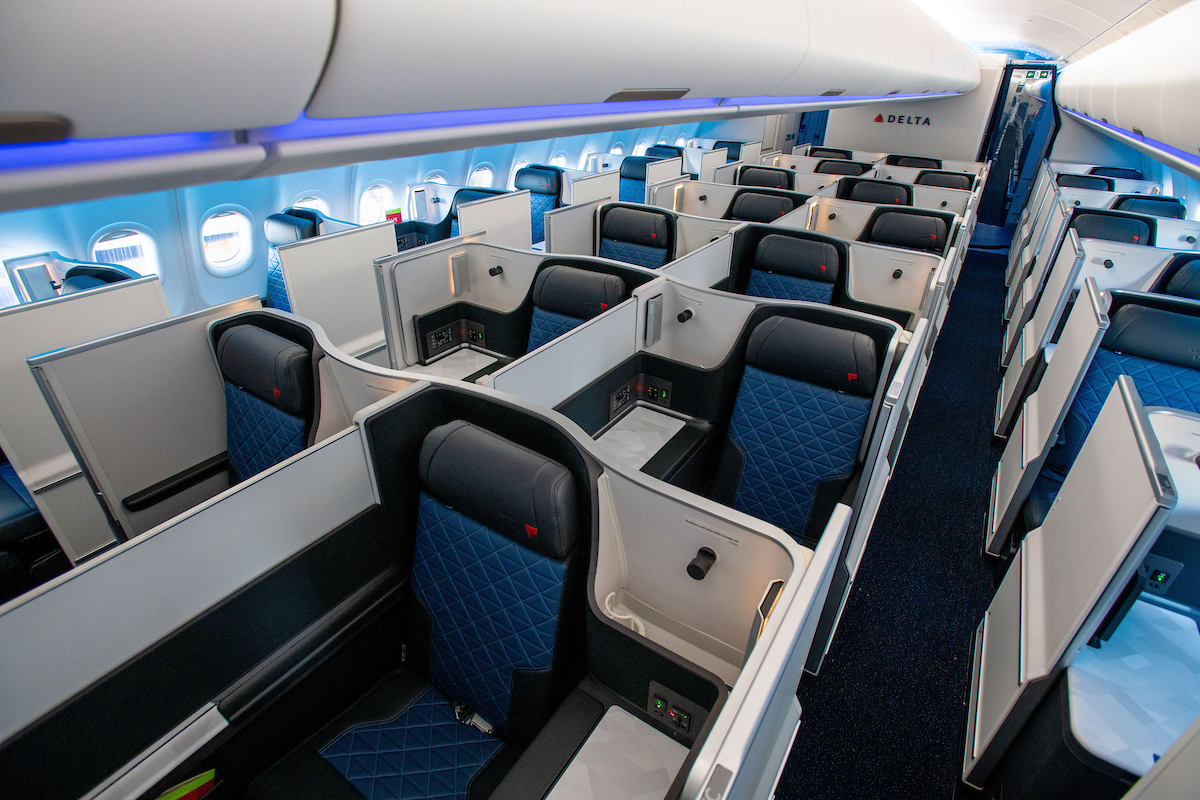
The situation will be even more acute on Delta’s new subfleet of ‘High J’ Airbus A321 aircraft, which feature 44 First Class recliners up front. Also consider that Delta is planning to expand the domestic First Class cabin across more narrowbody aircraft in the near future.
Why this FAA-mandated change has come about remains a mystery. As One Mile at a Time points out, the actual policy prohibiting service items in the cabin after pushback has been in place for more than three decades.
Specifically, Federal Aviation Regulation (FAR) 121.577 (a) states: “No certificate holder may move an airplane on the surface, take off, or land when any food, beverage, or tableware furnished by the certificate holder is located at any passenger seat.”
Up until now, airlines had an exemption that allowed them to use disposable service items. In May, however, the FAA struck this exemption from FAR 121.577 (a), telling airlines that “all galley items should be picked up and properly stowed prior to movement on the surface.”
Don’t expect flight attendants to break the rules, either. Crew members can be personally fined for violating FARs. Fines for violating the FARs can reach a staggering $100,000, although the FAA says that fines for individuals generally range from $1,100 to $75,000.
And yes, the FAA does regularly send its inspectors on board flights to see whether flight attendants are complying with the FARs.
In one case, a flight attendant said she was warned by an FAA inspector for telling a passenger who had gotten out of their seat to use the bathroom when the seatbelt signs were on that doing so “was at your own risk.”
Flight attendants are required to inform passengers that the seatbelt signs are on, but by adding “at your own risk,” suggests that the crew member is giving permission to the passenger to use the bathroom.
Interestingly, the serviceware rule will not apply to international airlines that serve pre-departure beverages on flights departing the United States. The rule also doesn’t apply to things like water bottles and blankets provided by the airline because their approved stowage location is actually at or on the seat, and not in the galley.
Want to see more stories like this? Add PYOK as a preferred source on Google, and we'll show up more often in your searches and Google News.
Add PYOK as a Preferred Source