



Have you ever boarded a plane where the logo on the outside doesn’t match the logo on your boarding pass… Only to then discover that the crew aren’t wearing wearing the uniform you were expecting and the inside looks completely different from what you were expecting?
It’s not a mistake. It’s one of a handful of leasing arrangements that let airlines borrow capacity from each other, and depending on exactly what’s being borrowed, passengers can end up on a completely different airline’s operation without realising it.
There are three main types, and the difference between them comes down to one simple question: how much of the operation is the leasing airline actually providing?
At a glance
What is a Wet lease vs dry lease vs damp lease?
- Wet lease — otherwise known as ‘aircraft, crew, maintenance, and insurance’ or ACMI for short. The leasing airline provides the aircraft, pilots, cabin crew, maintenance and insurance. It runs the whole operation.
- Damp lease — the leasing airline provides the aircraft and pilots only. The airline taking the lease supplies its own cabin crew.
- Dry lease — the leasing airline provides only the aircraft. The airline taking the lease supplies its own pilots, cabin crew, maintenance and insurance.
| Aircraft | Pilots | Cabin crew | Maint. & insurance | |
|---|---|---|---|---|
| Wet lease | Leasing airline | Leasing airline | Leasing airline | Leasing airline |
| Damp lease | Leasing airline | Leasing airline | Operating airline | Operating airline |
| Dry lease | Leasing airline | Operating airline | Operating airline | Operating airline |
Wet lease
Aircraft: Leasing airline
Pilots: Leasing airline
Cabin crew: Leasing airline
Maint. & insurance: Leasing airline
Damp lease
Aircraft: Leasing airline
Pilots: Leasing airline
Cabin crew: Operating airline
Maint. & insurance: Operating airline
Dry lease
Aircraft: Leasing airline
Pilots: Operating airline
Cabin crew: Operating airline
Maint. & insurance: Operating airline
Wet lease: the aircraft, the crew, and everything else
A wet lease is the most complete version. The airline providing the aircraft, known in the industry as ACMI (aircraft, crew, maintenance, insurance), supplies everything, while the airline leasing it simply sells the tickets and puts its name on the schedule. For short-term leases, the aircraft won’t be repainted, and the crew working the flight belong to a different company entirely.
Wet leases get used for a few different reasons:
- Sometimes it’s an emergency measure. When Norwegian was struggling with serious Rolls-Royce engine problems on its Boeing 787 fleet, it had to lean heavily on wet lease deals just to keep its long-haul schedule operating at all, a very expensive fix for a low-cost airline that was already under financial pressure.
- More commonly, wet leases fill seasonal capacity gaps. An airline that needs extra aircraft for a few peak summer months might wet lease so it can temporarily boost capacity without committing to the expense of buying more airplanes that won’t be needed year-round.
- Wet leases are also common for sports and government charters, and, more controversially, in deportation flights.
Deportation flights can be a significant source of income for some flights and if this makes you feel uneasy, I have some bad news… There might be no way of knowing that your scheduled flight operated by Airline A has been wet-leased to Airline B that regularly operates deportation charters.
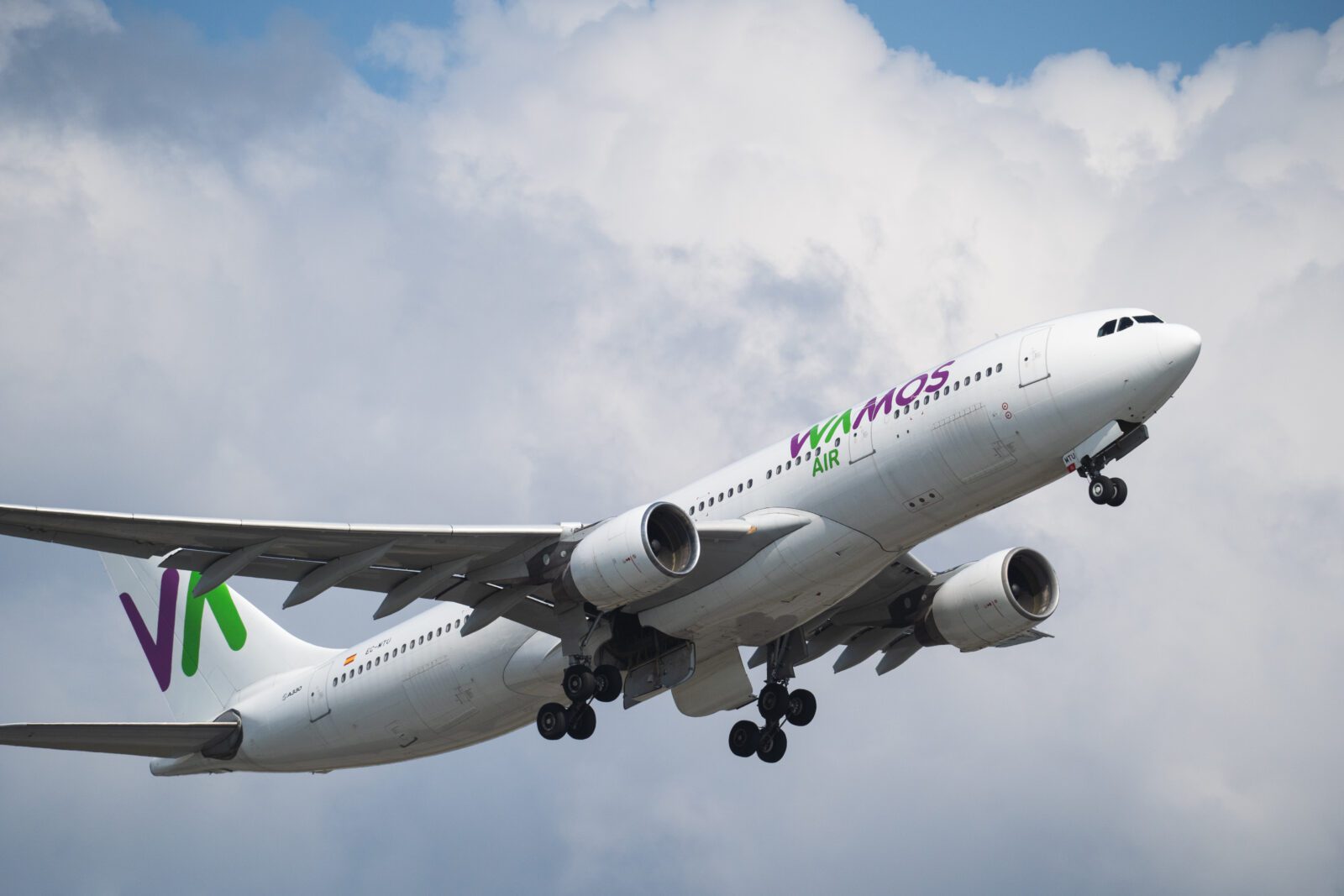
Wet leasing has created an entire specialist industry. Airlines like Hi Fly, Omni Air International, and Wamos exist almost entirely to provide wet lease capacity to other carriers. Pilots and cabin crew at these airlines can earn very good money, since the work is irregular and airlines paying for the service pay a premium for it. The trade-off, however, is that work isn’t guaranteed.
Wet leasing planes to other airlines isn’t limited to specialist operators. Regularly scheduled airlines have been known to lease out their own aircraft and crew when it makes financial sense.
Finnair is a good example: after Russia’s invasion of Ukraine closed its most valuable routes over Russian airspace and badly damaged its business model, it wet-leased some of its Airbus A320s, along with cabin crew, to British Airways to generate revenue from aircraft it could no longer use profitably on its own network.
Wet leasing is also sometimes a survival method rather than the preferred business strategy for an airline. Norse Atlantic has increasingly turned to the wet lease market as its own scheduled long-haul business has struggled. Unfortunately, wet-leasing income isn’t guaranteed. Its wet lease agreement with IndiGo has since fallen through, leaving the airline in further difficulty on top of problems it already had.
Not every airline is willing to go anywhere near a wet lease, in either direction. Some carriers treat their brand and consistency of experience as so important that they simply won’t hand their own passengers over to another airline’s crew and aircraft, or lease out their own to fly under someone else’s name.
Other airlines forced to turn to wet-leasing will attempt to protect their brand in other ways. In the case of Norwegian’s now defunct long-haul business, the airline paid extra to put one or two of its own cabin crew on board wet-leased flights.
The crew wasn’t there to work the actual service as they were certified to work on the other wet-lease operator’s planes. Instead, they acted as informal service advocates for the Norwegian brand.
Cabin crew who work for a wet-lease airline usually get some training in the contracting airline’s service protocol, but it doesn’t always erase the differences passengers notice, particularly around things like legroom or seatback entertainment, which depend on the leased aircraft’s own configuration rather than the airline whose name is on the ticket.
Damp lease: the aircraft, plus some of the crew
A damp lease sits in between. The leasing airline typically supplies the aircraft and just the pilots, while the airline taking the lease provides its own cabin crew.
Finnair, again, is a real-world example of damp leasing. It leased some of its Airbus A330s to the Australian flag carrier Qantas. For these services, Qantas didn’t need Finnair’s cabin crew as part of the deal, as it had plenty of its own crew. It did, however, need Finnair’s pilots.
The Finnair pilots had to be flown all the way from Helsinki to Hong Kong and Singapore just to operate Qantas rotations. The arrangement was later scaled back after Finnair’s own pilots staged strike action that led to a number of Qantas cancellations.
Dry lease: just the aircraft
A dry lease is the simplest of the three. The leasing airline supplies only the aircraft itself, with no crew, maintenance, or insurance attached. The airline taking the lease operates it entirely as its own, under its own certificate, with its own people.
Cathay Pacific’s arrangement leasing some of its Boeing 777s to Qatar Airways is a straightforward example of exactly this: just the metal changing hands, with Qatar Airways running the aircraft as fully its own.
The hybrid case that confused almost everyone
Global Airlines, the strange startup that launched with an all-Airbus A380 fleet, is a strange one that doesn’t fit neatly into any of the three categories.
Global owned the aircraft, but the airline itself never actually operated them. That was handled entirely by Hi Fly, which supplied the crew, the pilots, and the operating certificate the aircraft flew under. Global effectively financed the operation without running any of it, which meant that even though the tickets said Global Airlines, the flight itself was, in almost every operational sense, a Hi Fly service from the moment you stepped on board.
Want to see more stories like this? Add PYOK as a preferred source on Google, and we'll show up more often in your searches and Google News.
Add PYOK as a Preferred Source