



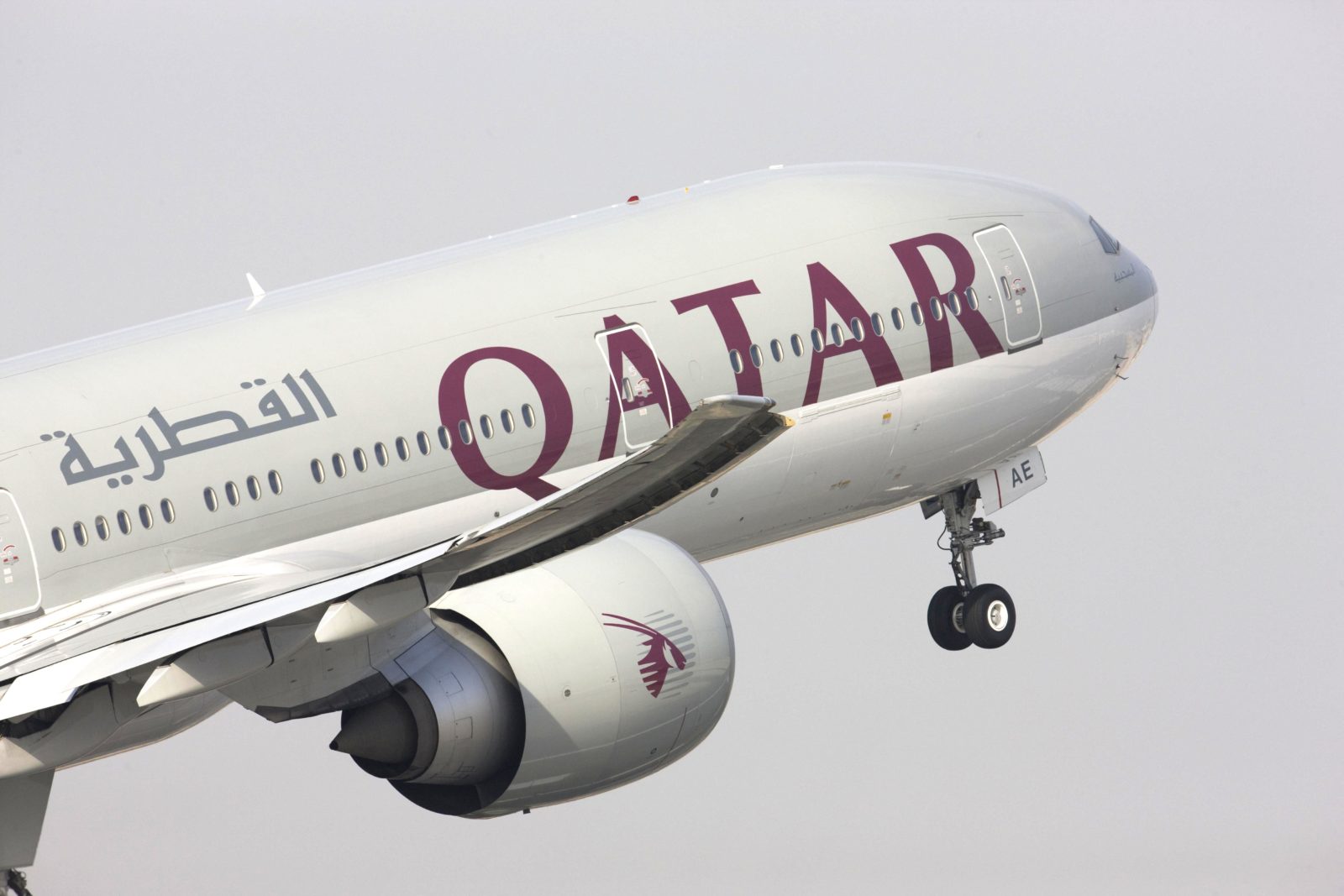
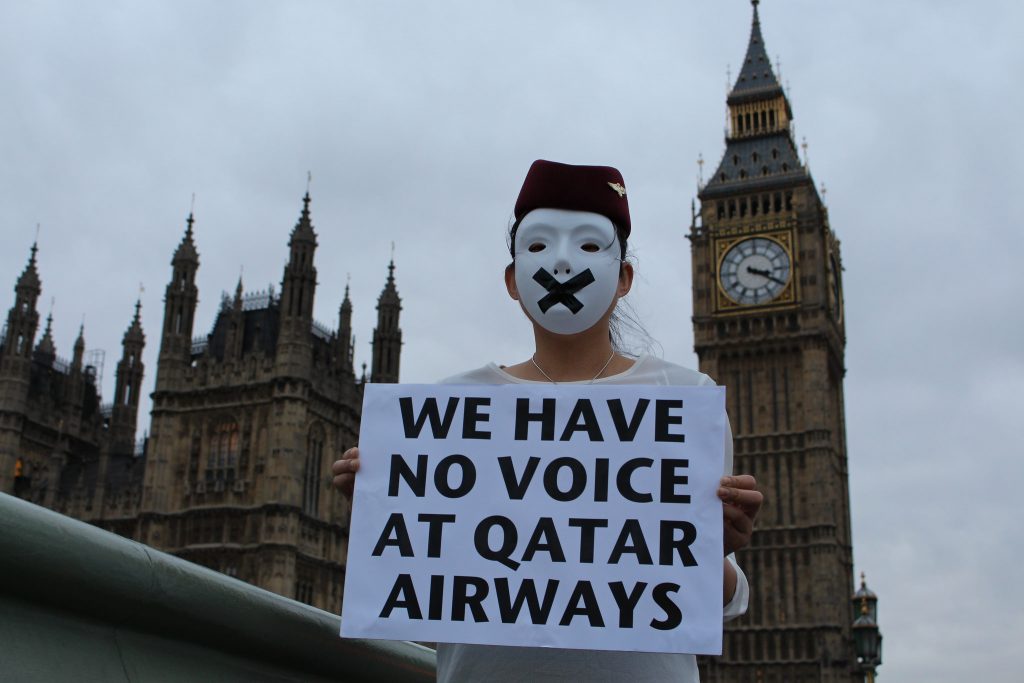
Cabin crew at Qatar Airways took part in what has been described as a ‘historic sickout’ on Monday, with crew members taking part in a first-of-its-kind coordinated work action designed to pile pressure on the Doha-based mega carrier.
The consequences of this sickout cannot be underestimated: In an authortarian county like Qatar, taking part in any form of protest or work activity is strictly prohibited, not only under employment law but also criminal law.
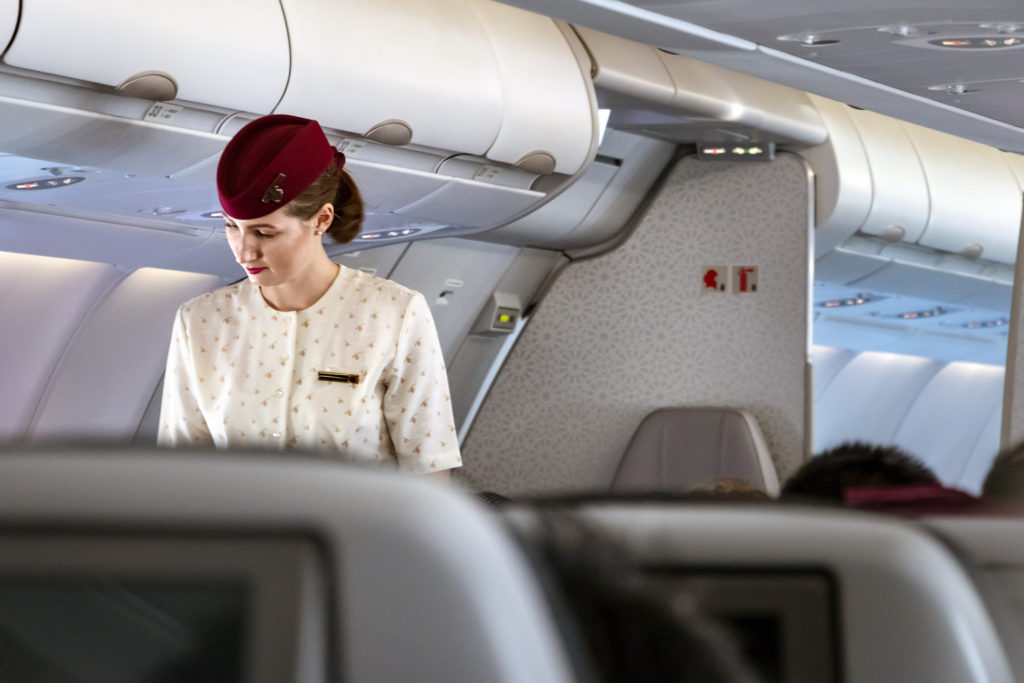
Anyone suspected of calling in sick as a form of protest risks a lot more than just their employment being terminated, with potential arrest, imprisonment, and deportation for Qatar Airways’ mainly expat workforce a real threat.
Now, cabin crew at the state-owned airline are coming forward with their reasons for risking it all, breaking a near-total silence that shrouds the company in secrecy.
While Qatar Airways has taken some major steps to improve working conditions in recent years, cabin crew say these reforms don’t go nearly far enough, and, in some cases, the reforms aren’t what they seem at all.
For context, for many years, Qatar Airways was led by Akbar Al Baker, a larger-than-life character in the aviation industry who built the airline into the behemoth that it is today.
His methods were, however, just as controversial as some of the things that he would often blurt out at media events and press conferences.
In return for a generous salary and free company-provided accommodation in Doha, cabin crew were expected to work incredibly hard – much more so than their peers in North America or Europe.
Cabin crew had to adhere to a strict overnight curfew in their accommodation, posting on social media was banned, and your career at Qatar Airways could be determined on a whim by a chance meeting with Al Baker himself.
That all seemed to change when Al Baker unexpectedly left the airline and was replaced by the reformer Eng. Badr Al Meer, who promised a cultural shift at Qatar Airways, where cabin crew would be treated with much more respect than in the past.
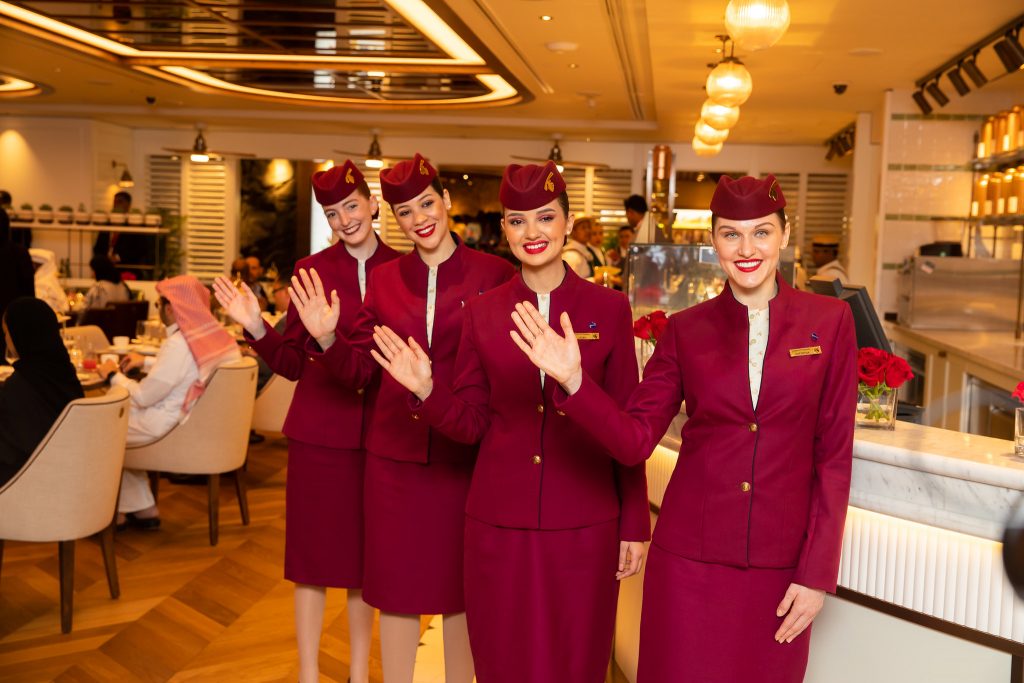
Al Meer relaxed the curfew rules and allowed cabin crew to post on social media, but his tenure at the airline didn’t last for long. He was forced out in December 2025 and replaced by Ali Al-Khater, an unknown quantity, who has publicly stayed almost completely silent.
Behind the scenes, however, Al Meer’s reforms are already being seemingly undone.
“Company accommodation feels more like a jail than a home,” one Qatar Airways cabin member told us. Crew members must tap in and tap out whenever they come and go from their accommodation, allowing the airline to trace their movements.
Nine hours before a flight, it is a mandatory requirement for crew to remain inside their accommodation. Tapping out to go to the shop or grab a drink from a coffee shop could result in instant dismissal.
The crew member added: “Management often points out that crew can move out of company accommodation, but this is only permitted if you are married. Even then, the housing allowance remains just 1,200 QAR per month and has not increased in approximately 12 years—an amount that would not even secure a basic studio apartment in Doha today.”
Wages are another flashpoint, having stagnated since the COVID-19 pandemic, with no “meaningful increases to either basic salary or hourly flight pay” in several years, despite the soaring cost of living.
In fact, during the COVID-19 pandemic, Qatar Airways slashed the allowances that cabin crew receive during overnight layovers – an important part of the total cabin crew compensation deal.
As of 2026, layover allowances remain nearly half of what they were before the COVID-19 pandemic.
Longer serving crew will also remember earning overtime pay once they had worked more than 1,000 flying hours per year, but this benefit has also been removed. The final straw on the camel’s back, however, appeared to be the airline’s refusal to pay an annual bonus despite posting a healthy profit.
Qatar Airways cabin crew struggle to understand the airline’s justification for withholding the bonus on the grounds that it needs to prioritize long-term stability due to the ongoing security situation in the Middle East.
After all, Emirates Airline in neighboring Dubai paid staff a bonus equivalent to around 20 weeks of basic pay, despite also being significantly hit by the fallout of the joint U.S. and Israeli military campaign on Iran.
Whether or not the Qatar Airways sickout will lead to some sort of meaningful dialogue between frontline workers and the airline’s management remains to be seen.
It does seem, though, that widely reported reforms at Qatar Airways have stalled.
Want to see more stories like this? Add PYOK as a preferred source on Google, and we'll show up more often in your searches and Google News.
Add PYOK as a Preferred Source

Then they should move to ek but the reality is that the most of them cannot, mostly because they don’t have the competitive edge to be hired at ek. That’s the sad reality.