



- New TSA Administrator David Cummins has scrapped the agency’s controversial Gold+ privatization program, but plans to expand private security screening at airports remain very much alive.
- Why Tampa Airport pulling out of Gold+ may have helped trigger the program’s shutdown.
- How a leaked briefing document at Orlando Airport first exposed Gold+ to the public.
- Why the flight attendants’ union says privatized screening would take the US back to a “dangerous” pre-9/11 model.
- How the US compares to Europe, the UK, and Canada, where private airport security is already the norm.
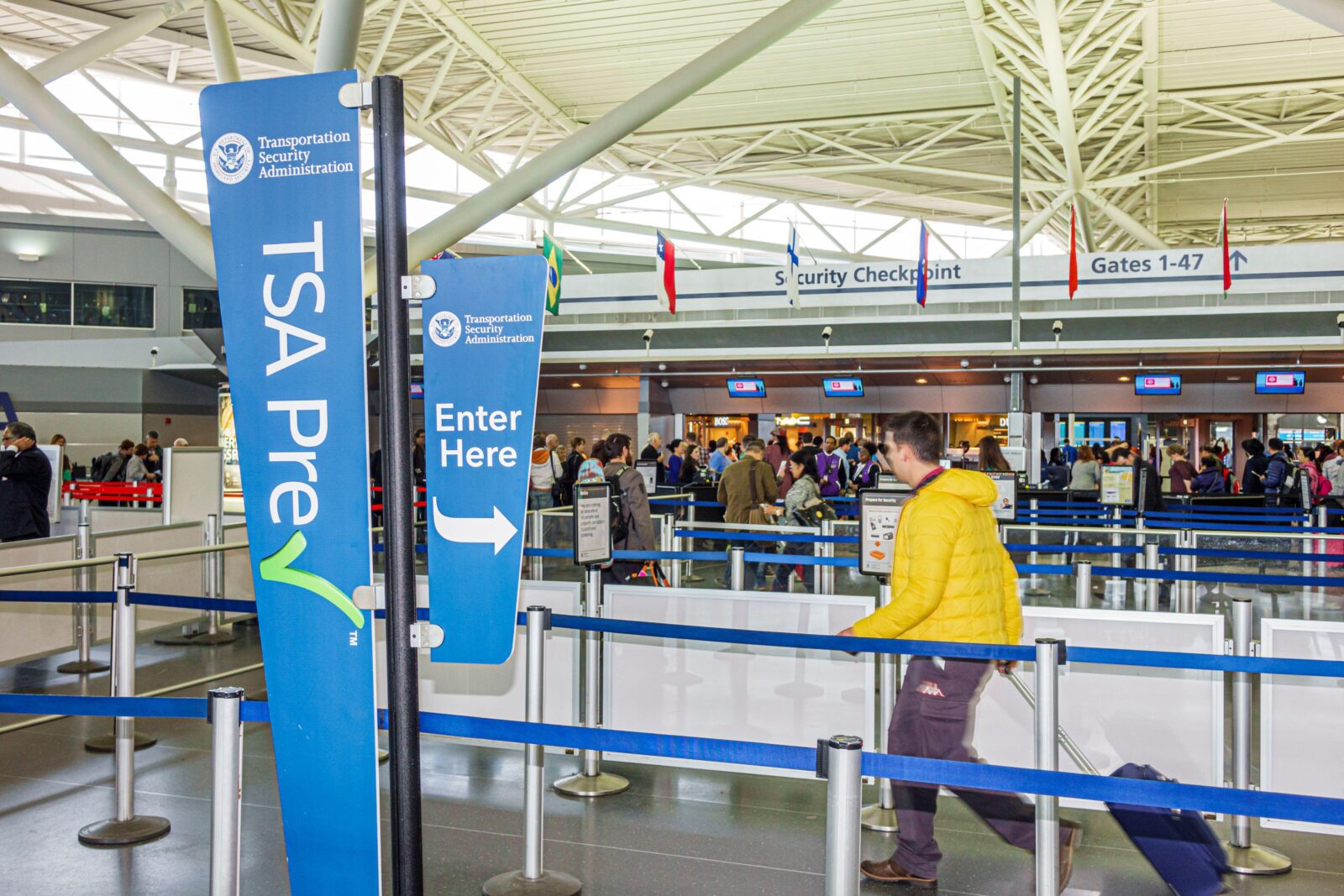
David Cummins, the new administrator of the Transportation Security Administration (TSA), has revealed that the agency is abandoning its controversial Gold+ public-private partnership program for airport security, but the widespread privatization of the TSA is still very much on the cards.
As a former vice president of the British public sector outsourcing giant Serco, it’s probably no surprise that Cummins is a staunch advocate for privatizing the TSA, saying on Monday that he planned to “accelerate” public-private partnerships at airport security checkpoints across the country.
To be clear, the TSA has, for some years, allowed designated airports to opt out of federal TSA security and, instead, use private contractors through the ‘Screening Partnership Program. At present, there are, however, just 20-22 airports that use SPP contractors, including San Francisco (SFO), and Kansas City (MCI).
The Atlanta City Council also recently approved a feasibility study into ditching the TSA in favor of an SPP private contractor to take over security controls at Atlanta Hartsfield-Jackson International Airport – the busiest airport in the world.
For several months, the Trump administration has been planning to hand over TSA responsibilities to private contractors at more and more airports. But rather than using SPP, the administration created a secretive new program called TSA Gold+.
Earlier this month, the American Federation of Government Employees (AFGE) sued the Department of Homeland Security in an attempt to secure access to files related to the Gold+ program, claiming that officials had stonewalled it over a Freedom of Information Act request to access records.
We vividly remember the dangerous reality of the pre-9/11 aviation security landscape, which relied on a fractured patchwork of private security contractors.
Sara Nelson, AFA-CWA President
Gold+ was only publicly acknowledged by the government when a confidential briefing paper about the program was found at the Orlando Airport. The AFGE claims that the TSA had been secretly building and selling the program to airports for many months before the file was leaked to the media.
Whether shutting down Gold+ is an attempt to also shut down the AFGE’s lawsuit remains unclear. There have also been reports that Tampa Airport, which was one of the first airports to sign up to Gold+, decided to pull its participation in the program, and this may have also played a role in the decision to shutter the program.
The widespread rollout of SPP is part of a new strategic vision that Cummins announced on Monday, called Horizon 25.
“In its first 25 years, this agency has performed its critical Homeland Security mission with dedication and excellence,” Cummins said. As we look forward to the next 25 years, we must constantly work to stay ahead of evolving threats and deliver a Golden Age of Travel. Through the Horizon 25 Strategy, we will build a TSA that is agile, resilient and ready for tomorrow’s challenges.”
Cummins said that SPP is the best way to “harness the role of the private sector in delivering a safer, more secure, and more efficient aviation system.”
The Association of Flight Attendants (AFA-CWA) has slammed plans to privatise TSA responsibilities, claiming such a move would compromise “passenger safety and introduce unacceptable vulnerabilities into our national defense.”
“We vividly remember the dangerous reality of the pre-9/11 aviation security landscape, which relied on a fractured patchwork of private security contractors,” commented AFA President Sara Nelson. “Under that privatized model, screening standards varied wildly from airport to airport, driven by corporate bottom lines and cost-cutting rather than national security protocols.”
Internationally, however, there is nothing unusual about private security companies being contracted to carry out airport security screening. Private security companies are commonplace in airports across Europe, the UK, and even just across the border in Canada.
While private companies employ the security officers and pay for the screening equipment, they must abide by rigorously enforced standards that are continuously tested. National security agencies set the rules, and there is a close liaison between the companies and government authorities.
In many countries with strong labor rules, private security guards are also members of unions and can stage work stoppages in a bid to win better pay and conditions, just like members of the TSA can do through the AFGE union.
In many ways, the United States is an outlier in running airport security at the federal level, and there is no overwhelming evidence to suggest that this is a better or more secure system than hiring private companies to do the same job.
Want to see more stories like this? Add PYOK as a preferred source on Google, and we'll show up more often in your searches and Google News.
Add PYOK as a Preferred Source