



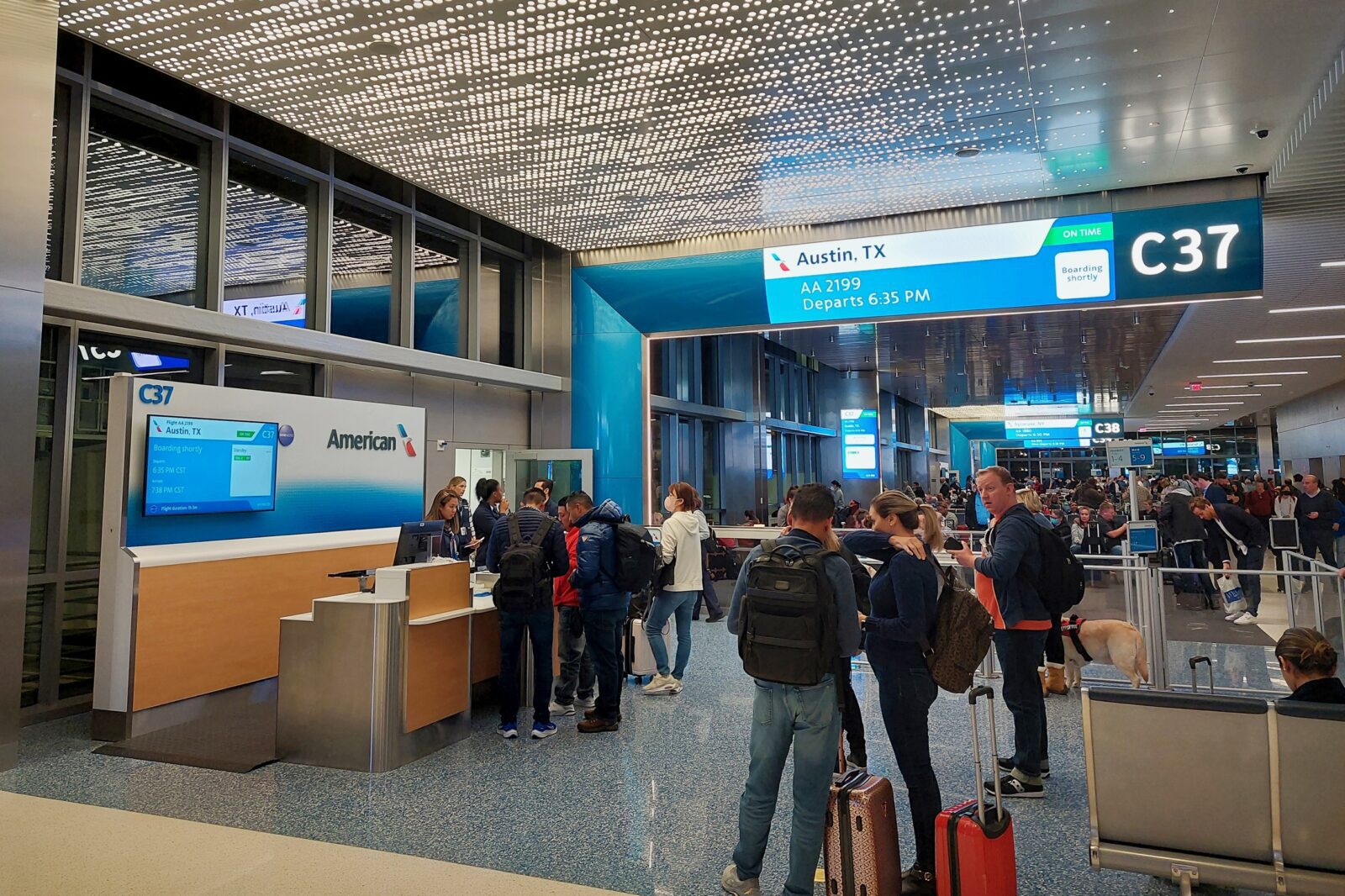
Non-revving is one of the best perks of working in aviation, and also, I promise you, one of the most stressful things about it. I always say non-revving will make my hair turn gray long before my time, but the benefits always outweigh the cons.
Non-rev is short for non-revenue travel, but that name is a bit misleading, since, in many cases, money still changes hands. What it actually means is that a ticket is sold to airline employees at a steep discount, although the downside of that discount is you don’t get a guaranteed seat, and instead are listed on standby for your chosen flight.
Commercial passengers who have paid full price for a ticket always come first, and a non-rev passenger only gets on if there’s a seat left over once everyone else has boarded. Non-rev travel includes airline employees flying on their own carrier, to a friend using a buddy pass, to staff hopping on a completely different airline through a reciprocal agreement.
The mechanics, the price, and how stressful it actually is all depend heavily on which of those categories you’re in.
At a glance
What does “non-revving” mean?
Non-revving is flying on a discounted, non-guaranteed fare rather than a confirmed full-fare ticket, most often as an airline employee benefit. A non-rev passenger only boards if there are spare seats left after all commercial passengers are accounted for. Priority for any remaining seats generally runs in this order:
- Paying passengers, always first
- Employees flying on their own airline
- Buddy pass holders travelling on that employee’s airline
- Staff flying standby on a different airline through a ZED or interline agreement
Flying on your own airline
The most straightforward version of non-revving is an employee flying on their own airline’s metal, and even this varies enormously from one carrier to the next.
Some airlines charge staff nothing beyond the taxes and fees. Others charge a small percentage of the normal fare on top – historically known as an ID90 ticket, which is short for ‘industry discount of 90%.’ The cabin class you’re eligible to sit in depends on your contract too. At Emirates, for instance, only pursers and pilots get access to premium cabins on staff travel, regardless of how long everyone else has been flying for the airline.
While the exact discount and eligibility differ from one airline to the next, what is certain is that employees using standby travel will only get on board their chosen flight is their are spare seats that haven’t been filled by commercial passengers.
Buddy passes extend that same discounted access to an airline employee’s friends or family, although giving out buddy passes isn’t a decision to be made lightly. If the friend or family member misbehaves on board and it gets reported, the employee risks having their own non-rev privileges revoked, and even face disciplinary action.
Airline employees are increasingly dubious about handing out buddy passes, and when they do, it’s only after the friend or family member has been briefed on the behavior that is expected of them.
Some airlines have started offering an alternative to standby altogether: a cheaper confirmed ticket rather than a discounted seat that depends on availability. Delta’s Fly Confirmed for Less program and British Airways’ Hotline fares both work this way – the discount is a lot less than flying standby, but you have a guaranteed seat.
Flying on a different airline
Airline employees not only get to travel at a steep discount with their own airline, but also with rival carriers through reciprocal agreements between airlines.
Flying standby on another airline works through what’s called a ZED fare, which stands for ‘Zonal Employee Discount’. The old ID90 name still gets used informally even though ZED has technically replaced it.
What that agreement actually includes varies enormously: some deals let staff sit in premium cabins on the partner airline, most restrict them to Economy, and US carriers commonly extend similar reciprocal privileges to jumpseats for pilots, dispatchers, and flight attendants.
Access to another airline’s cheap standby tickets is dependent on the relationship between two carriers – and agreements can suddenly be changed or terminated altogether based on politics.
For example, Qatar Airways once offered Qantas staff access to Business Class standby, but that benefit was pulled after a dispute over Qatar Airways being denied additional flying rights into Australia. And in 2017, Emirates and British Airways got into a dispute over their own reciprocal deal – that led to standby privileges being terminated altogether.
Flying standby on another airline also puts you at the very back of the line. You’re not just behind every paying passenger, you’re also behind that airline’s own staff who are trying to non-rev.
How you actually get on the plane
Airline employees generally book non-rev fares through a dedicated internal booking page, then check in like any other passenger through the normal website or app. Whether you get a seat comes down to what’s left once paying passengers have boarded. On a wide-open flight you might be assigned a seat straight away. If the load factor is already tight, you might not know until boarding has closed and the gate agent works out who’s misconnected or not shown up.
Even once you’ve been assigned a seat, nothing is guaranteed until you’re sitting in it and the boarding door has closed. A late-showing paying passenger, a crew member needing to travel at the last minute, or a straightforward operational change can see a non-rev passenger pulled from a seat they thought they already had, right up until that door shuts.
A lot of airlines run this through a platform called MyIDtravel, which is renowned for its face emojis that denote your chance of getting on a specific flight. Rather than showing the exact number of available seats, the website shows a green smiley face when there are at least nine available Economy seats. An amber face suggests there are only a few seats left, while a red unhappy face suggests your chances of getting on are very limited.
The problem with this system is that it doesn’t show how many other people are on standby for a specific flight, or, perhaps more importantly, what your position is in that list. The most experienced non-revvers out there will know that a green smiley face means as much as a red unhappy face. Seats could be filled at the last minute, while all it takes is one misconnect to get on when a red unhappy face is showing.
Who gets the seat when there’s more than one non-rev passenger competing for it usually comes down to seniority, though not always in the same way. Some airlines factor in rank as well as hire date, so a longer-serving purser might get priority over a newer first officer, or vice versa, depending on the airline’s own rules. A smaller number of airlines skip seniority altogether and simply go first-come, first-served based on who booked or checked in earliest, which catches a lot of non-rev passengers used to seniority systems off guard.
Dress codes have relaxed over the years, but smart casual is still very much the expectation, especially if there’s any chance at all of an upgrade into a premium cabin.
The rules of flying as a non-rev
Whatever airline you’re flying on, there’s one rule that applies everywhere: no complaining. You sit quietly, you do what you’re told, and you’re the best-behaved passenger on that aircraft, because you’re not really flying as a customer, you’re flying as a guest of the industry you work in.
Unless a flight is absolutely wide open, don’t rely on getting your preferred flight. You need to have a Plan B, a Plan C, and sometimes a Plan D. Don’t make the first flight? Fine, do you try a different routing, relist for the next one, cut your losses entirely, or hope a jumpseat comes up instead?
You can wake up in the morning and check the loads, and everything is looking great. By the time you get to the airport, the situation has changed completely. One cancellation can lead to spare seats being gobbled up by commercial passengers who are being rerouted.
Non-revving has never been harder than it is right now. Capacity across the industry is tight, and with airlines prioritising and expanding premium cabins, there are fewer seats on board many planes than there were even just a few years ago.
Want to see more stories like this? Add PYOK as a preferred source on Google, and we'll show up more often in your searches and Google News.
Add PYOK as a Preferred Source

An an airline employee, this article is a mix of accurate and false information. I do not know of ANY US Carrier that collects money from their own employee for travel on their own metal. There is no small fare, only possible taxes and fees would be for international taxes if leaving the country. Pilots can ride on any US carrier or cargo airline for 0$ through reciprocal Jumpseat agreements. Zed info is mostly accurate. I am lucky that my airline has extensive premium travel with other airlines all over the world but I know DL/AA have almost zero premium travel agreements. There is no reason to stress over non-rev travel unless you are commuting which I happily do not have to do. There is plenty of ways to retrieve load information so you know before you leave for the airport which flight you will get on. If you have to be somewhere, you buy a ticket just like everyone else.
Hey, thanks for the comment! This article covers standby benefits industry-wide, not just the United States. Hence why we hedged on the cost… it really does differ from one airline to the next.