



WHAT TO KNOW
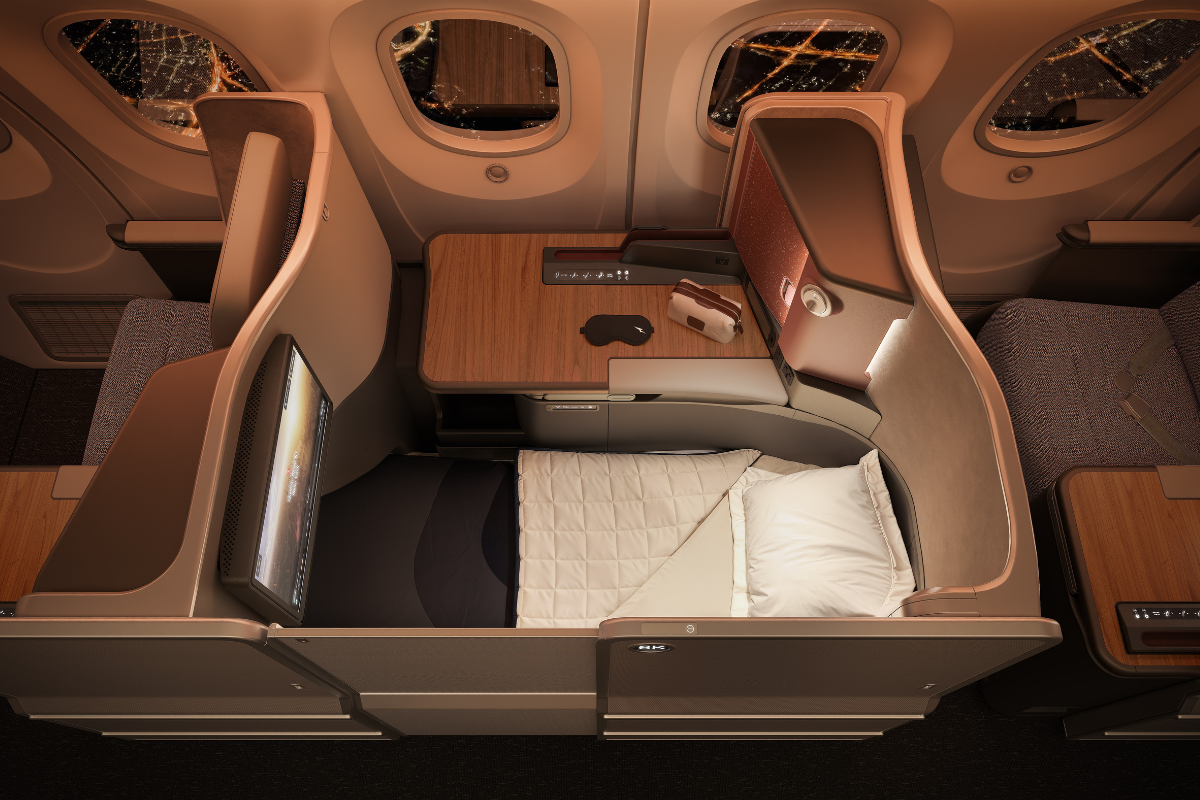
- The A321XLR suites mark Qantas' first lie-flat Business seats on a narrowbody aircraft, arranged 1-1 in a herringbone layout on 16 of the 20 A321XLRs on order.
- Both new suites include 19-inch entertainment screens, wireless and USB-C charging, with the A321XLR also getting free in-flight Wi-Fi.
- The 787-9 suite is an evolution of Qantas' existing Thompson Aero VantageXL seat, gaining a sliding door for the first time.
- Qantas has no current plans to retrofit its existing 787-9 fleet with the updated suite.
Qantas has unveiled its latest Business Class suites, which will appear on the next deliveries of Airbus A321XLR and Boeing 787-9 Dreamliners, due for delivery from 2028 onwards. While the suites on the two aircraft are quite different, they both feature sliding privacy doors.
Perhaps the most interesting part of this announcement is concerning the Airbus A321XLR, which is the longest range of the best-selling A320 narrowbody series. Until now, Qantas has been taking delivery of these aircraft with 20 standard Business Class recliners, despite the fact that the aircraft has a maximum range of 4,700 nautical miles.
For context, the aircraft could theoretically complete flights of up to 10 hours, although in the real world, airlines have found that the airline’s actual range isn’t quite as generous as Airbus promised. Even so, the plane is still capable of operating medium and long-haul flights on which premium passengers would normally expect lie-flat seats.
Qantas has, however, not attempted to utilise its current fleet of seven A321XLRs even close to this range, so, for now, the standard Business Class recliners have been just fine.
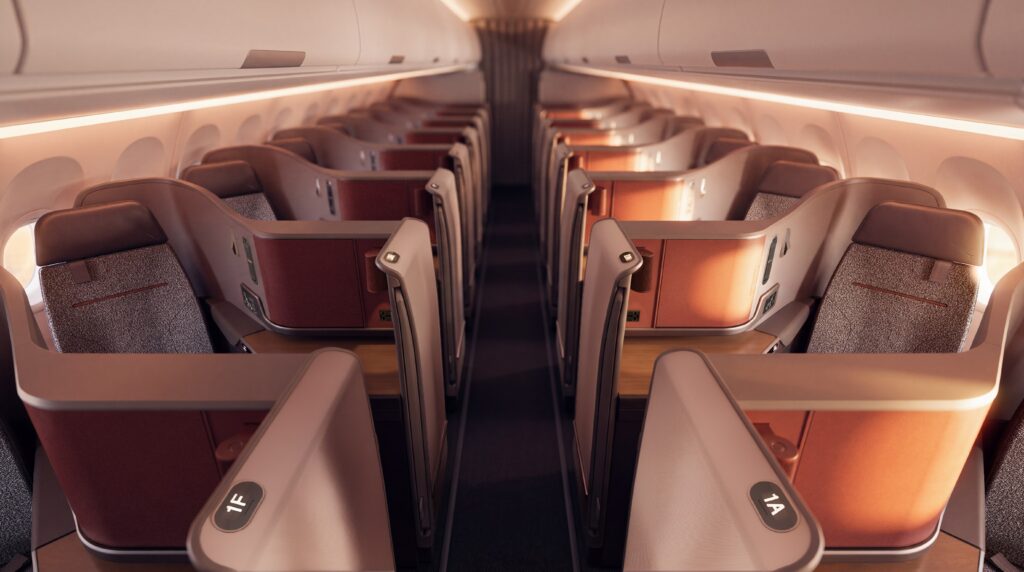
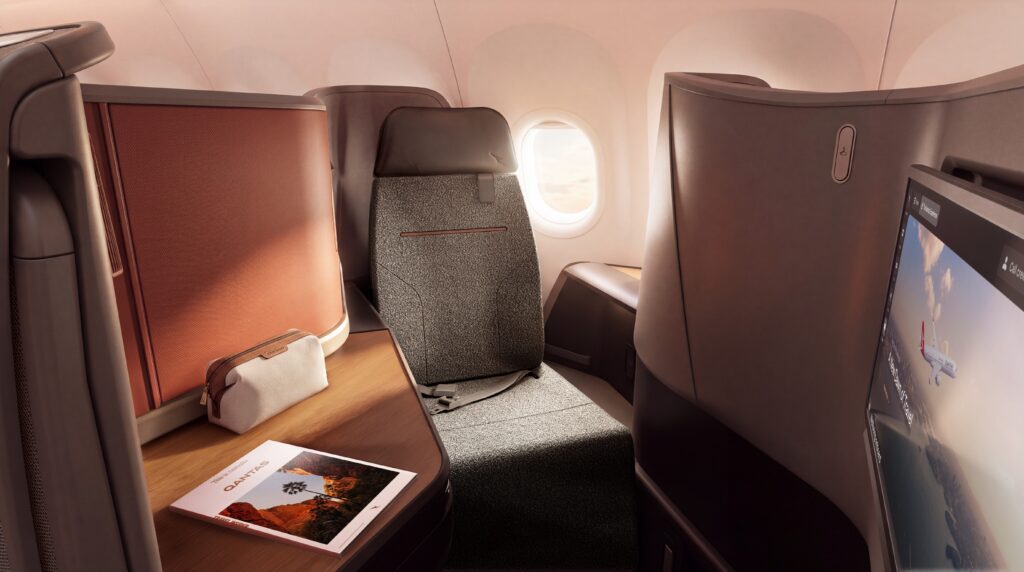
When Qantas takes delivery of 16 additional A321XLRs starting in 2028, that looks set to change as the airline will be equipping these planes with 20 lie-flat Business Class suites with sliding privacy doors.
It’s worth pointing out that these suites will be in a so-called herringbone configuration, which means that all of the seats face towards the aisle, rather than towards the window. Although this is viewed by many frequent flyers, the configuration is the most space efficient, and the seats haven’t faced any certification issues (unlike Delta’s planned reverse herringbone seats for its A321neos).
Qantas is pretty much up front about this compromise, saying that the design makes the “most of the cabin space to give every customer a lie-flat bed and a sliding privacy door.”
Along with a sliding privacy door, the suites will also be equipped with a 19-inch entertainment screen, wireless and USB-C charging. The aircraft will also be equipped with free in-flight Wi-Fi.
For its Boeing 787-9 Dreamliners, Qantas has opted for an updated version of its existing Business Class suite, which is made by Thompson Aero and is known as the VantageXL platform.
This is an evolution, rather than a revolution, although Qantas has been able to make the design its own, with bespoke finishes, such as a wood-effect side table, along with a muted red storage cupboard and soft greys that match the design ethos that was first unveiled for the airline’s A350-1000ULR aircraft.
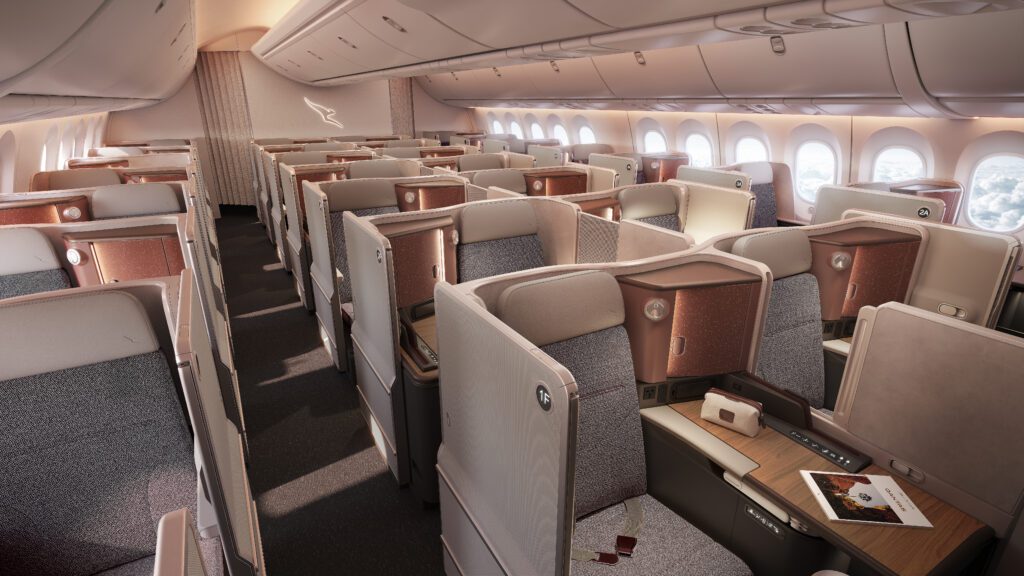
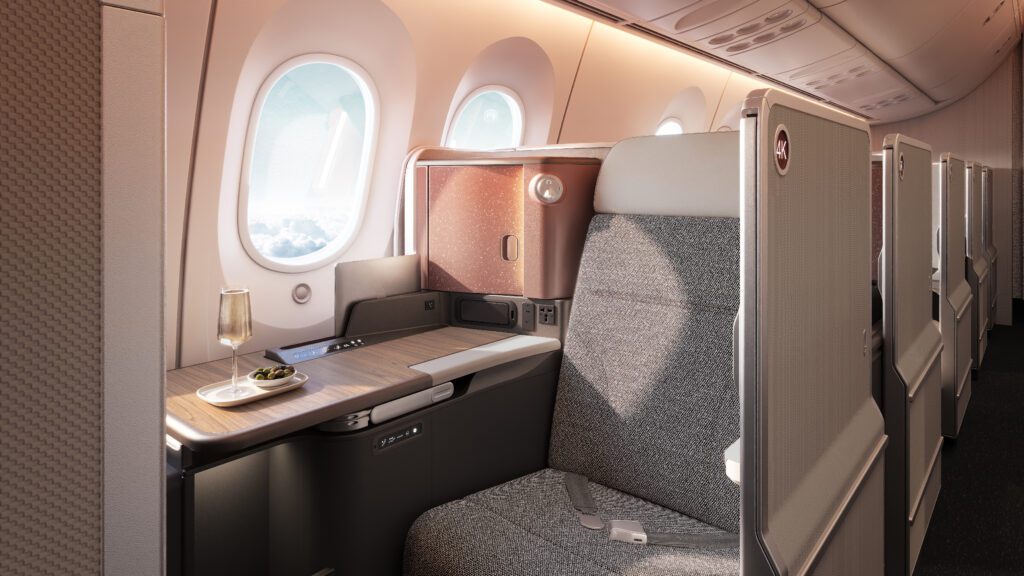
Qantas said the updated color palette was inspired by the red earth of Western Australia’s Pilbara region.
The seat layout is 1-2-1, with all seats facing fully forward, alternating from row to row, with the seat being closer to the window or the aisle. Qantas hasn’t opted for a companion configuration for its middle seats, so there is always a gap between passengers occupying the two center seats.
It appears that Qantas has no plans, at least at the moment, to retrofit its existing fleet of Boeing 787-9s, and given that the airline doesn’t want a subfleet of aircraft that would make last-minute aircraft swaps a logistical nightmare, the airline has also decided to keep the number of suites on its new 787-9s the same as 42 in Business Class.
Want to see more stories like this? Add PYOK as a preferred source on Google, and we'll show up more often in your searches and Google News.
Add PYOK as a Preferred Source