



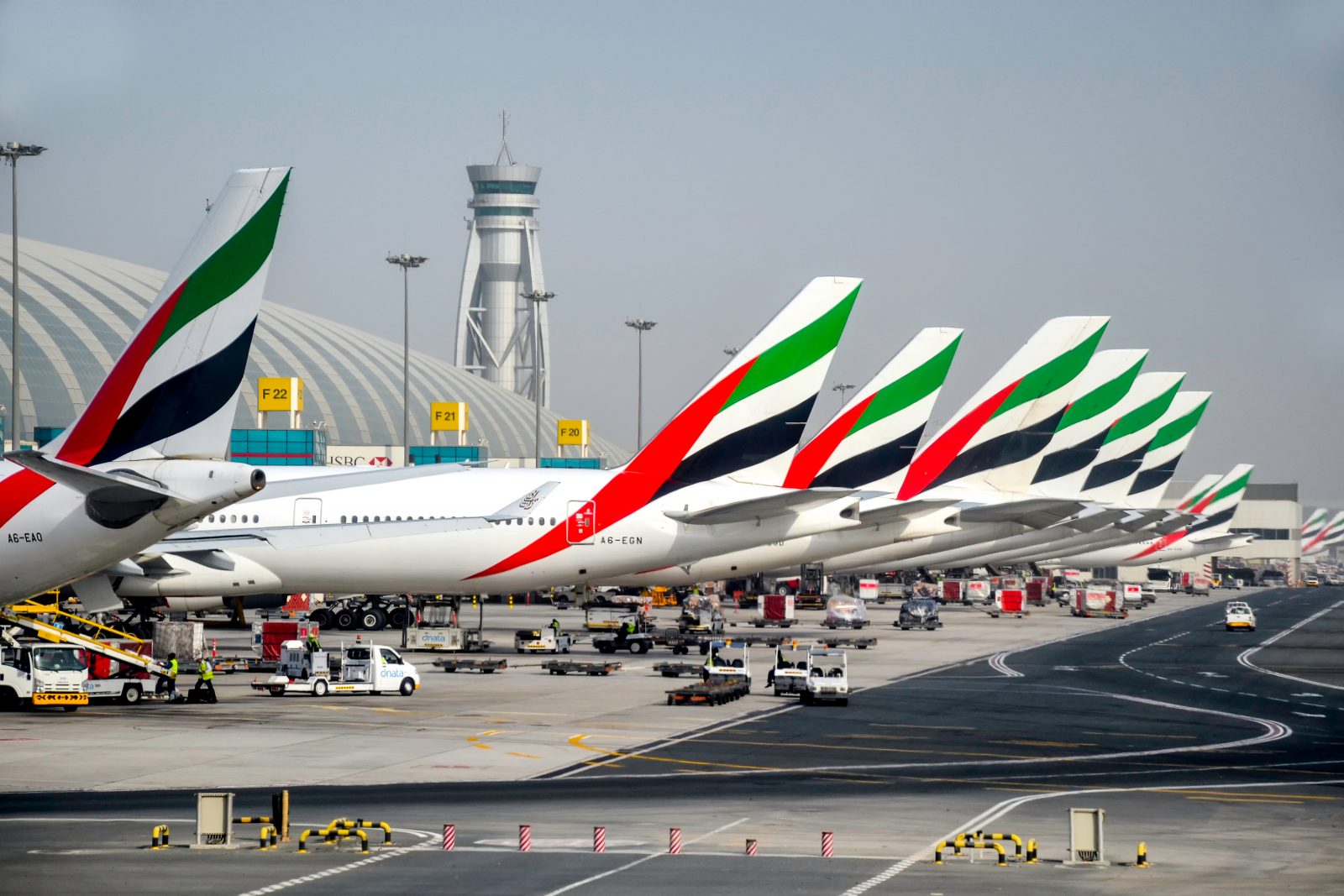
Flight operations at Dubai International Airport (DXB) were heavily impacted on Monday night after authorities in the city sent emergency alerts to residents warning of incoming ballistic missile attacks from Iran.
The alerts are the first in nearly a month that the authorities in the United Arab Emirates have detected and responded to an aerial threat from Iran following the start of a ceasefire between Iran and the US and Israel, which began on April 8.
Air defense systems are currently responding to a missile threat. Please remain in a safe location and follow official channels for warnings and updates. pic.twitter.com/DJFh6q8xi1
— NCEMA UAE (@NCEMAUAE) May 4, 2026
In a message posted to its official account on X, the UAE’s National Emergency Crisis and Disaster Management Authority said: “Air defense systems are currently responding to a missile threat. Please remain in a safe location and follow official channels for warnings and updates.”
The warning was posted just two days after the UAE’s General Civil Aviation Authority lifted all remaining flight restrictions, allowing airlines to ramp up operations to 100% of pre-war levels.
Until now, airlines such as Emirates, FlyDubai, and Etihad Airways had been restricted to using so-called ‘safe air corridors’ which were established within days of the Iran War starting on February 28.
The use of these Safe Air Corridors limited the number of flights per hour that could take off and land at the country’s hub airports, including in Dubai and Abu Dhabi.
As the emergency alert was sounded in Dubai on Monday evening, air traffic controllers scrambled to stop departures from Dubai International Airport, while a slew of planes entering UAE airspace to land in the city were sent into holding patterns away from the area of danger.
Some of the impacted flights included Emirates service EK-7, an Airbus A380 superjumbo from London Heathrow, and EK-93, a Boeing 77 which had been flying for more than 15-hours from Seattle.
As the warnings continued, flight operations at Abu Dhabi International Airport were also disrupted, with several Etihad Airways flights put into holding patterns over the UAE desert.
On Saturday, Emirates had responded to the news that flight restrictions were being lifted by vowing to immediately increase its operations. The airline is now serving 137 destinations in 72 countries, and was hoping to rebuild its schedule from 80% to near 100% in the coming weeks.
Dubai International Airport came under repeated attack during the first weeks of the Iran conflict, with a succession of ballistic missiles and kamikaze drone strikes aimed at the busy airfield.
Within hours of the conflict starting, a kamikaze drone struck the roof Terminal 3, the hub of Emirates, damaging the roof and concourse, and injuring at least four people.
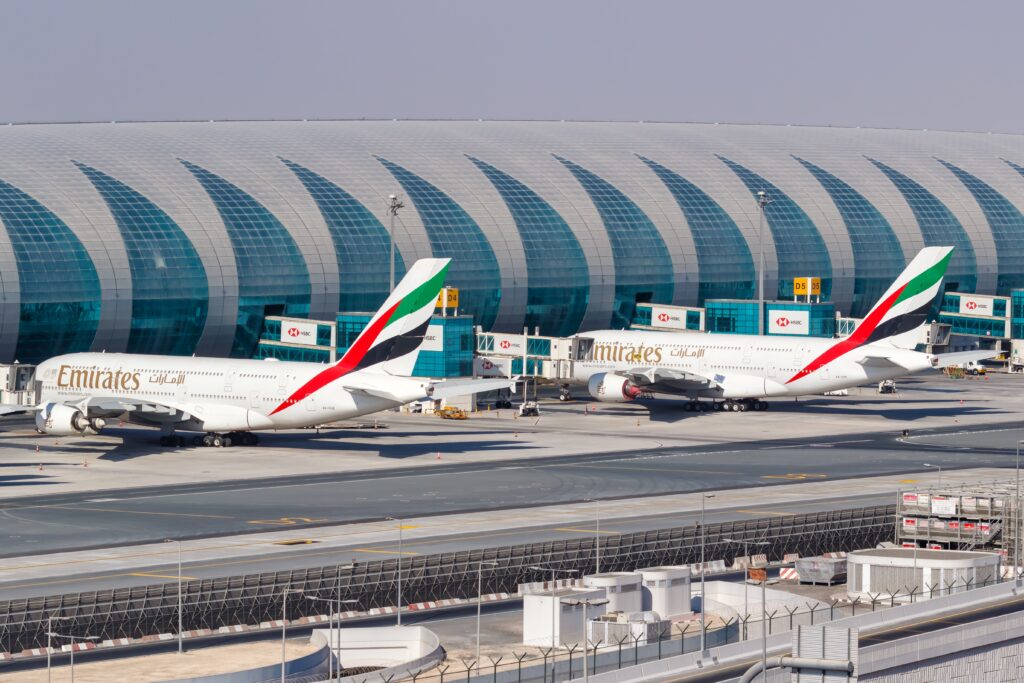
Just days later, a second drone exploded on the outskirts of the airfield, close to Terminal 3. Thankfully, no one was seriously injured, but an Emirates Airbus A380 and an A321 single-aisle plane belonging to Saudia Airlines were damaged in this attack.
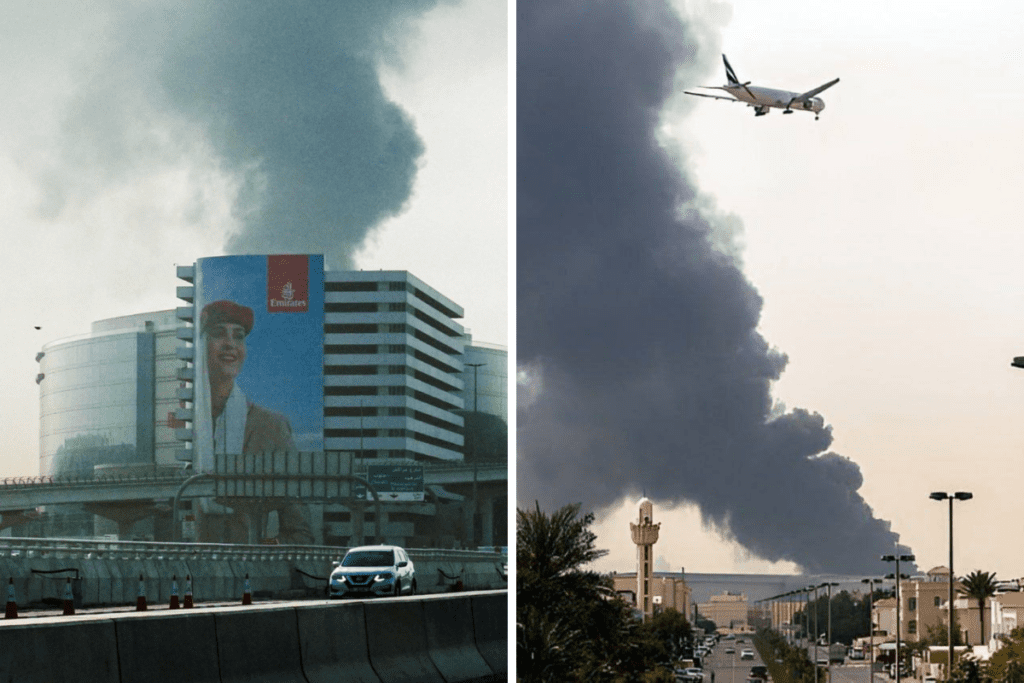
Around a week later, a third drone struck a massive fuel tank within the airport perimeter, creating a large fire that caused large plumes of thick black smoke to rise above the city.
As of 7:50 pm (local) on May 4, the airspace in Dubai remained shuttered, although the airport has not ordered passengers to shelter in place at this time.
Yesterday, Dubai Airports said it was entering “the next phase of recovery operations, ramping up daily flight movements and enabling airlines to progressively restore schedules.”
Those plans could now be in disarray.
Want to see more stories like this? Add PYOK as a preferred source on Google, and we'll show up more often in your searches and Google News.
Add PYOK as a Preferred Source