



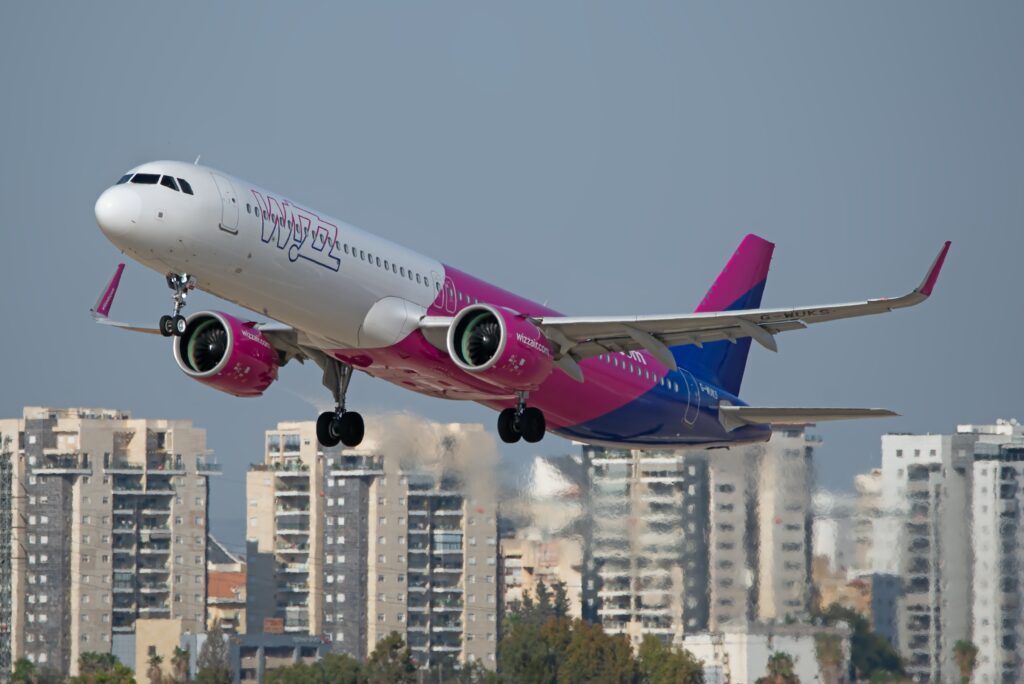
József Váradi, the chief executive of one of Europe’s largest low-cost carriers, Wizz Air, just said the quiet part out loud of what he thought of airlines in the Middle East continuing to fly while countries in the region still faced the active threat of Iranian missiles and kamikaze drone attacks.
“We think UAE airlines, Middle Eastern airlines, are operating based on political pressure, not based on safety,” Váradi was quoted as saying by the Financial Times in an incredibly unusual attack on airlines like Emirates, FlyDubai, and Etihad Airways.
“I don’t follow [the example] of airlines like Flydubai, or any of those, because I don’t think they observe safety and security.”
Váradi added: “I wouldn’t even fly them personally.”
On February 28, when the US and Israel launched a joint military offensive on Iran, airspace throughout the Middle East was immediately shut down over the threat of the Iranian regime launching retaliatory strikes on its neighbors.
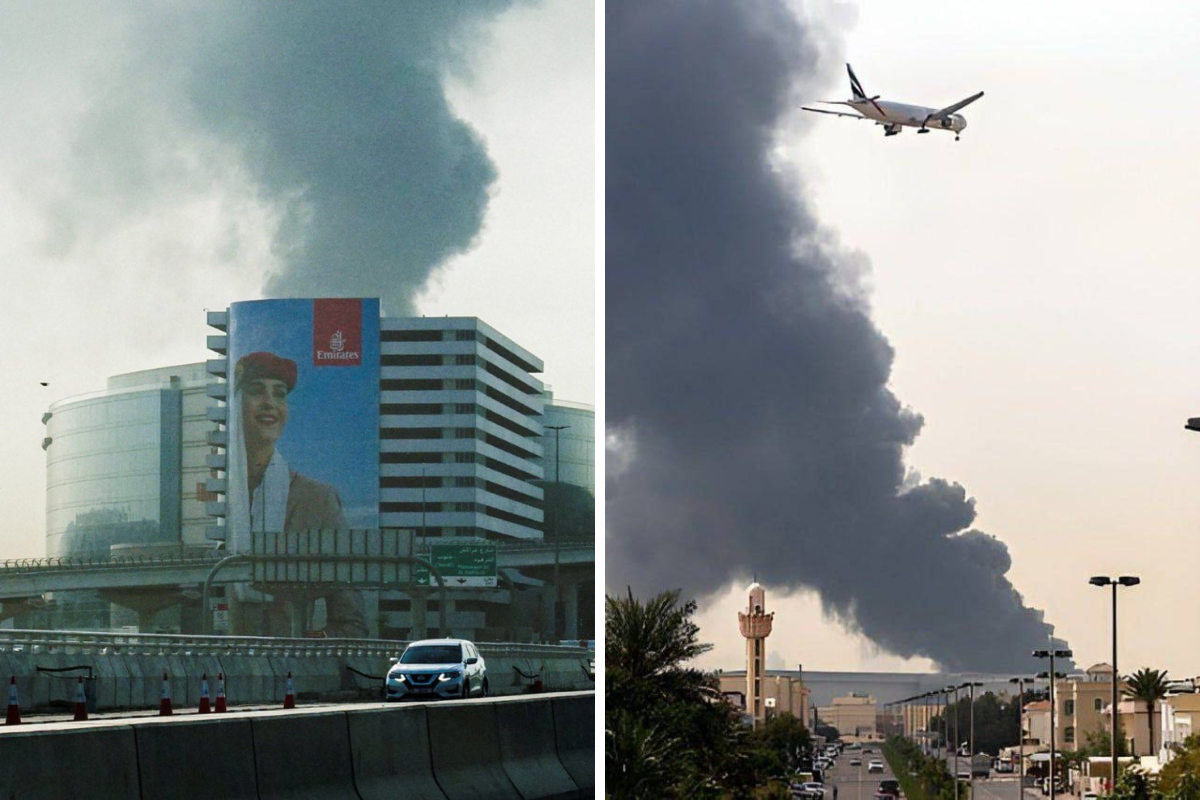
Those fears very quickly turned out to be accurate. Within hours, drone strikes were launched against Kuwait International Airport and Dubai International Airport.
Passenger terminals at both airports took direct hits from kamikaze drones, with one striking the roof of Terminal 3 at Dubai Airport, injuring at least four people and damaging the airport concourse.
Surprisingly, within days of the conflict starting, the UAE authorities announced they would restart flights through so-called ‘safe air corridors’. The following weekend, a second drone attack on Dubai International Airport caused a large explosion on the outskirts of the airfield, close to Terminal 3.
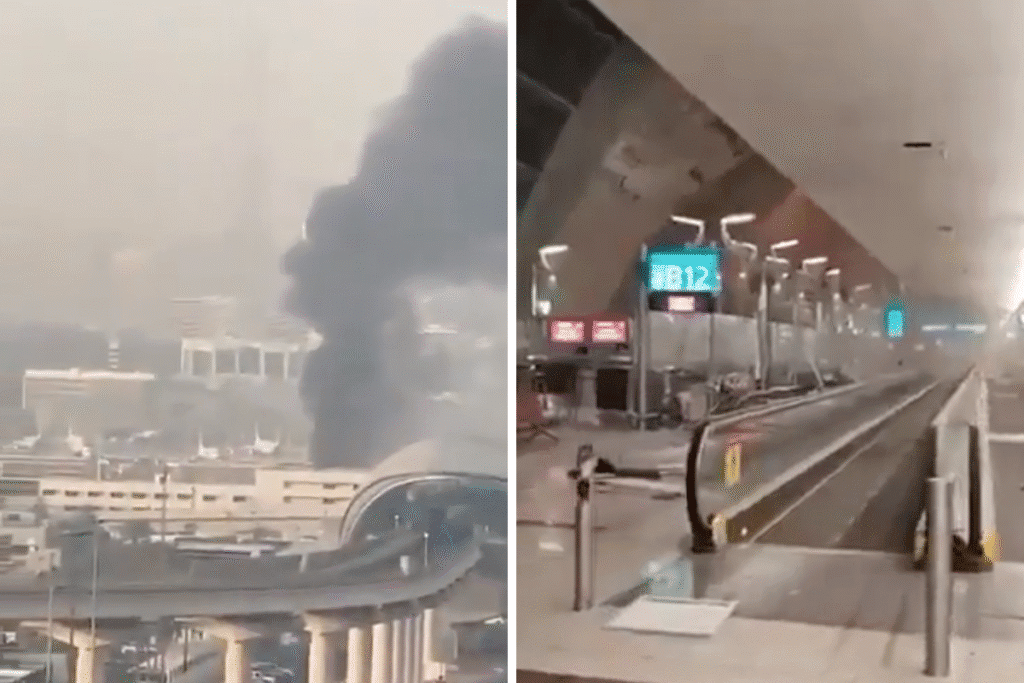
Flights were paused for just a few hours before resuming. It was later revealed that an Emirates Airbus A380 superjumbo and an Airbus A321 beloning to Saudia Airlines were damaged in the attack.
Two days later, in the early hours of March 16, a third drone struck one of DXB’s massive fuel tanks on the edge of the airfield, right next to the airport’s VIP terminal, known as the Royal Airwing. Operations were once again suspended but resumed by 10 am.
Even as these assaults continued, Emirates continued to rebuild its schedule, allowing passengers to transit through Dubai International Airport as if everything was normal.
During this time, Etihad Airways in neighboring Abu Dhabi and Qatar Airways were attempting to restore their schedules on a limited basis, while Bahrain and Kuwait kept their airspaces closed to all civilian air traffic.
Váradi suggested that airlines in the region were under pressure to start flying before they deemed it safe to do so because they are owned and controlled by their respective governments.
“If you act on the basis of political will, not on your own safety and security assessments, you may get along with that,” Váradi said of the short-term benefit.
Váradi’s Wizz Air had, until only recently, big plans for its expansion in the Persian Gulf. The airline had established Wizz Air Abu Dhabi as a joint venture with the Emirates sovereign wealth fund, but things began to sour in 2025.
Explaining the decision to shutter Wizz Air Abu Dhabi last September, Váradi said geopolitical volatility in the region, as well as regulatory hurdles and market access, had hastened the demise of the carrier.
Admittedly, that wasn’t the only reason Wizz Air decided to cut its losses in the Middle East. Ongoing issues with the Pratt & Whitney engines that power its fleet of Airbus A320 series aircraft have forced the airline to ground planes for extended periods, adding to the airline’s costs.
In the end, Váradi decided that Wizz Air had expanded too fast and neglected its core market in Europe.
In response to Váradi’s comments, FlyDubai told the Financial Times that safety was “at the heart of everything we do”, and that operations were conducted “in line with approved and recognised international and national regulations, and to the highest safety standards.”
According to data supplied by Flight Radar 24, Emirates has now restored around 75% of its pre-war schedule, while FlyDubai is still operating a little less than half of its pre-war schedule.