



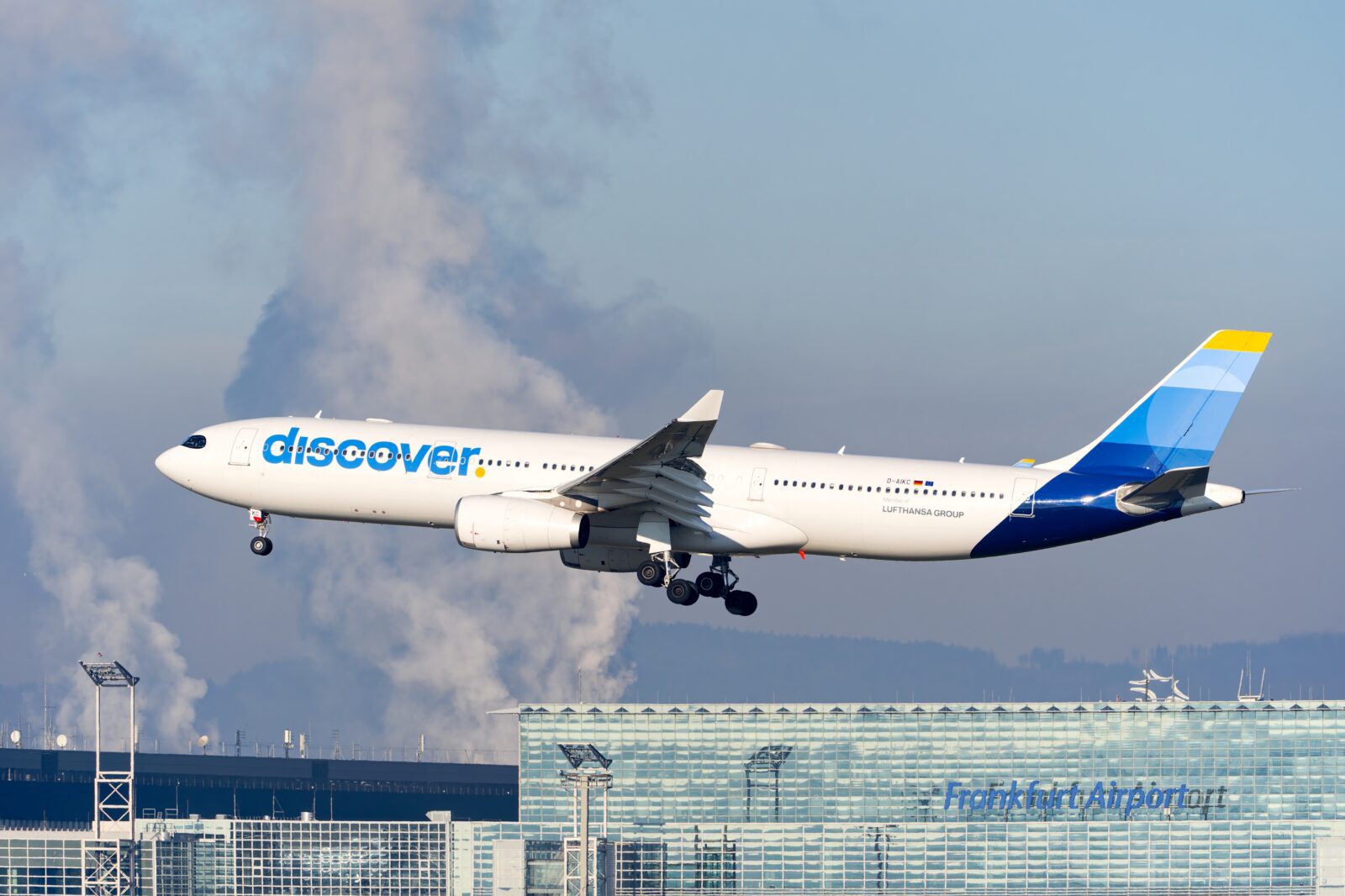
A flight attendant working for a wholly owned subsidiary of German flag carrier Lufthansa allegedly rushed an elderly lady down a set of wet and slippery airstairs, causing her to fall and seriously injure herself so badly that she had to be hospitalized in two foreign countries for weeks.
The traumatic incident has come to light after the injured woman, Patricia Gunsser from Pennsylvania, filed a lawsuit against Lufthansa under the provisions of Article 17 of the Montreal Convention, which can make airlines responsible for injuries sustained by passengers during the course of an international flight.
Patricia had booked a flight with Lufthansa from Philadelphia to Frankfurt on November 29, 2025, although the flight ended up being operated by Discover Airlines, a cheaper, leisure-oriented carrier created by Lufthansa in 2023 from the shell of another subsidiary to save money.
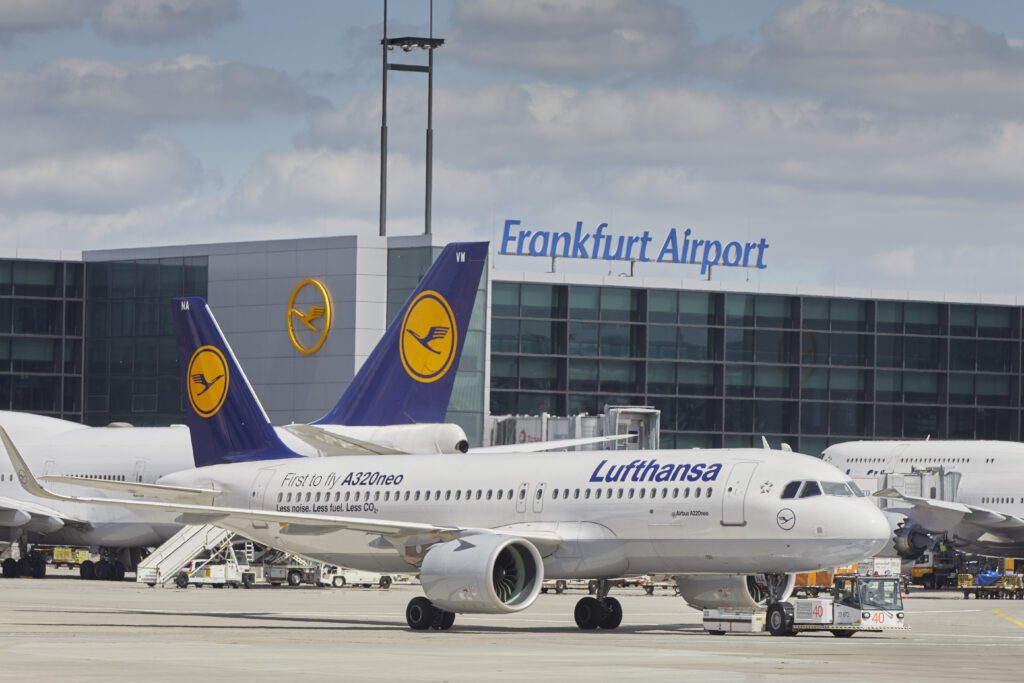
The seven-and-a-half-hour transatlantic flight went without incident, but on arrival in a cold and wet Frankfurt, the pilots of the Airbus A330 aircraft were directed to park at a so-called ‘remote stand’ where passengers would have to deplane via mobile airstairs and then board buses to be driven to the terminal.
While some mobile airstairs are equipped with perspex hoods to keep them dry and protect passengers from the elements, the airstairs that Discover Airlines used didn’t have a hood and were soaking wet from the rain.
When Patricia exited the aircraft, she stopped at the top of the airstairs and discussed with her daughter how she could safely descend the stairs. Her daughter took Patricia’s carry-on case, causing a brief pause in the flow of passengers down the stairs.
According to Patricia’s complaint filed against Lufthansa, the flight attendant saw this interaction, but rather than offering assistance, they “rushed Ms. Gunsser and her daughter off the aircraft because there were other passengers waiting to descend.”
Patricia attempted to safely descend the damp stairs, but just five steps down, she slipped and tumbled down the reamining two thirds of the stairs. She came to a rest in a broken bundle on the tarmac below, where Paramedics were called to push her to the hospital.
She ended up spending two weeks as an inpatient at the Varisano Hospital in Frankfurt, where she was treated for a broken collarbone, broken sternum,
a cardiac contusion and “multiple other wounds.”
Due to the level of pain Patricia was left in, the German physician treating her decided not to perform the required surgery on her collarbone under the condition that she got back to the United States as quickly as possible.
In order to do so, Patricia would need to fly with Lufthansa in a special stretcher seat specially designed for medical repatriations. However, her first attempt to fly back to the United States failed when Lufthansa made her wait on a stretcher in the Frankfurt Airport for hours before ultimately deciding she didn’t have the proper medical clearance to return home.
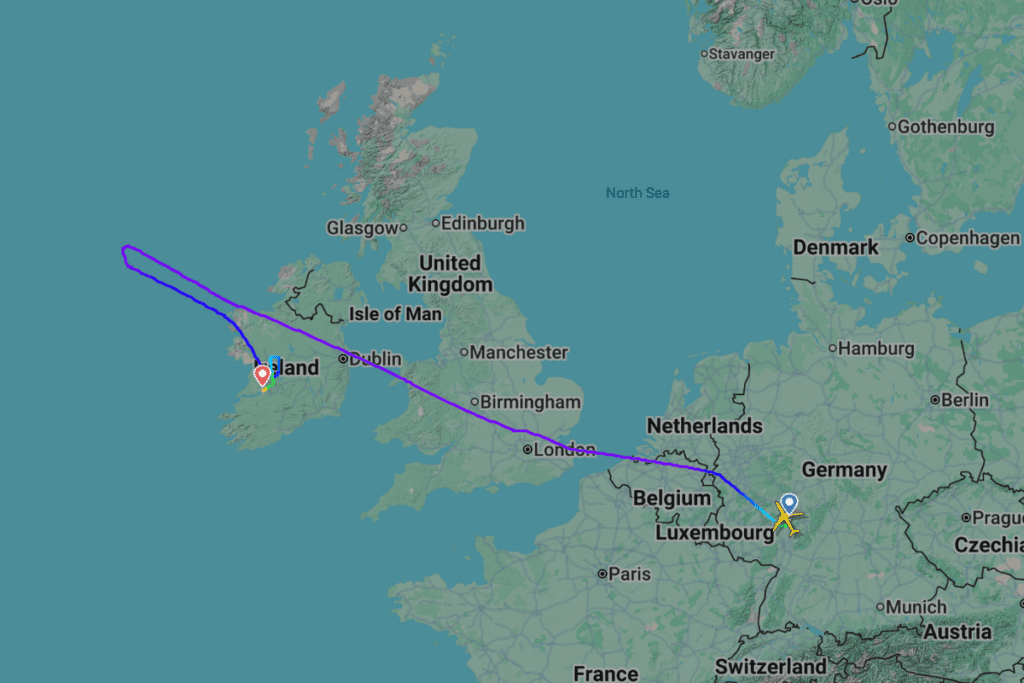
The following day, on December 14, 2025, however, Patricia was permitted on board. Just an hour or so into the flight, Patricia experienced what has been described as an “acute medical deterioration, which she puts down to the “physical and mental stress she endured as a result of the accident.”
Her condition was so bad that the plane made an emergency medical diversion to Shannon, Ireland, where she was taken to a local hospital and diagnosed with a serious infection that would see her hospitalized for a further four weeks.
Patricia is seeking damages under Article 17 of the Montreal Convention, an international treaty that governs international flighs, which states:
"The carrier is liable for damage sustained in case of death or bodily injury of a passenger upon condition only that the accident which caused the death or injury took place on board the aircraft or in the course of any of the operations of embarking or disembarking.."
In simple terms, airlines are unable to limit liability for claims under Article 17 up to 128,821 Special Drawing Rights – a monetary instrument developed by the IMF to represent a basket of currencies. At present, 128,821 SDR is equivalent to around $176,000.
Passengers can, however, claim more than this limit, although airlines can avoid a higher payout if they can prove that the injury wasn’t due to the “negligence or other wrongful act or omission of the carrier or its servants or agent,” or that the injury was “solely due to the negligence or other wrongful act or omission of a third party.”
Importantly, Patricia’s lawsuit claims her accident was “due to the negligence or other wrongful act or omission of Discover,” opening up the legal fight for a claim over 128,821 Special Drawing Rights.
Bizarrely, this isn’t the first time that Lufthansa has faced a lawsuit in a US court from a passenger who claimed a flight attendant rushed them down a set of mobile airstairs, causing them to fall.
In 2024, Carlo Trimboli from Ocala said he was left in ‘excruciating pain’ and developed a blood infection when he fell down airstairs at Frankfurt Airport and ripped open a previously sutured wound on the side of his foot.
Trimboli says he told one of the flight attendants that he couldn’t walk down the stairs and required wheelchair assistance, but the flight attendant allegedly told him that the stairs were “the only way you’re getting off the plane”.
The flight attendant then allegedly exhorted him to hurry up, as he was holding up other passengers without offering any assistance to help him down the stairs.
Trimboli says he stumbled on the stairs and tore open a previously sutured wound on his foot. The case was settled out of court.