



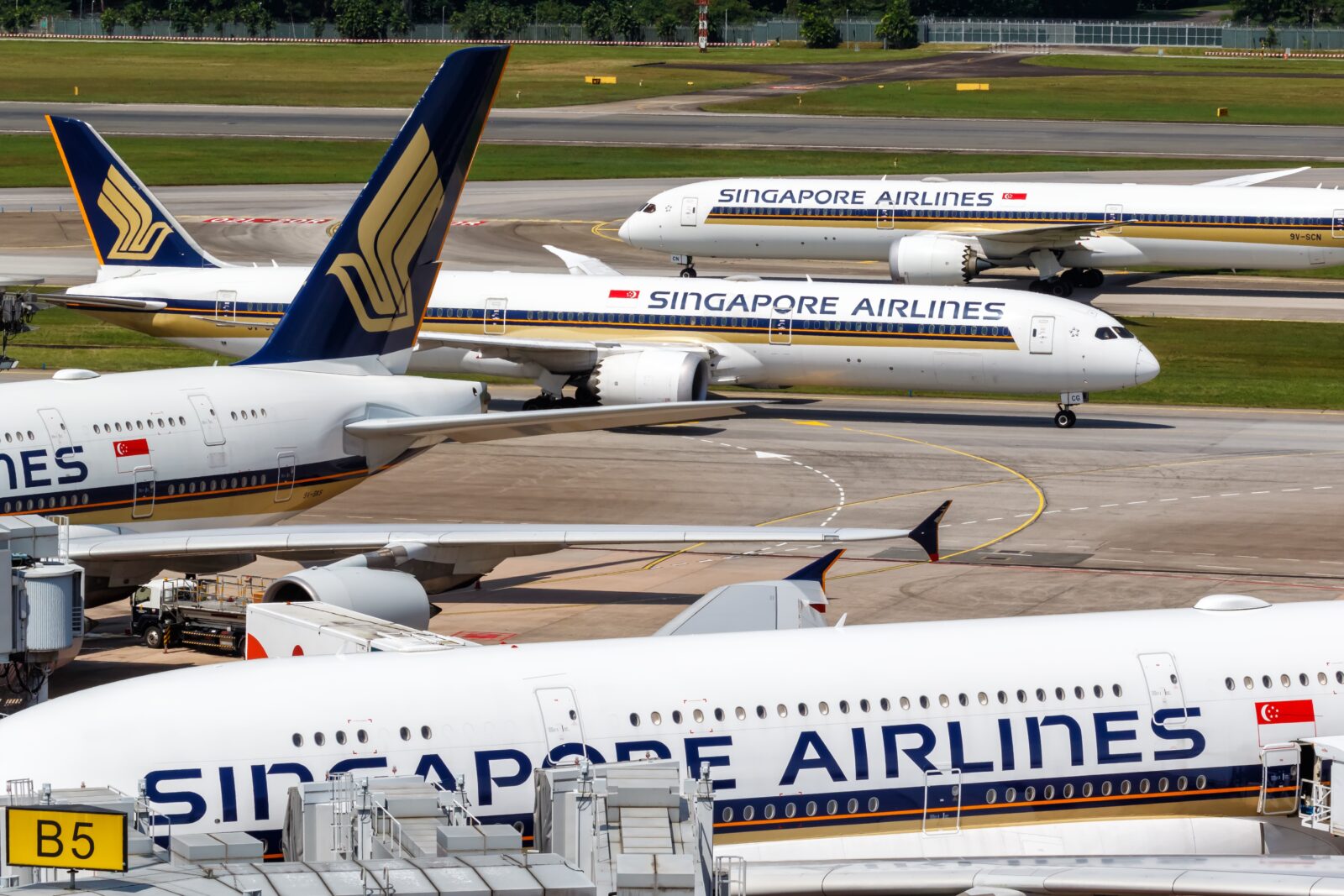
Singapore Airlines has become the latest major international carrier to sign a major deal with Elon Musk’s Starlink internet company for fast and free in-flight Wi-Fi at 38,000 feet. Unfortunately, Singapore Airlines’ plans for Starlink aren’t nearly quite as grand as many of its rivals.
Announcing the Starlink deal on Monday, the airline’s SVP for Customer Experience, Yeoh Phee Teik, admitted that “fast, seamless connectivity is, today, an essential part of the travel experience.”
Bizarrely, however, Singapore Airlines has deliberately chosen not to install Starlink across its entire aircraft fleet, and the rollout timeline leaves a lot to be desired, given the speed with which so many carriers are managing to deploy Starlink.
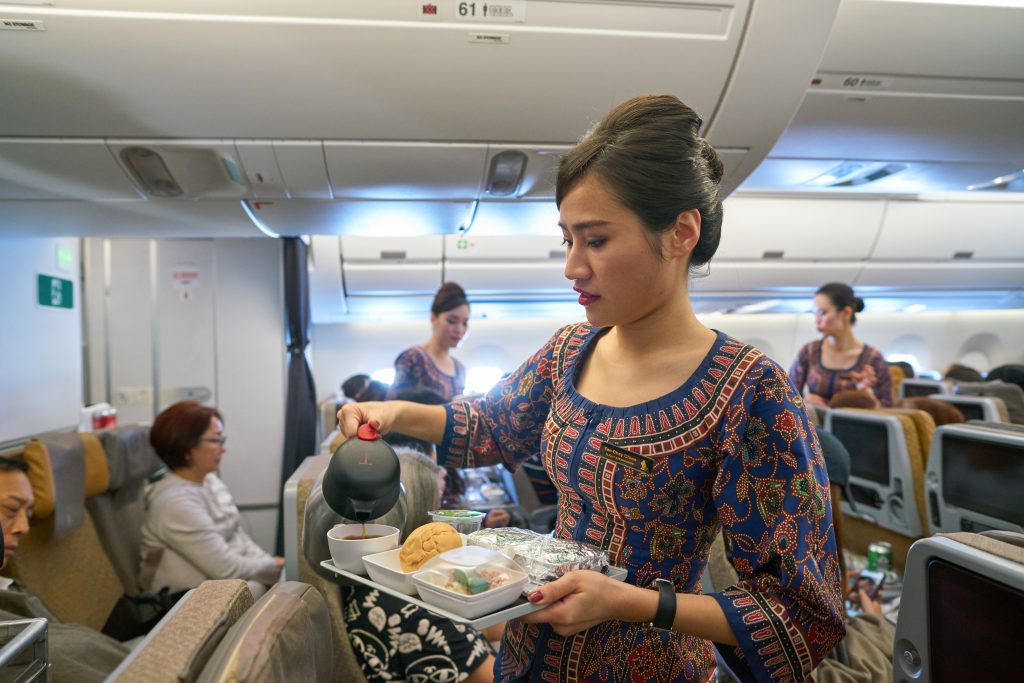
For now, at least, Singapore Airlines has only agreed to install Starlink on three of its aircraft types:
- The Airbus A350-900 Long Range : Which operates to destinations like Melbourne, Cape Town, Milan, Paris, Brussels, and Christchurch.
- The Airbus A350-900 Ultra Long Range : Operating to New York and San Francisco.
- The Airbus A380 : A variety of destinations, including Delhi, London, Melbourne, Sydney, Frankfurt, and Mumbai.
That means a good chunk of Singapore Airlines’ fleet wont have Starlink installed, including Boeing 737s, Boeing 777s, and Boeing 787-10 Dreamliners. In fact, nearly two-thirds of the entire Singapore Airlines fleet won’t have Starlink after the rollout is complete.
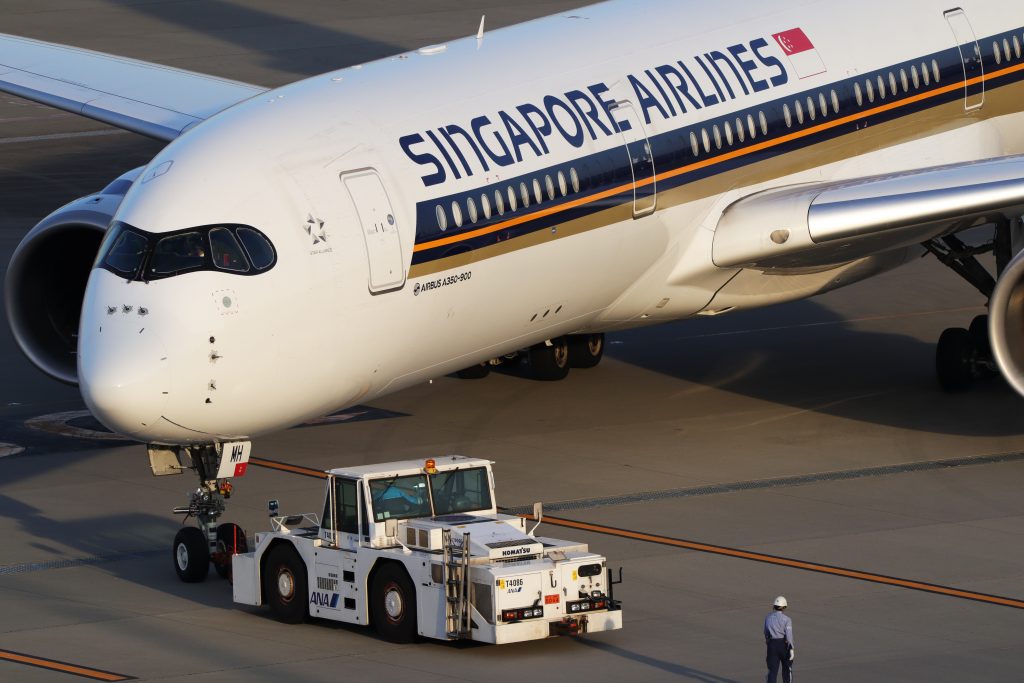
And that’s once the rollout is complete, because it’s going to take some time for this process.
Singapore Airlines doesn’t even plan to start the Starlink retrofit project until early next year, and then it will take nearly two years, until the end of 2029, to complete the rollout.
Compare that to many other international carriers that have signed deals with Starlink and immediately embarked on ambitious retrofit projects to roll out the antennas and other hardware as quickly as possible.
Singapore Airlines clearly thinks that it has time to complete this project without harming its bottom line due to lost revenue from passengers booking away to other carriers who are offering Starlink internet.
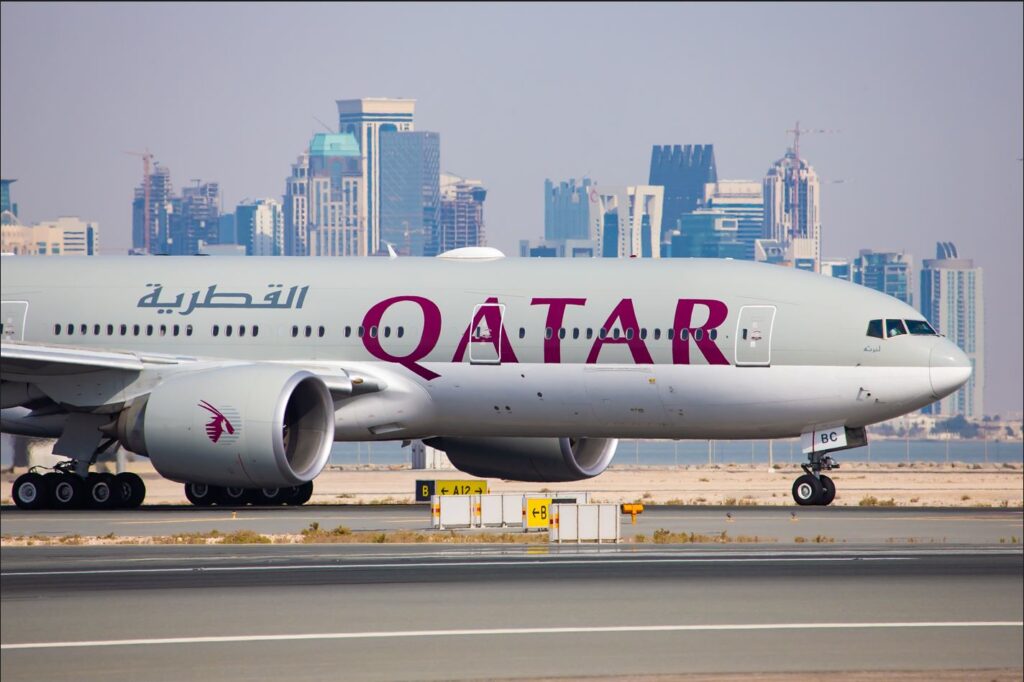
For now, Singapore Airlines doesn’t really have any competition in the region, and while it does have to compete with the likes of Qatar Airways and Emirates, the carrier is no doubt betting that the current security situation in the Middle East gives it some time.
This could also explain why Singapore Airlines is choosing to install Starlink only on its long-haul aircraft that primarily serve premium international destinations, directly competing with the likes of Emirates, as well as European and US carriers like Air France, British Airways, Lufthansa, and United Airlines.
Closer to home, there’s no real Starlink competition on regional flights, so, for lack of a better explanation, Singapore Airlines can get away without offering Starlink, even though the carrier admits that passengers want broadband-quality Wi-Fi on its flights.
And let’s be clear, there’s not another airline Wi-Fi service that can come even close to offering the kinds of high-speed, low-latency service that Starlink currently offers.