



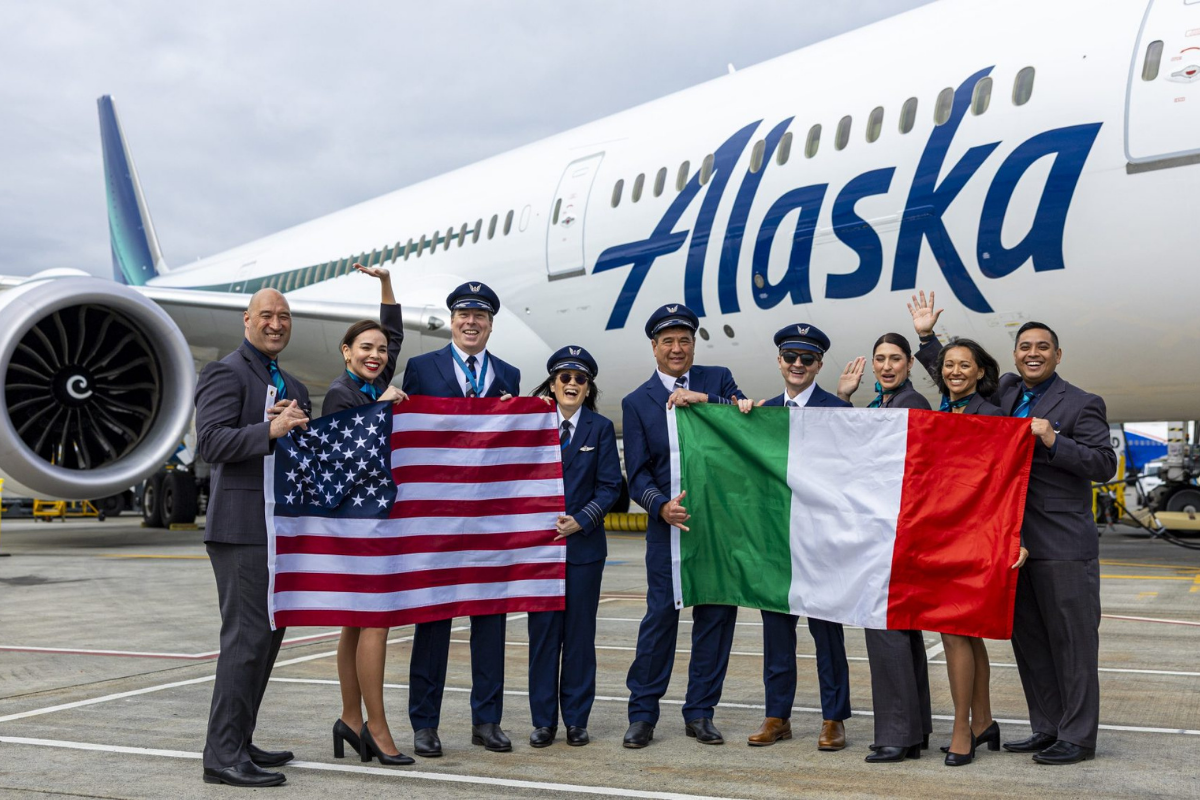
On Tuesday evening, Alaska Airlines operated its first-ever long-haul transatlantic flight to Europe, marking a major step forward in the Seattle-based carrier transforming itself into a global carrier, using widebody Boeing 787-9 Dreamliners for the first time.
Alaska Airlines flight AS-180 departed SeaTac International Airport just before 6 pm on April 28 for the 10-hour flight to Rome, Italy, arriving in the Eternal City just a few minutes behind schedule.
Before the flight even took off, celebrations were already getting underway. Chief executive Ben Minicucci was in attendance at the gate area, along with assembled media and dignitaries, to commemorate the airline’s bold move into the transatlantic market.
Everyone was in good spirits… or, at least, nearly everyone was in good spirits, as there was one group of ‘passengers’ who were left bitterly disappointed.
Alaska Airlines’ own employees had been so excited about the launch of the new summer seasonal route between Seattle and Rome that more than 1,100 workers attempted to use their ‘non-rev’ privileges to buy massively discounted tickets to be on the first flight.
The one big caveat with these non-rev perks, though, is that they are just standby tickets. If an airline ends up filling up the plane with commercial passengers and everyone turns up on time, then non-rev travelers are simply left behind.
Non-rev travel is never for the faint-hearted. It can be an incredibly stressful and time-consuming business, but even when it looks like you have no hope of getting on board, it’s surprising how often a seat can open up at the very last minute.
In the case of Alaska’s inaugural flight to Rome, however, a record-breaking number of non-rev standby passengers is pushing this kind of luck to the very limit.
The question is, how many of these non-rev travelers, if any, actually ended up getting on Alaska’s first flight to Rome? That’s the question that ‘A Fly Guy’s Cabin Crew Lounge’ asked, and it didn’t take long for someone from the airline community to chime in with the answer.
In the end, the vast majority of the listed employees gave up before they even got to the airport, with just 72 non-revs checking in and putting their name forward in the hope of securing a spare seat onboard.
Of those 72 non-revs who checked in, only four ended up securing a coveted seat, and three of those people were in the same group.
Seats were assigned based on seniority, with active Alaska Airlines employees giving priority, ahead of other airline employees and so-called ‘buddy pass’ holders, who don’t work for an airline but are using their friend or family member’s travel privileges.
If you work for the airline whose flight you are trying to get on, it’s normally pretty easy to see where you are positioned in the priority list, so it makes sense that the vast majority of those who initially listed on this flight gave up before it even came to check-in.
Still, 72 non-revs hanging around the gate area on what would appear to have been a very busy flight is a significant number.
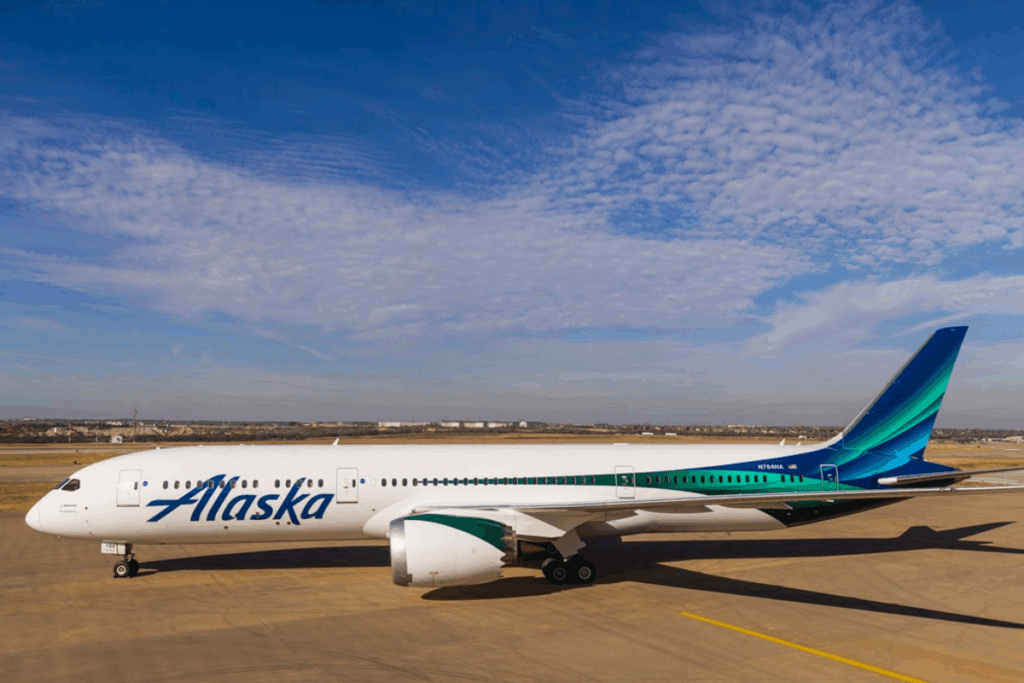
Alaska Airlines is currently using Boeing 787-9s that were once operated by Hawaiian Airlines before the two carriers merged. Alaska has taken over the 787 Dreamliner flight, while Hawaiian’s long-haul fleet is made up of Airbus A330s.
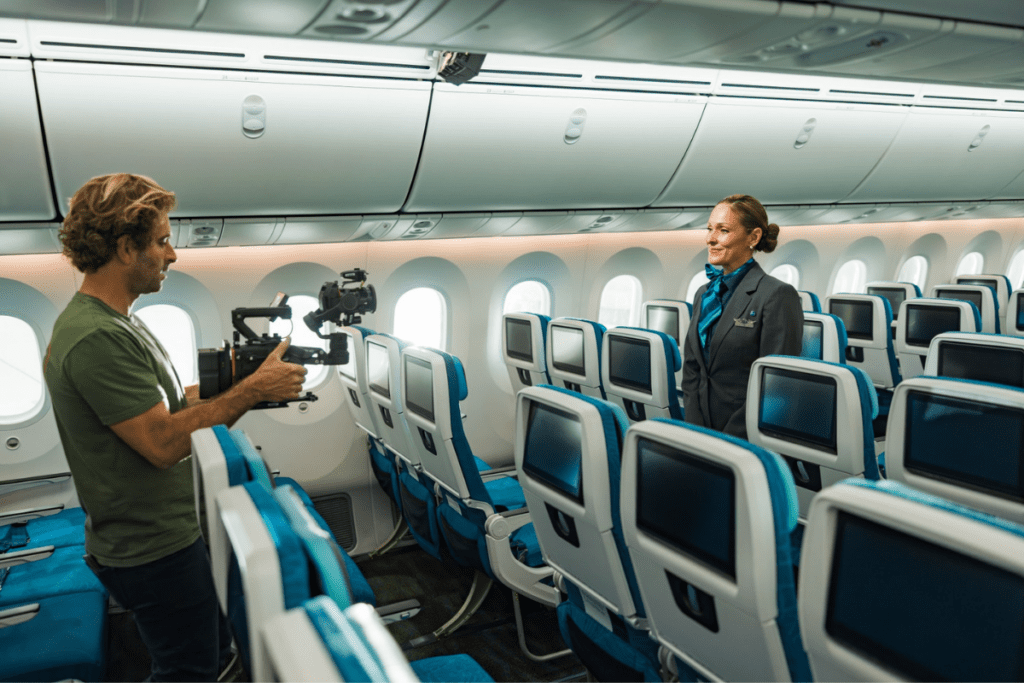
Although Alaska has repainted the exterior of the Dreamliners with its new Northern Lights-inspired ‘Global Livery,’ the interior remains pretty much the same as when the planes were operated by Hawaiian.
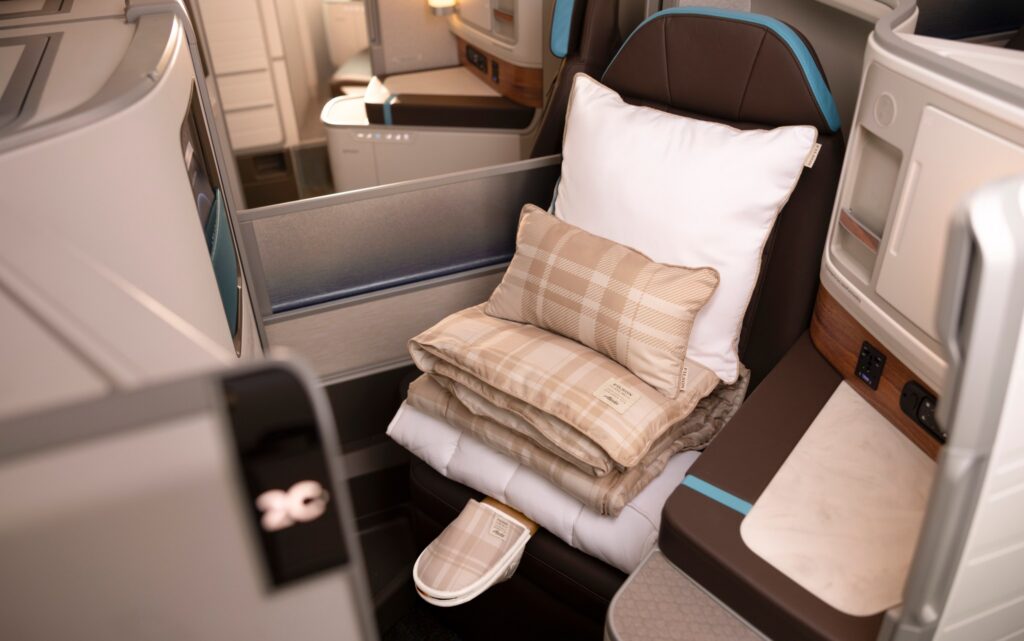
Alaska Airlines has, though, introduced new long-haul amenities, along with the carrier’s very first safety video.