



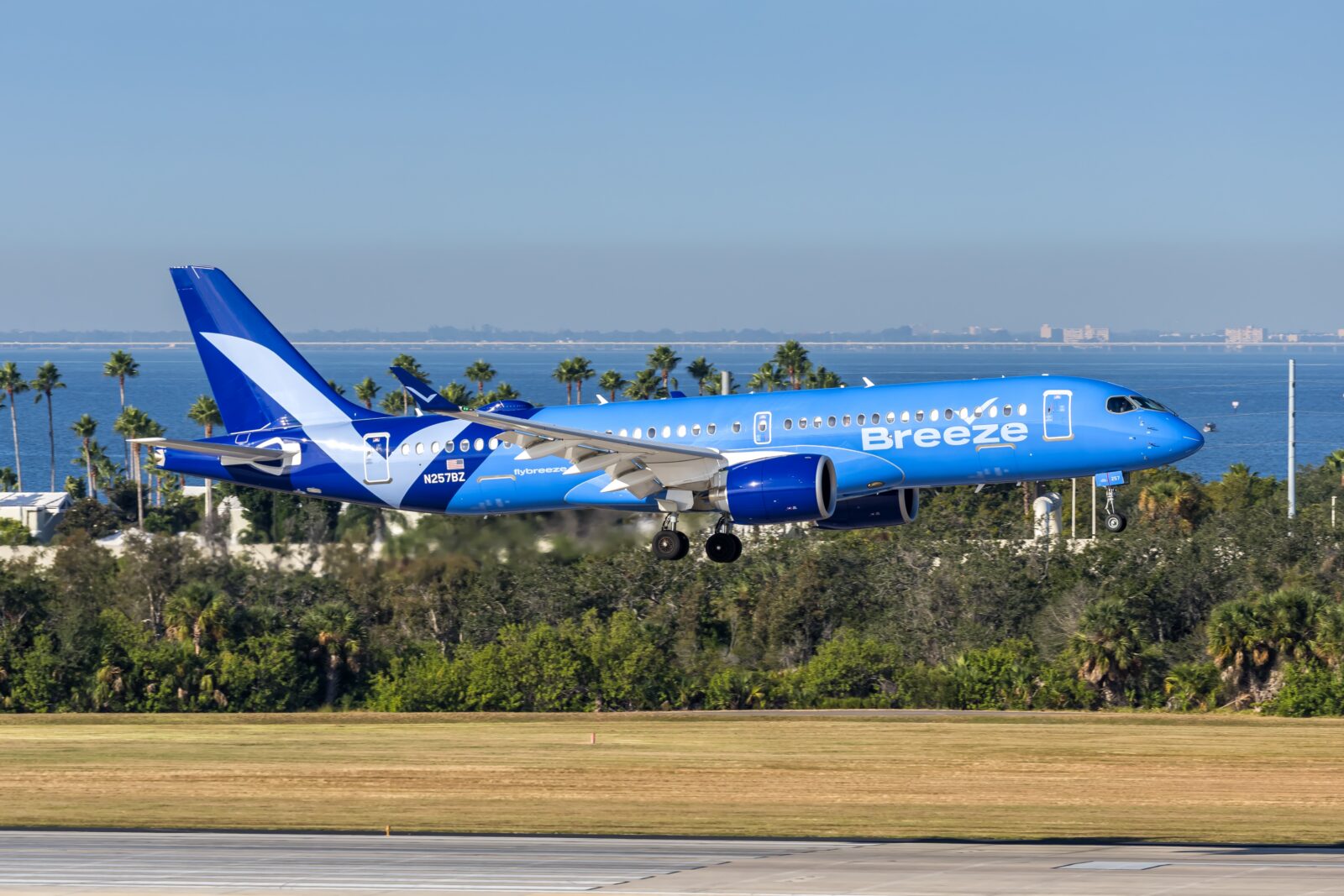
David Neeleman is one of the world’s most prolific airline entrepreneurs. He is the driving force behind five different airlines, including New York-based JetBlue and Brazil’s Azul Airlines, which has grown to become the country’s third-largest carrier since its inception in 2008. His latest airline startup is Breeze Airways, although that isn’t the name he had originally intended for his latest venture.
When Neeleman first announced plans for a new airline targeting secondary airports across the United States, he envisaged a tech-first carrier built around web check-in, app-based support, and no telephone agents that would directly appeal to the millennial market.
His working name for the airline was Moxy, a name he’d been sitting on for years. In fact, according to Neeleman, he had even considered the name for JetBlue before settling for the name that we know so well today. By the time he came back to it for his new venture, the Marriott hotel group had beaten him to it, launching its own millennial-focused Moxy hotel brand, which first opened in Milan in 2014.
At a glance
Why is Breeze Airways’ callsign “Moxy”?
Breeze Airways was originally going to be called Moxy Air, a name founder David Neeleman had wanted to use for years. Marriott’s Moxy hotel brand already existed under the same name, so Neeleman renamed the airline Breeze to avoid a trademark dispute, but kept “Moxy” as the airline’s official radio callsign, IATA code (MX), and ICAO code (MXY).
A few other unusual airline callsigns:
- British Airways — Speedbird
- US Airways — Cactus
- Aer Lingus — Shamrock
- TUI Airways — Tomjet
While the Moxy hotel brand had nothing to do with Neeleman’s Moxy Air, the name was so distinctive as to cause a potentially major trademark dispute.
When Marriott’s own lawyers made clear they weren’t keen on an airline launching under the same name as one of their hotel brands, Neeleman went back to the drawing board. Rather than risk a drawn-out legal battle over a name, he simply picked a new one, and Breeze Airways was born.
But here’s the thing. The Moxy name didn’t disappear completely from Neeleman’s latest airline. When Breeze Airways launched, it kept it in its IATA and ICAO codes, MX and MXY, and even more directly as its actual radio callsign.
Every time the pilots of a Breeze Airways flight check in with air traffic control, they don’t call themselves ‘Breeze’ but rather ‘Moxy.’ It’s a not-so-subtle nod to Neeleman’s preferred name for the airline, without any risk of trademark infringement.
What a callsign actually is
A callsign is simply what an airline identifies itself as over the radio, and it doesn’t have to match the airline’s public name at all.
Most airlines keep it simple and just use their own name. For example, American Airlines is simply ‘American,’ Delta Air Lines is just ‘Delta,’ and, you guessed it, United Airlines is referred to as ‘United.’
There are, however, plenty of airlines that have opted for far more inventive callsign names – sometimes this is due to historical influences, while sometimes it is just to be quirky. Moxy is an unusual case, since it comes from a name the airline was legally blocked from using in the first place.
Ten more fun airline callsigns, and where they actually came from
- British Airways: Speedbird – The most famous callsign in aviation, taken from the stylised bird logo used by Imperial Airways back in 1932, later inherited by BOAC and then British Airways itself.
- US Airways: Cactus – Inherited through a merger with America West Airlines, whose desert-based Arizona roots gave it the name in the first place.
- Aer Lingus: Shamrock – About as fitting as callsigns get, drawn straight from Ireland’s national symbol and the shamrock painted on every tail.
- South African Airways: Springbok – Named after the antelope that’s also South Africa’s national animal, a callsign that’s outlived the emblem itself being removed from the livery.
- China Airlines: Dynasty – Taiwan’s flag carrier, with a callsign that nods to the great ruling dynasties of Chinese history.
- Pan Am: Clipper – Long gone as an airline, but Clipper remains one of the most fondly remembered callsigns in aviation history, named after the fast sailing ships of the 19th century.
- Middle East Airlines: Cedar Jet – Lebanon’s flag carrier, matching the cedar tree painted on its tail and found on the country’s own flag.
- Atlas Air: Giant – A literal callsign for once. Atlas Air is named after the Titan condemned to hold up the sky, and Giant fits a cargo airline that flies some of the largest freighters in the world.
- Virgin America: Redwood -Another airline that no longer exists, but the callsign lived on as a nod to California, where the airline was based.
- TUI Airways: Tomjet – the UK-based airline that carries the TUI Airways brand uses Tomjet, which is named after its predecessor charter holiday company, Thomas Cook.
Next time you’re listening in on ATC and hear something that sounds nothing like the airline printed on the fuselage, there’s a good chance there’s a story behind it, even if it’s rarely as strange as an airline being told it couldn’t use its own name.
Want to see more stories like this? Add PYOK as a preferred source on Google, and we'll show up more often in your searches and Google News.
Add PYOK as a Preferred Source