



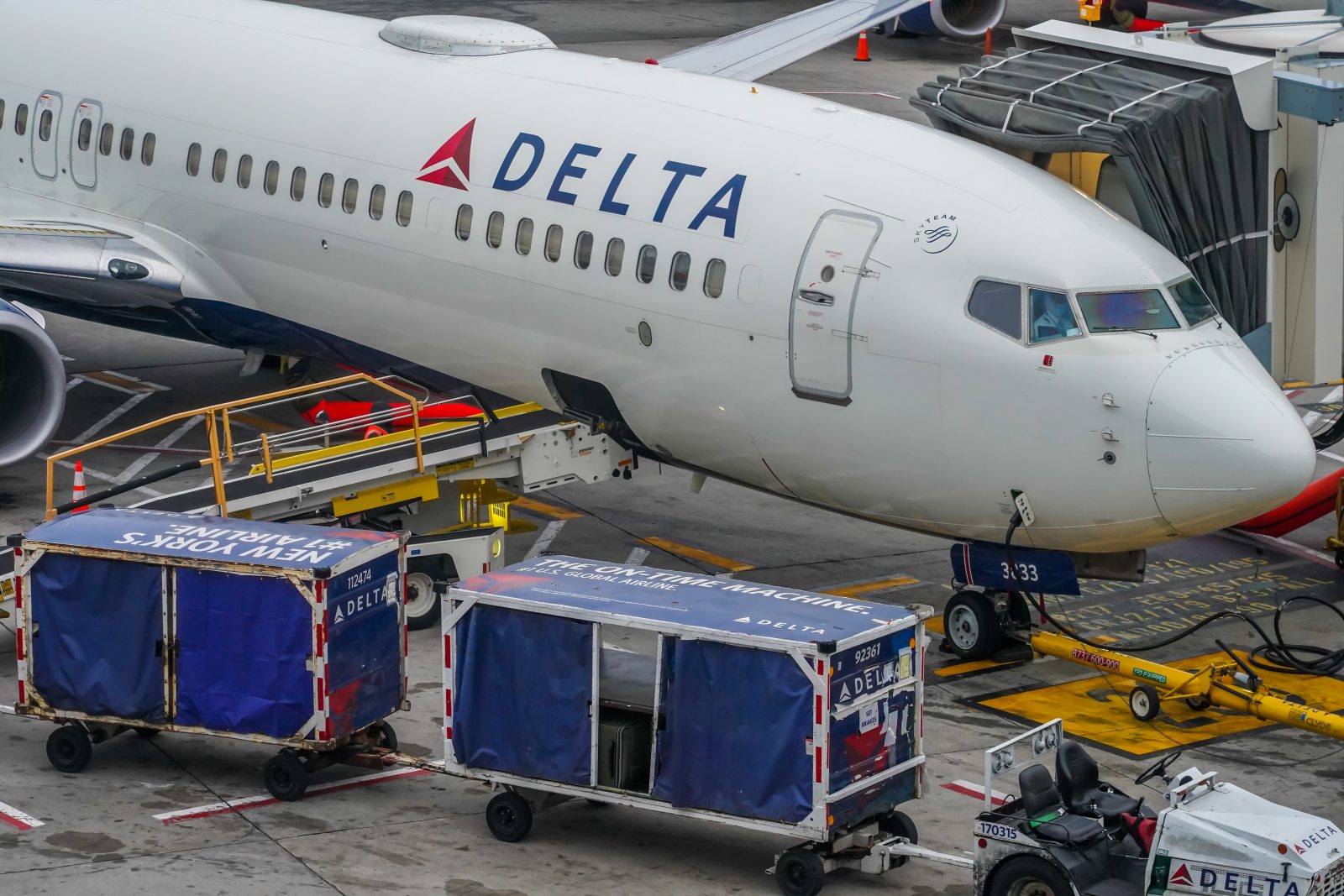
The aviation industry is facing its first-ever passenger-led lawsuit over so-called ‘toxic fumes’ after a law professor at Temple University accused the embattled aerospace giant Boeing of leaving him with chronic brain and respiratory injuries following an incident aboard a Delta Air Lines Boeing 737.
Jonathan Harris is suing Boeing for $40 million in a landmark case, which was filed in a Virginia Circuit Court for the district of Arlington last week.
The case comes as the flying public becomes increasingly aware of ‘fume events’ aboard planes, which can occur when dangerous contaminants like engine oil vaporize and get sucked into the plane’s air conditioning system through the engines.
- What The Lawsuit Alleges
- Harris Says He Is Still Suffering More Than a Year Later
- What is a ‘Toxic Fume’ Incident?
- Experts Disagree Over The Dangers Posed By Fume Events
- A United Airlines Flight Attendant is Suing Airbus Over Toxic Fumes
- What is the Only Commercial Passenger Plane Not To Use Bleed Air?
- Bottom Line

What The Lawsuit Alleges
Jonathan Harris was a lecturer at Loyola Law School in Los Angeles at the time of the incident last August, and he was traveling back to California after a conference in Atlanta.
He flew aboard a Delta Air Lines Boeing 737 on an otherwise uneventful flight to Los Angeles International Airport until the moment that the plane landed and was sitting on the tarmac waiting for a gate to become available.
During this time, Harris says the cabin started to fill with what he describes as a dirty sock odor – a telltale sign, experts say, of a fume event. The dirty sock odor is commonly linked to engine oil.
Harris became so unwell from the smell that he struggled to breathe before being physically sick into a bag. Along with other passengers, Harris implored the flight attendants to let them off the plane, but no one seemed to take heed, he told the Washington Post.
In the end, the passengers had to wait for 45 minutes before a gate became available.
By the time that Harris got off the plane, he says his head was throbbing, and he was struggling even to string sentences together. The next morning, he still wasn’t feeling well, so he took himself to sought out medical care and blood work which revealed low levels of oxygen, alongside high levels of bicarbonate, and carbon monoxide levels.
Harris Says He Is Still Suffering More Than a Year Later
In the months following the incident, Harris says his health began to deteriorate. He was unable to stand up for long periods, felt unsteady on his feet, and had to be prescribed an inhaler due to tightness in his chest.
Harris says he still gets bad headaches and believes his symptoms are directly related to the fumes he inhaled aboard the Delta Boeing 737 last August.
What is a ‘Toxic Fume’ Incident?
Most commercial passenger planes supply air into the cabin through the so-called ‘bleed air’ system.
As the engines are sucking air in, a small amount is ‘bled’ off into an inlet and sent into the air conditioning system before being circulated around the passenger cabin.
The problem with this system is that should there be a leak of engine or hydraulic fluid in the engine, it can vaporize from the extreme heat and get sucked into the air inlet.
Experts Disagree Over The Dangers Posed By Fume Events
The jury remains out, however, over the ill effects that this kind of air contamination can cause, and medical tests to prove a link between a victim’s symptoms and what they breathed in on a flight are far from reliable.
The aviation industry insists that, while unpleasant, breathing in contaminated cabin air will not cause any long-term adverse health effects.
That may well be true for the vast majority of victims, but campaigners argue that a small number of people involved in contaminated air events can and do suffer chronic symptoms that turn their worlds upside down.
A United Airlines Flight Attendant is Suing Airbus Over Toxic Fumes
Fume events are not just isolated to Boeing, and earlier this year, a United Airlines flight attendant sued rival planemaker Airbus for $30 million over what she described as the manufacturer’s “dirty little secret” of toxic fume events.
Darlene Fricchione was an otherwise healthy flight attendant who now suffers from a multitude of serious health complaints after she breathed in contaminated air in April 2023.
Just like in Harris’ case, Darlene claims the cabin started to fill with fumes just after the plane had landed. Darlene says she was left gagging and choking from the fumes which also caused a burning sensation in her eyes.
The Airbus lawsuit asserts that a known design flaw with the auxiliary power unit (APU) at the back of the aircraft of Airbus A320 family aircraft was the cause of the contaminated air.
What is the Only Commercial Passenger Plane Not To Use Bleed Air?
The vast majority of commercial passenger planes use the bleed air system to provide air into the cabin. The only aircraft which doesn’t use this system is some way or another is the Boeing 787 Dreamliner.
Bottom Line
Jonathan Harris is suing Boeing for $40 million over a ‘toxic fume’ incident aboard a Delta Air Lines Boeing 737 last August, which he claims has left him with long-lasting health issues. Boeing has yet to respond to the claims.
This is believed to be the first time that a passenger has led a lawsuit against an aircraft manufactuter for a toxic fume event.
In the past, fume events have been more likely to effect pilots and flight attendants. The reason for this isn’t fully understand but its suspected that as crew members have been active throughout the flight, they will be breathing heavier when contaminated air starts to be pumped into the cabin.