



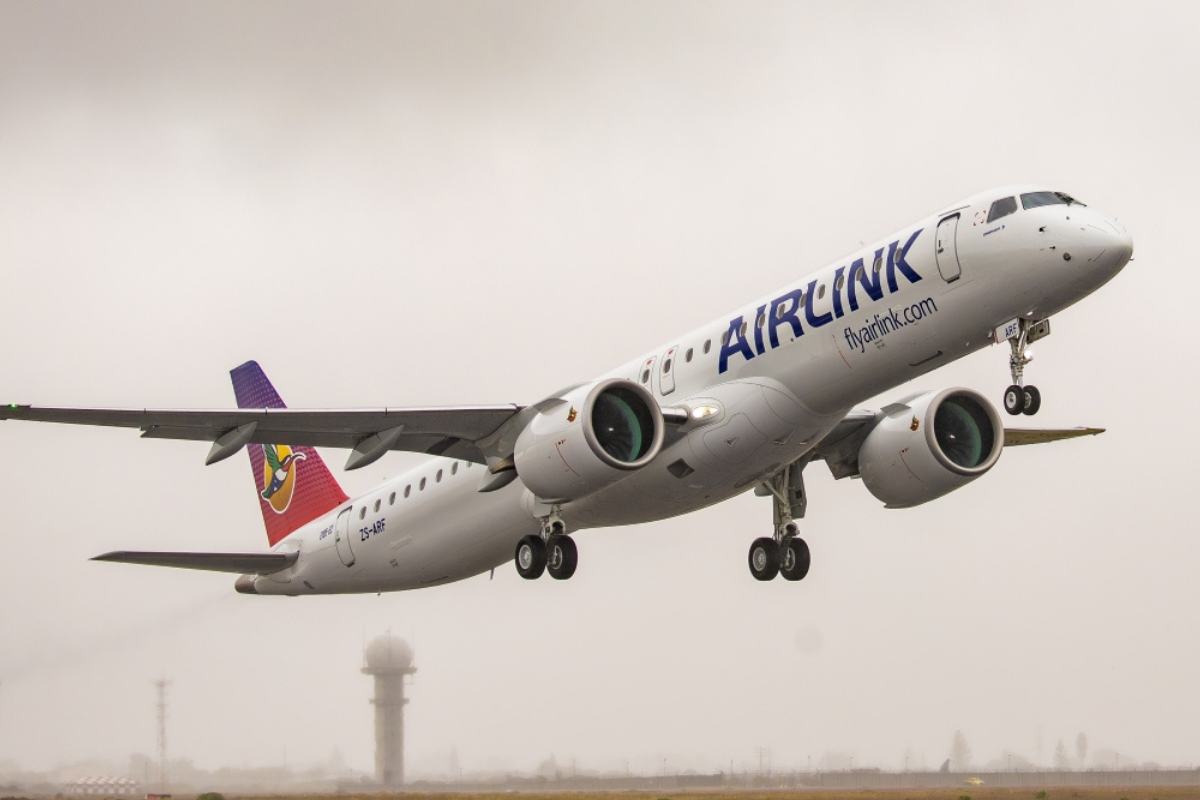
The World Health Organization (WHO) is urgently trying to trace up to 98 passengers who were on a flight for more than four hours with a woman who died after being infected with Hantavirus just one day after the plane flew from the remote South Atlantic island of St Helena to Johannesburg, South Africa.
The woman had been a passenger on the Dutch-flagged MV Hondius cruise ship, which had set sail from Ushuaia, Argentina, on April 1, and has since been linked to a worrying Hantavirus outbreak which could include human-to-human transmission.
The woman’s husband was the first person to be taken ill on April 6, initially reporting symptoms including fever, headache, and mild diarrhoea. Within days, however, the man developed “respiratory distress” and died on April 11.
It would take the cruise ship 18 days to reach land when it berthed in the remote British overseas territory of St Helena, where the man’s body was taken ashore. The deceased man’s wife accompanied his body, at which point she was experiencing gastrointestinal symptoms.
The next day, the woman flew on the only commercial flight from St Helena, a four-hour service operated by South African airline Airlink to Johannesburg aboard an Embraer 190 regional jet, which only operates around once per week.
During the flight, the WHO says the woman’s condition deteriorated, and the following day she was rushed to the hospital where she was later pronounced dead. It would, however, take nine days for Hantavirus infection to be confirmed via PCR testing.
While much of the focus of this Hantavirus outbreak is focused on the passengers still aboard the Hondius cruise ship, and it’s quest to find somewhere safe to berth, the WHO says it is urgently carrying out contact tracing of all the passengers onboard the Airlink flight to Johannesburg.
According to the WHO, human hantavirus infection is “primarily acquired through contact with the urine, faeces, or saliva of infected rodents.” The husband and wife who were the first to die in this outbreak had been on vacation in a remote part of Argentina, where the Andes strain of Hantavirus is present.
“Although uncommon, limited human-to-human transmission has been reported in previous outbreaks of Andes virus,” the WHO warned in a global update.
It is, therefore, possible that transmission of Hantavirus amongst the cruise ship passengers occurred through human-to-human contact, and could also extend to passengers onboard the Airlink flight to Johannesburg.
Tragically, a third death has already been reported after a female passenger on the cruise died on May 2 following a short illness characterized by fever that quickly developed into pneumonia.
A male passenger remains in Intensive Care in a South African hospital, and three suspected cases remain on the ship.
The ships had requested permission to dock in Cabo Verde, but local officials refused that request. Instead, the Spanish government has invited the ship to sail to the Canary Islands, where medical staff are being stood up to meet the ship and take care of the passengers.
One of the biggest issues with Hantavirus is that the incubation period can extend to as much as eight weeks. In its most recent update, however, the WHO noted that it “currently assesses the risk to the global population from this event as low.”
The WHO added that it “will continue to monitor the epidemiological situation and update the risk assessment as more information becomes available.”