


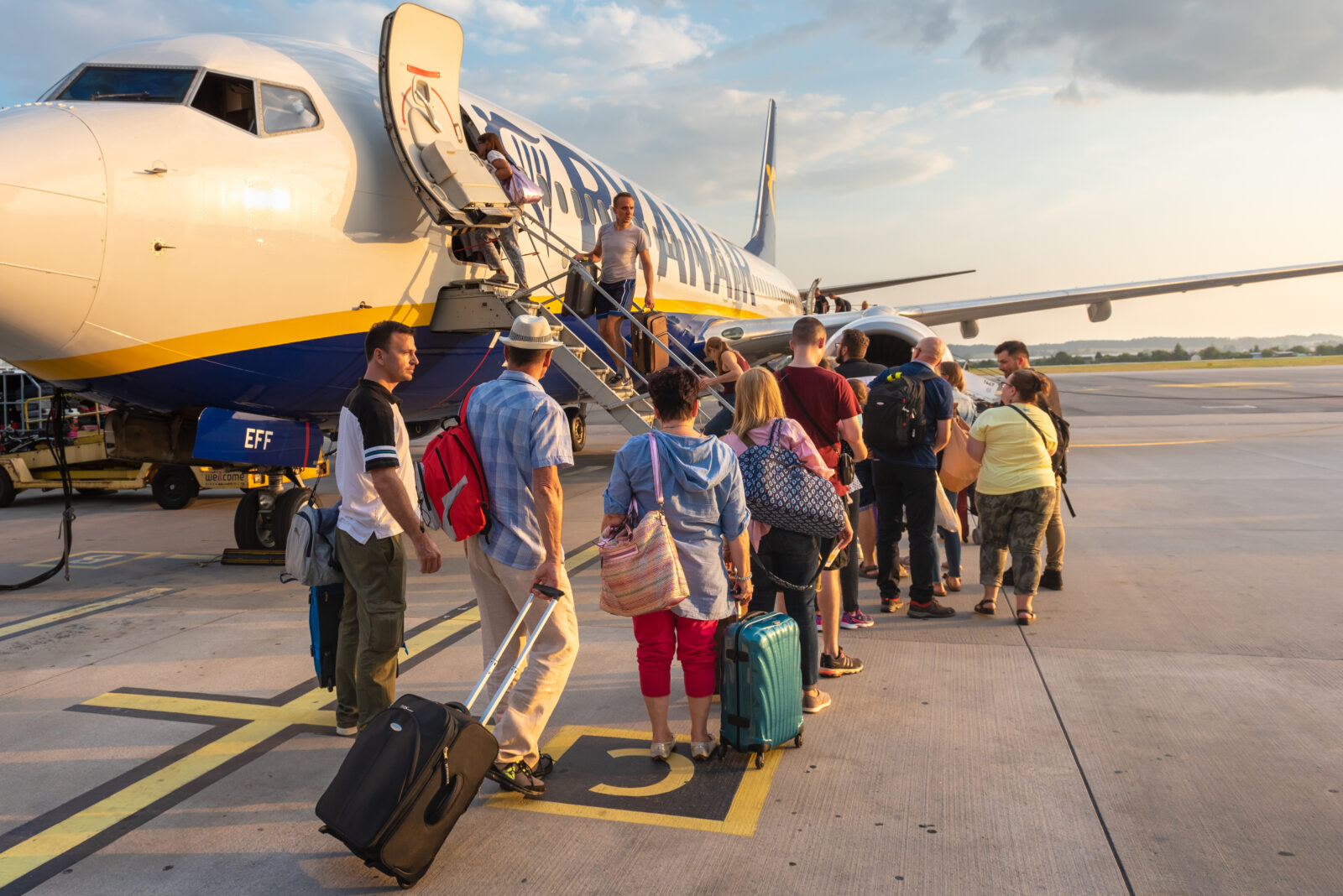
British competition authorities have opened an investigation into Ryanair over claims it is breaching consumer rights laws by forcing parents to pay a seat reservation fee to sit next to their children, saying that the requirement could be considered an “unfair contract term.”
Ryanair requires at least one parent or guardian of children aged between 2 and 11 years old to sit next to their child. In order to do so, however, Europe’s largest budget carrier forces parents to pay between £4 and £12 per seat reservation, each way.
On average, the Competition and Markets Authority (CMA) says parents are paying an additional £8 per flight in order to meet Ryanair’s mandatory seat reservation requirement.
“Lots of families save up to afford a summer holiday and we know that extra charges can quickly bump up the price,” commented Hayley Fletcher, Senior Director of Consumer Protection at the CMA after details of the investigation were announced on Thursday.
“Our investigation will consider Ryanair’s approach to family seat reservations and how the cost is presented to consumers to determine whether they comply with consumer law,” Fletcher added.
While parents must pay for a seat reservation, all other passengers can choose whether or not to pay an additional fee to reserve a seat. This disparity could equate to an “unfair” contract term under consumer law, the CMA said.
Explaining how this law works in practice, the CMA said: “The law applies a fairness test that asks whether the wording tilts the balance of rights and responsibilities in the contract too much in favour of the business. Unfair terms are not legally binding on customers, and the CMA can take enforcement action to stop businesses using them.”
While other airlines have similar requirements, insisting that at least one parent or guardian sits next to their child, Ryanair is understood to be the only carrier flying to and from the UK that charges a seat reservation fee in these circumstances.
In addition to investigating Ryanair for unfair contract terms, the CMA will also determine whether the seat reservation fee is a form of ‘drip pricing’ in which mandatory charges are added later in the booking process, making the price of the airfare appear lower than what it turns out to be when passengers go to pay.
Unfortunately, passengers shouldn’t expect the CMA to take any swift action. The investigation team doesn’t plan to post an update until December 2026, and the CMA has been careful to note that it shouldn’t be assumed at this stage that Ryanair has actually broken consumer rights laws.
Last November, Ryanair was forced to soften its stance on banning paper boarding passes and forcing passengers to download a digital version on the airline’s mobile app after European regulators put the low-cost carrier on notice.
With much fanfare, Ryanair had announced that it would 100% eliminate paper boarding passes and require all passengers to download a digital pass on their smartphones via the Ryanair mobile app.
However, before the paper boarding pass went into effect, Portugal’s civil aviation authority, known as ANAC, raised its concerns that the rule could breach discrimination laws.
In response, Ryanair softened its stance on the issue, saying that as long as passengers check in for their flight online, they will still be able to pick up a paper boarding pass at the airport for free.