



A family that went out of their way to make sure their child traveled as safely as possible, spending extra money on a separate seat and the only FAA-approved safety restraint system for infants, were barred from using it by a flight attendant who contradicted the advice of her own airline and her union.
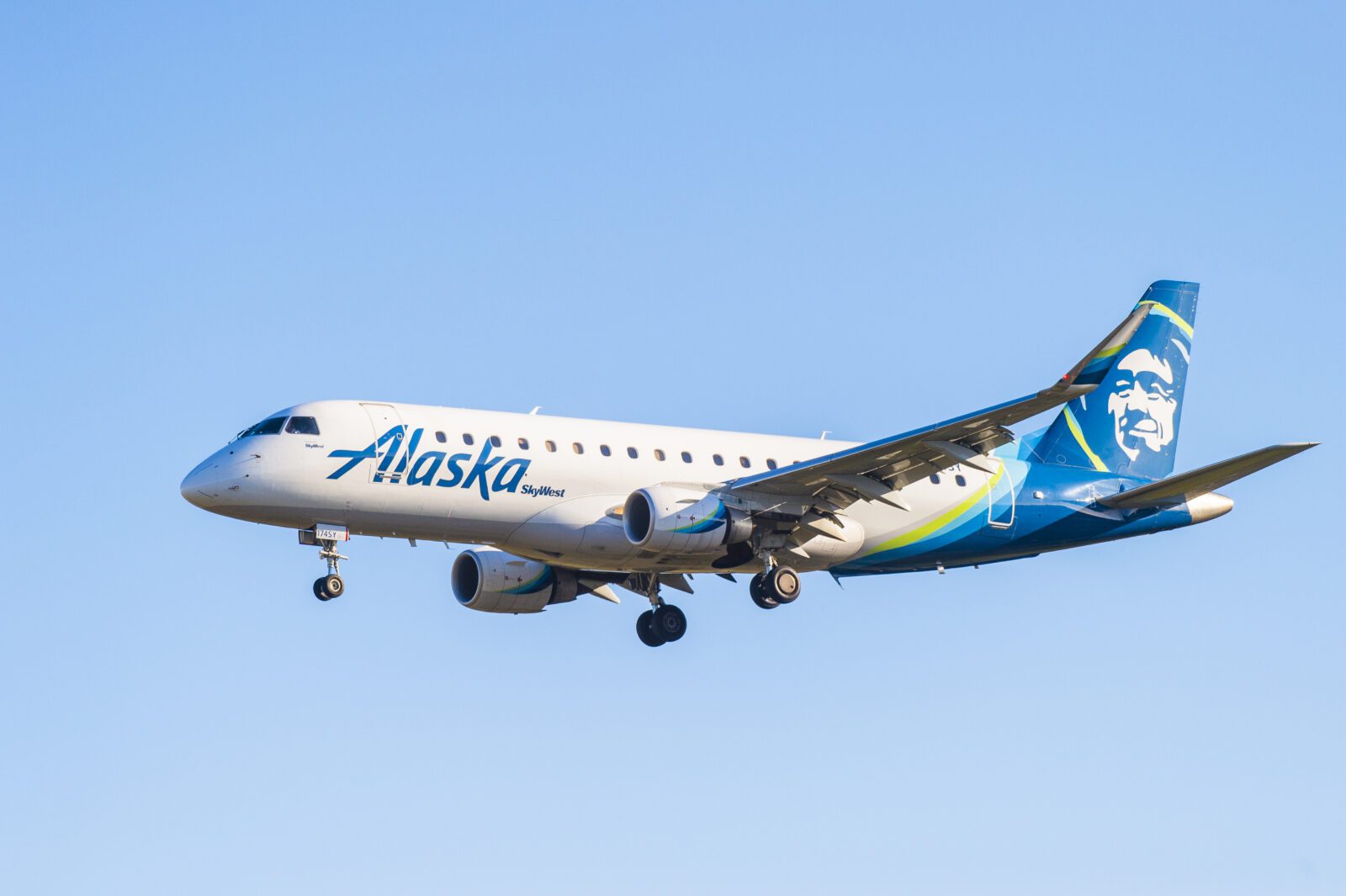
The family was traveling with their 16-month-old infant on a short flight from Santa Ana to San Francisco and had booked to fly with Alaska Airlines, although the flight was operated by Alaska’s wholly owned regional subsidiary Horizon Air.
Crew prohibited us from using CARES harness for 16-month old with his own seat purchased
byu/longlivetheturbofish inAlaskaAirlines
As their child is less than two years old, they are legally considered an infant by the Federal Aviation Administration (FAA) and, as such, the family could easily save some money by traveling with their child as a so-called ‘lap infant.’
The Association of Flight Attendants (AFA-CWA), which represents crew members at both Alaska and Horizon Air, has, however, long campaigned for lap infants to be banned, fearing that an unsecured child could be seriously hurt or even killed in the event of severe turbulence or a crash.
As recently as July, the union once again renewed its call for the Federal Aviation Administration to ban lap infants, highlighting the mid-cabin exit door blowout of an Alaska Airlines plane in January 2024.
On board Alaska flight AS-1282 were three lap infants whose parents had to grip onto them to stop them from being sucked out of the plane. The National Transportation Safety Board concluded that the accident once again demonstrated the “potential for severe injury or death” for children who are not secured in an approved child restraint in their own seat.
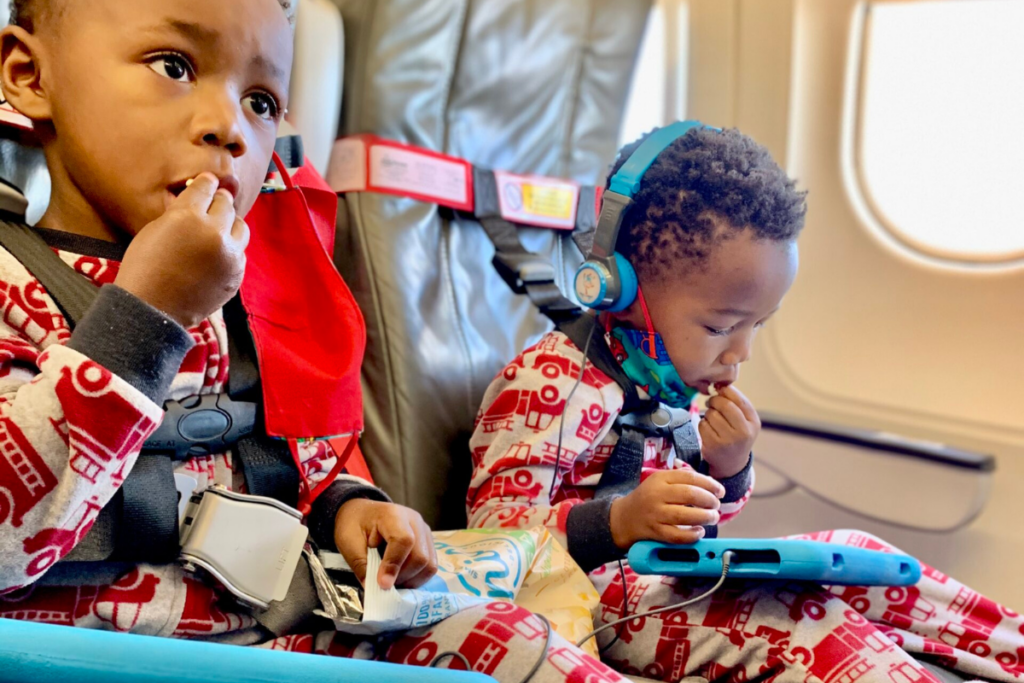
Airlines do not, however, provide any incentive for parents to use child restraint devices like an infant car seat or the CARES Child Aviation Restraint System (which remains the only restraint harness approved for use by the FAA).
Parents not only have to book and pay for a separate seat for their child, but they also have to provide the restraint device.
This is exactly what the family in this latest incident did, but they were then prevented from using the harness by a flight attendant.
“Shortly after boarding, one of the flight attendants told us we could not use the CARES harness we had carefully installed according to the instructions,” one of the child’s parents wrote on Reddit. “I told her it was FAA-approved and pointed to the certificate. She said she thought it was against SkyWest’s policy.”
The flight attendant then went to get a second employee to confirm, and this worker also said the harness was banned on Skywest flights.
“Even though we had bought a ($486!) ticket for him and had the proper safety harness, they forced me to hold my child in my arms during takeoff and landing, a significantly less safe option,” the disgruntled parent wrote.
As the parent pointed out, the Alaska Airlines website ‘maddeningly’ states that the AmSafe CARES Restraint can be used on its flights and does not make any mention of it being prohibited on Horizon Air flights.
This isn’t, though, the first time that parents have faced issues with flight attendants over the use of the CARES harness. In June, a flight attendant scared a family into not using the harness after telling the parents she would leave their child to die in a plane crash.
“If the plane were to crash and you two (the parents) both die, and I can’t figure that out to get her off the plane if she survives, I’ll leave her to die,” the flight attendant allegedly said.
Matt’s take – How can flight attendants not know about the CARES harness?
The AmSafe CARES harness has been approved by the FAA for more than 18 years, so by this point, it’s hard to believe that flight attendants aren’t aware that this device exists and that many airlines encourage its use.
Admittedly, some airlines place restrictions on where the CARES harness can be used, although AmSafe says it can be installed on “virtually all Economy, Business, and First Class” seats with the exception of seats fitted with an airbag.
Along with being approved by the FAA in the United States, AmSafe has secured approval from a slew of other national regulators, including in the United Kingdom, Australia, New Zealand, Japan, and Oman. Europe’s aviation safety agency has also approved use of the device.


This is an issue with SkyWest. Not Horizon. You need to correct the upper section
The lack of communication around these devices drives me crazy. I flew JetBlue whose website states they can be used without mentioning restrictions. FA told me after we were already inflight that their manual restricts it to window seats.