



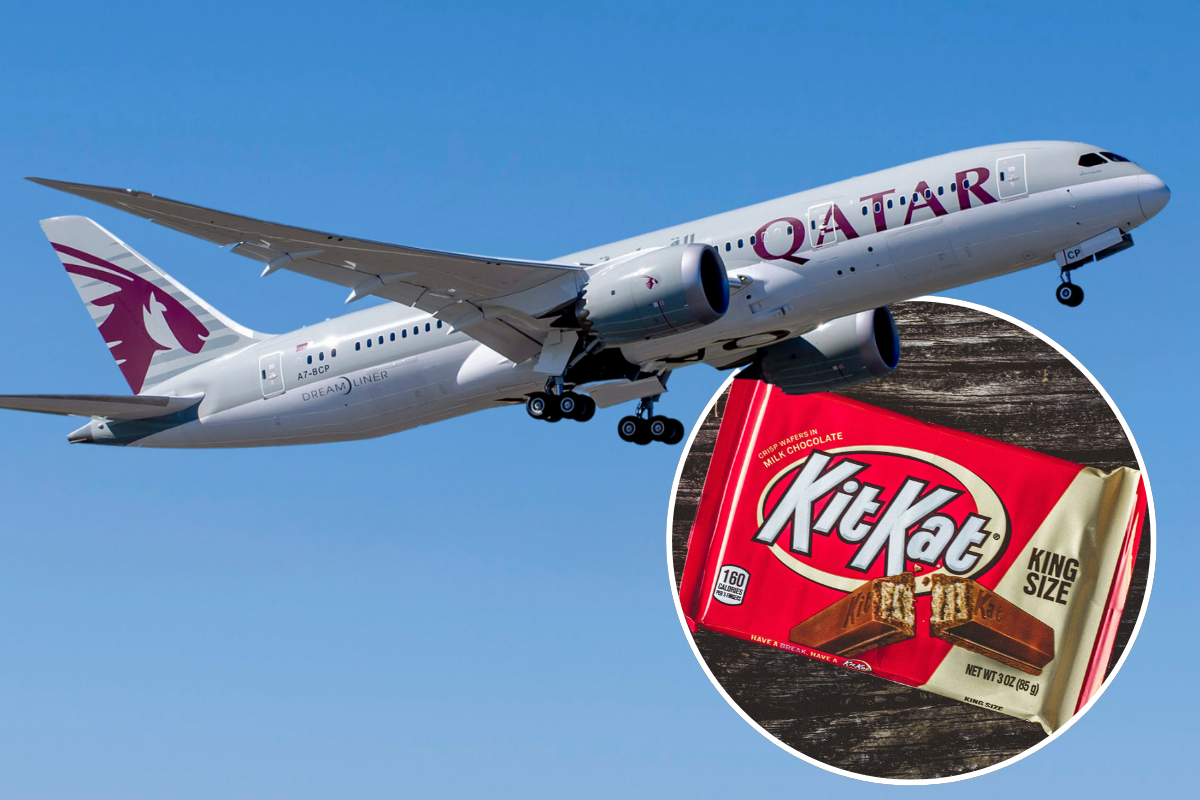
A mom is suing Qatar Airways for $5 million after a flight attendant fed her three-year-old daughter a KitKat bar during an ultra-long-haul flight from Washington Dulles to Doha, despite being informed the child was severely allergic to dairy and nuts.
Swetha Neerukonda says her daughter suffered a severe anaphylactic shock after being fed the chocolate bar and had to be administered a life-saving shot of epinephrine with an EpiPen after her “mental status and vital signs declined.”
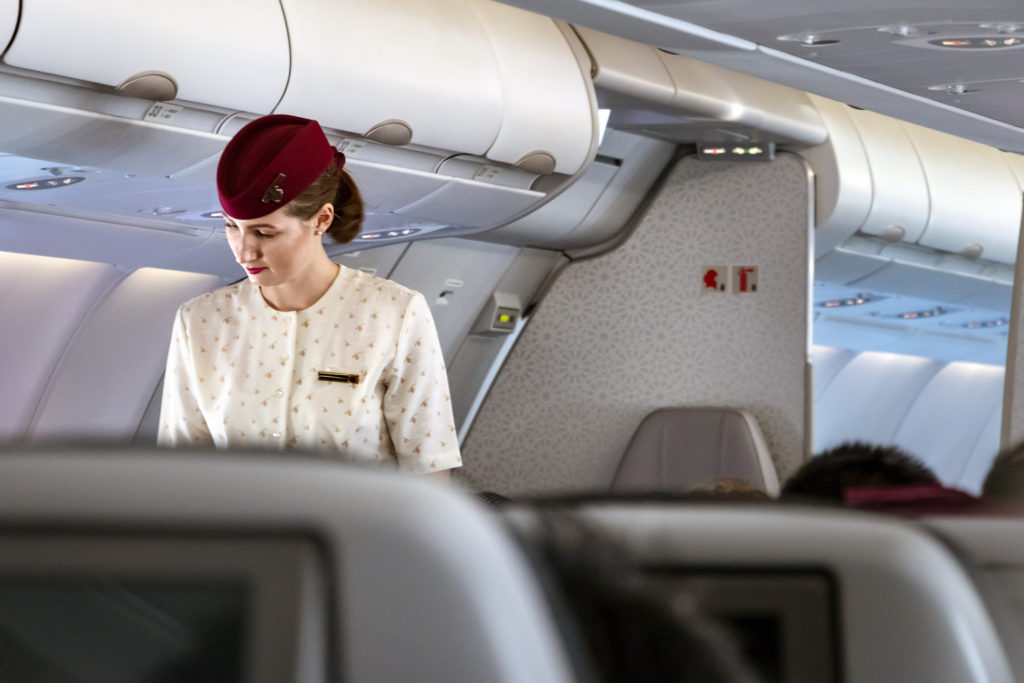
But rather than rushing to offer medical assistance, the lawsuit, filed in a Virginia district court late last month, alleges the flight attendant who gave the KitKar bar “mocked” the young girl’s mother and dismissed her concerns.
Swetha was traveling with Qatar Airways aboard flight QR-710 on April 9 and had told the airline before her date of travel about her daughter’s allergies. She also told the flight attendants when she boarded the plane.
The six-page complaint against the airline argues that “once cabin crew members were placed on notice of a passenger’s food allergy, they had a duty of care to ensure that food items containing such allergens, or their ingredients, not be served to that passenger.”
But during the 12-hour flight, Swetha needed to use the restroom and asked a flight attendant if she could look after her daughter for a few minutes. The flight attendant agreed, but before leaving the two alone, Swetha says she once again reminded the crew of her daughter’s allergies.
Despite this warning, on her return, she was horrified to see her daughter eating the dairy-laden snack. On being challenged, the flight attendant admitted to giving the KitKat to her daughter, the woman’s attorney told The Independent, but dismissed Swetha’s concerns and downplayed the seriousness of what she had done.
The suit claims flight attendants failed to make a PA announcement asking for any medically trained passengers to come forward, and they didn’t seek assistance from a ground-based telemedicine provider that could have given the crew specialist advice to treat anaphylaxis.
Thankfully, Swetha and her daughter made it to Doha safely and transferred to a connecting flight to India, but at this point, her daughter suffered another allergic reaction, at which point she had to be rushed to the hospital and admitted to the ICU.
As this was an international flight, Swetha has filed the lawsuit using provisions contained in the Montreal Convention, which, amongst other things, makes airlines responsible for injuries sustained by passengers in the course of a flight.
Although there is normally an upper threshold for damages to the tune of around $170,000, this isn’t actually a cap, and in serious cases, injured passengers can claim far bigger sums.
In this case, Swetha argues that $5 million would be “full, fair, and reasonable” damages for what occurred to her daughter on Flight 710.
Although rules differ from country to country, in the United States, the Federal Aviation Administration (FAA) does not require airlines to carry EpiPens or their generic equivalents in onboard emergency medical kits.
Airlines are, however, required to carry the active ingredient, epinephrine, in vial format, but, importantly, this requires a trained healthcare worker to administer.
Some US carriers, including Southwest Airlines, do voluntarily carry a generic version of the EpiPen in their onboard medical kits, meaning that flight attendants or even another passenger can deliver this life-saving medicine to someone suffering a severe allergic reaction.
A review commissioned by the FAA that looked at the contents of onboard medical kits recommended that airlines be required to stock EpiPens onboard, but the FAA has never followed up on this recommendation with a formal rulemaking.


Indians ? Is that another scam?