



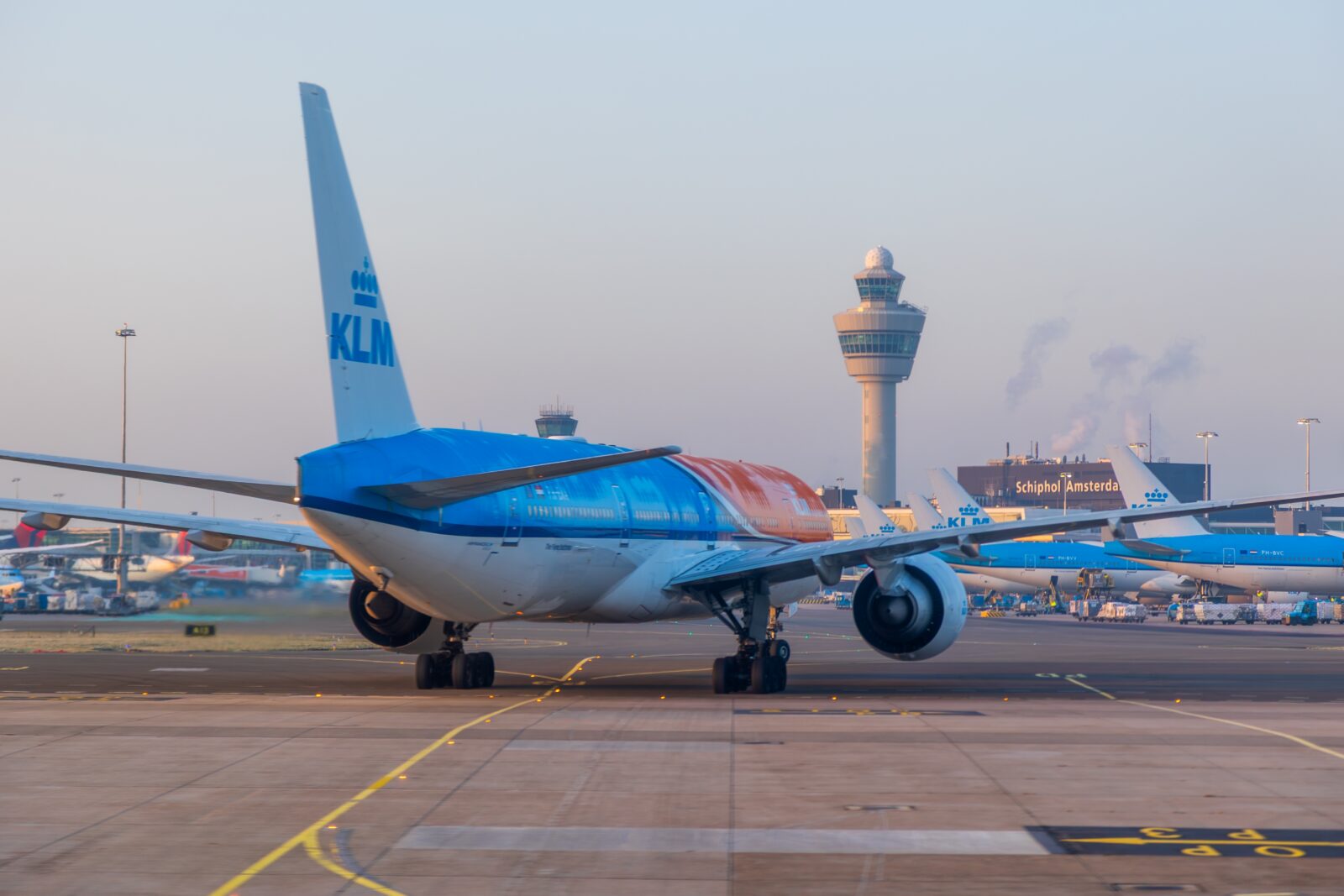
A woman who died from the Andes strain of the Hantavirus was briefly onboard a packed KLM Royal Dutch Airlines airplane at Johannesburg International Airport before the flight attendants noticed how ill she looked and had her removed from the flight.
The following morning, the woman was rushed to the hospital in Johannesburg, where she was pronounced dead the same day.
The Amsterdam-based airline has now put out an urgent alert for passengers who were on the same flight as the woman, as Dutch health authorities carry out contact tracing of everyone on the passenger manifest.
The flight in question was KLM service KL-592, which departed Johannesburg International Airport (JNB) at 11:15 p.m. local time on April 25 and arrived at Amsterdam Schiphol Airport on the morning of April 26.
Passengers on this flight may also have booked tickets as a codeshare with one of KLM’s partners, including Air France (AF08282), Delta Air Lines (DL-9560), and SAS (SK-6855).
In a statement, a spokesperson for KLM said it was working closely with the Dutch National Institute for Public Health, which is leading the country’s response to the Hantavirus outbreak aboard the Dutch-flagged cruise ship MV Hondius.
“KLM extends its condolences to the next of kin and wishes them much strength during this difficult time,” the statement from the airline added.
The woman’s husband was the first person to be taken ill, just days after the ship set sail from Ushuaia, Argentina, on April 1, initially reporting symptoms including fever, headache, and mild diarrhoea.
Within days, however, the man developed “respiratory distress” and died on April 11.
The ship continued onto the remote British Overseas Territory of St Helena, where the man’s body was taken ashore on April 24. The man’s wife accompanied his body and then, later the same day, got on a regional Airlink plane to Johannesburg.
By this point, the woman was already suffering from gastrointestinal symptoms, but she attempted to get on the KLM flight to Amsterdam. Her medical condition worsened, and the crew refused to let her fly.
After her tragic death, it would take nine days for Hantavirus infection to be confirmed via PCR testing. Further testing then confirmed that the woman had been infected with the Andes strain, which can be spread through close human-to-human transmission.
Along with contact tracing of all the passengers and crew aboard the KLM flight, health officials in South Africa are also urgently trying to track down all of the people who were onboard the Airlink regional jet from St Helena.
On Wednesday, Airlink confirmed that 82 passengers and 6 crew were onboard the flight, and is working with the World Health Organisation. In a statement, Airlink said it wasn’t aware that anyone was sick when it allowed the woman to fly to Johannesburg.
According to the WHO, human hantavirus infection is “primarily acquired through contact with the urine, faeces, or saliva of infected rodents.” The husband and wife who were the first to die in this outbreak had been on vacation in a remote part of Argentina, where the Andes strain of Hantavirus is present.
“Although uncommon, limited human-to-human transmission has been reported in previous outbreaks of Andes virus,” the WHO warned in a global update.
Tragically, a third death has already been reported after a female passenger on the cruise died on May 2 following a short illness characterized by fever that quickly developed into pneumonia.
A male passenger remains in Intensive Care in a South African hospital, and on Wednesday, three passengers from the cruise ship were medically evacuated after they became sick.
The ship is currently sailing towards Tenerife in the Canary Islands, where the Spanish government has offered to provide assistance to the roughly 150 passengers and crew aboard the MV Hondius.


How can you not compare this to the coronavirus pandemic? At least, for now, this isn’t like the Delta variant, with Western countries simply blaming African countries; meanwhile, that variant was already in Europe/North America anyway. Thank you for being one of the few travel blogs actually covering this. Surprised more Boarding Area affiliates have basically been silent on the topic. It has travel-specific importance as well as global significance.