



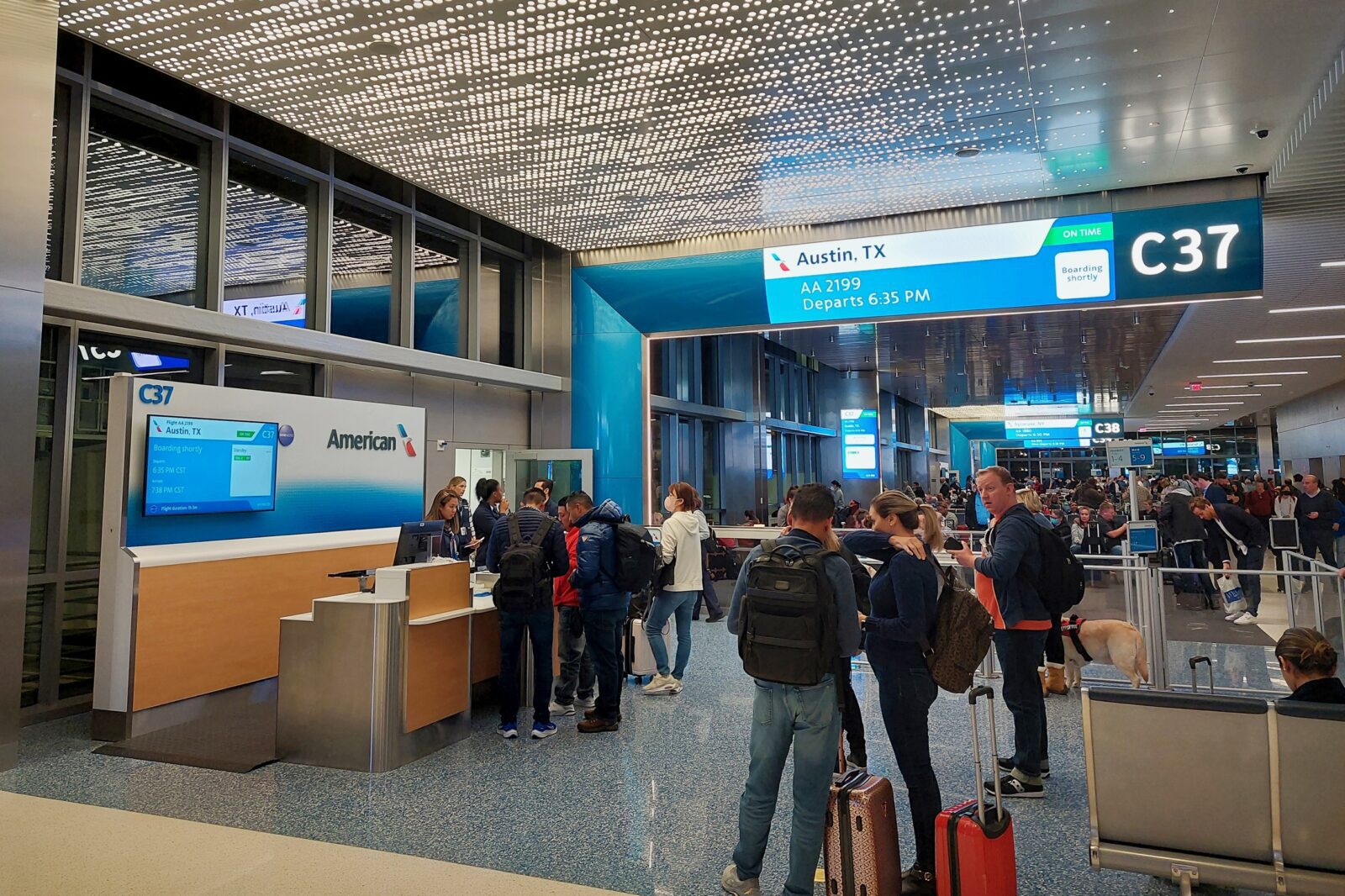
We’ve all been in that position where you arrive at the gate and the boarding time comes and goes without any movement or announcement as to why the flight is delayed. The plane is at the gate, and there’s no mention of a mechanical problem, but still, boarding is delayed.
Time ticks by, and the passengers around you, already lined up and eager to get on board, grow increasingly frustrated. Then, suddenly and out of nowhere, a group of flight attendants walk towards the boarding gate.

In unison, every single passenger waiting at the gate suddenly turns out to watch the flight attendants board the plane. Out of nowhere, applause breaks out as it dawns on everyone that the delay has been due to late-arriving flight attendants.
Passengers are often simply celebrating the fact that the reason for the delay is now not only known but also resolved… they’ll soon be boarding and getting on their way.
The unified clapping signals a sense of camaraderie amongst the passengers, but it can have a very different effect on flight attendants.
The truth is that at the moment a round of applause breaks out in the gate area, the flight attendants could perceive this as a sarcastic attack on their tardy arrival, and it could have a big impact on their emotions.
And here’s the thing: In the vast majority of situations, flight attendants are delayed arriving at the gate through no fault of their own.
Running an airline is most definitely a complicated business, and that’s no more true than in flight attendant scheduling. Even to crew members, the manner in which airlines schedule flight attendants to work from one destination to the next makes little sense.
No flight attendant wants to arrive at the gate late. After all, they want to get their work day over and done with as quickly as possible… much like everyone else.
But delays happen and, all too often, flight attendants find themselves racing from one gate to the next to work their next flight. And when they know that passengers have been waiting around for their arrival, they’ll be dreading the moment that they arrive at the gate and the passengers work out why they were delayed.
What’s worse is that sometimes they know that the gate agents are going to throw them under the proverbial bus in order to save their own skin from passenger anger, telling weary travelers that the delay is the fault of the late-arriving crew members.
What this explanation doesn’t make clear, however, is what is really happening behind the scenes. The flight attendants aren’t running late through any fault of their own, but because of the way the airline has scheduled flight attendants to work from one flight to the next.
Some airlines are better at explaining these kinds of delays than others. United Airlines has done well in providing real-time updates within its mobile app that often explain why the delay is due to a late-arriving crew.
Many other airlines, though, could do a lot better in this area.
It might just be better to hold off the applause the next time a late-arriving crew turns up at the gate. Even with the best of intentions, it isn’t necessarily going to be well-received.