



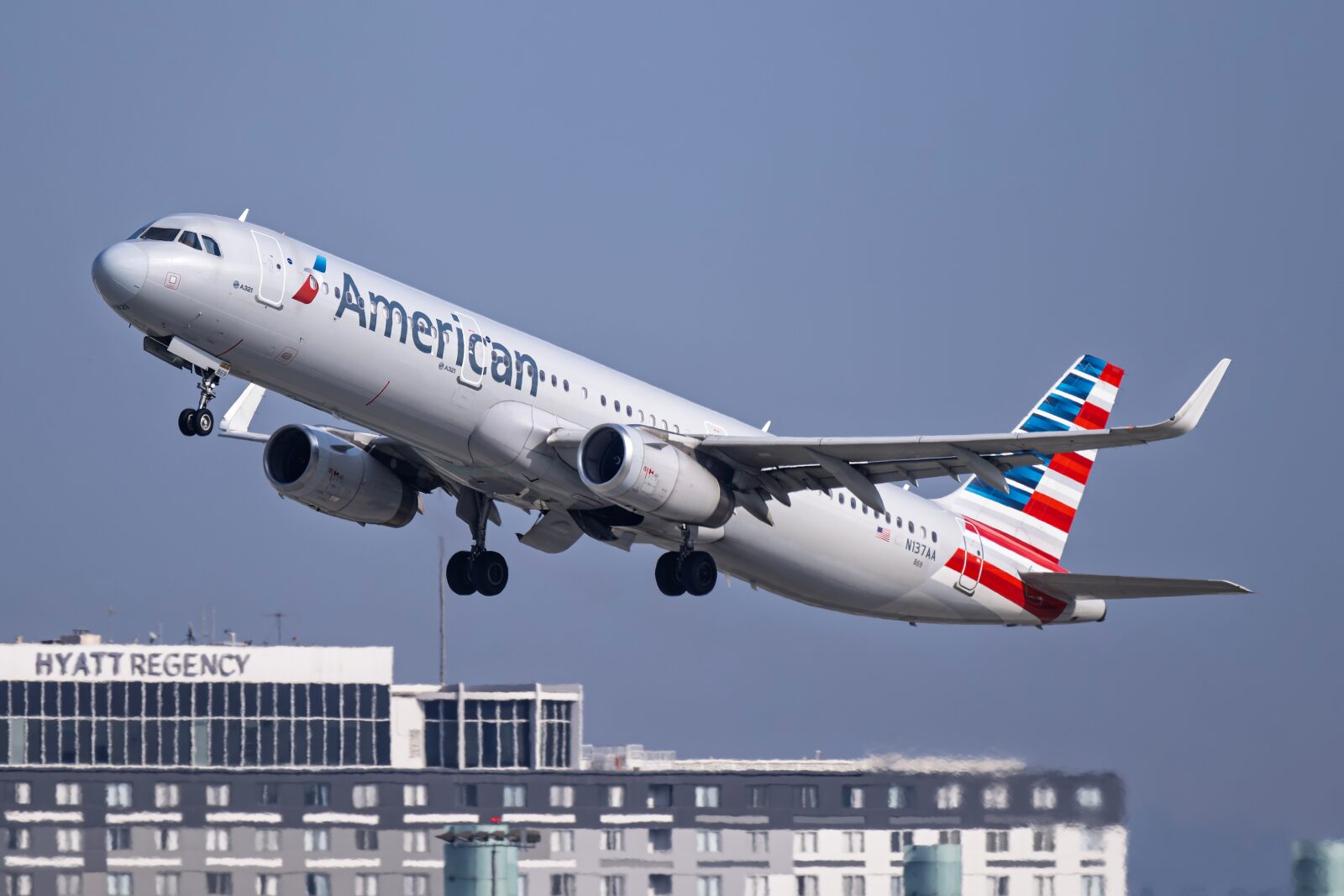
Inspectors from the Federal Aviation Administration (FAA) watched on during a series of flights that American Airlines conducted as it trained its first domestic pilots in the intricacies of flying a single-aisle aircraft across the Atlantic Ocean.
Last month, American Airlines operated a total of 42 flights between Philadelphia and Edinburgh, Scotland, using a narrowbody Airbus A321 aircraft as it prepares to take delivery of a new long-range variant that will open up new transatlantic routes.
Getting its hands on the new long-range A321XLR is a pretty exciting prospect for American Airlines, but it comes with a fundamental problem – until now, the airline’s A320-series pilots have only operated domestic or short-haul international flights.
Flying long-haul international across the North Atlantic brings with it a whole new set of rules and procedures, as well as an operating environment that many of these pilots would never have experienced before.
But these empty flights that crisscrossed the Atlantic over the course of September weren’t to train the initial 45 so-called ‘line pilots’ who will regularly fly these aircraft, but just the check pilots.
“These training flights were a huge success,” explained Captain Josh Hall, American’s A320 fleet captain.
“This effort sets us up nicely to begin training our line pilots to fly the A321XLR over the North Atlantic, and it was only made possible by the hard work and professionalism of our check pilots, the FAA, and our A320 flight training and fleet technical teams.”
During these training flights, the check pilots got to grips with some of the unique challenges of flying across the Atlantic, notably the North Atlantic Track system, which the airline described as “a highway in the sky that changes daily based on wind conditions.”
The pilots also got to experience the different air traffic control procedures in use across the Atlantic, including the lack of radar-based air traffic control that they are more used to in the United States.
American Airlines is expected to have its first of 50 Airbus A321XLRs ready to fly by the end of this year, but the plane won’t be put into service flying the Atlantic on its first day.
Initially, the plane will operate a domestic service between New York JFK and Los Angeles before being deployed on longer routes… not that we know what those routes are.
With a maximum range of 4,700 nautical miles, the aircraft will open up brand new routes that would never have been commercially viable with a widebody jet, but American Airlines isn’t yet ready to reveal what long-haul destinations will be served by the A321XLR.
Unfortunately, the A321XLR’s entry into service with American Airlines has been slightly delayed because of delays with the new fully-flat Flagship Business Class seats.
Where could American’s A321XLR fly?
While we now know that American Airlines plans to primarily deploy its A321XLR fleet on transatlantic flights to Europe, the exact route network hasn’t yet been revealed.
These aircraft will, however, likely serve destinations with lower demand, so don’t expect the A321XLR to be flying between major hubs like New York JFK to London Heathrow or Paris Charles de Gaulle.
The A321XLR could, however, easily replace the Boeing 787-8 Dreamliner on routes between aircraft pairs, like:
- Charlotte to Edinburgh (3299 nautical miles)
- Miami to Milan (4285 nautical miles)
- Philadelphia to Naples (3906 nautical miles)
- Philadelphia to Milan (3553 nautical miles)


There’s nothing unusual about this. The FAA has to validate the ETOPS figures and all of the line check pilots for the aircraft. Additionally, the proposed airports and ground handling for the new jet must be checked.
AA already flies the A321neo to Hawaii. General ETOPS figures and concerns were addressed years ago. It was more about the specifics of operations across the North Atlantic
Watched “On”??? WTF?
Should have been a comma after the word on….
Single aisle planes should be banned on any flight over 45 minutes, let alone flying so far across any ocean. They are miserably uncomfortable. This is why they came out with wide bodies, for a more comfortable long haul experience.
The public is really really stupid. They just should not book such a long flight on a single aisle plane. The airlines will then learn real quickly that it’s not a popular decision, and resume those flights with wide bodies.
You don’t have to be a Mensa member to see what kind of plane you’re going to be flying on before you book it.
Stupid people will put up with this.
Airlines and all large corporations know how stupid the public is. They feed them garbage, and the public eats it up.
But unfortunately the IQ, especially of Americans this dropping a few notches every year.