



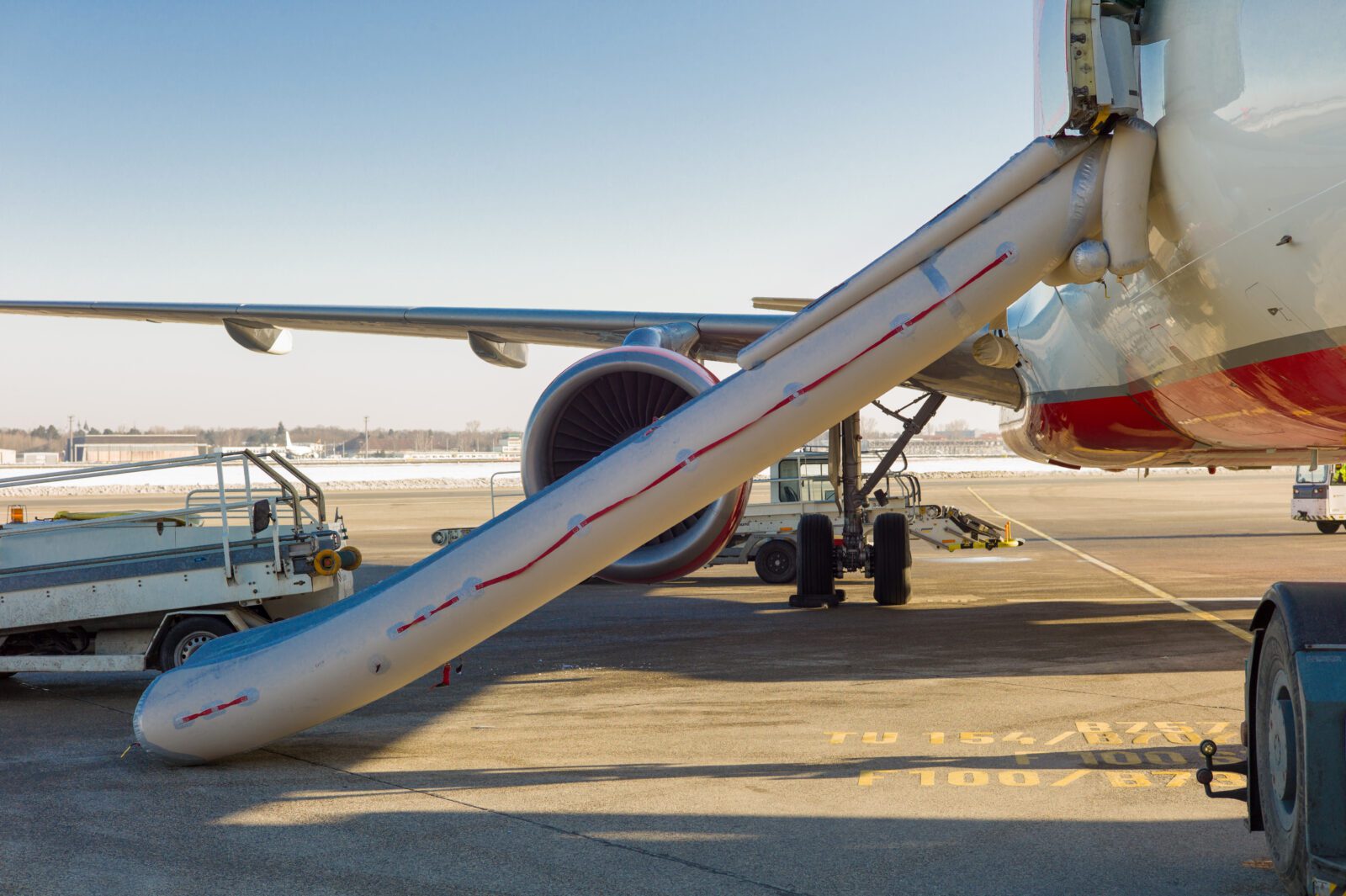
Around 120 ‘passengers’ will soon get to find out what it’s like to go down an airplane evacuation slide, but this isn’t a real-life emergency with lives at stake – instead, the passengers are actually volunteers who will be paid $30 an hour to test the slides in a controlled environment.
The tests are being organized by Collins Aerospace, a giant in the aviation industry, which makes everything from the latest lie-flat Business Class seats to airplane ovens, coffee makers, and flight deck systems.
The breadth of this one company’s reach is truly astonishing, and Collins has also become one of the primary suppliers of emergency slides to the airline industry, or what Collins prefers to call inflatable evacuation systems.
You might be surprised to learn that the technology in these slides is constantly evolving, and frequent testing is required to make sure that they can really evacuate people from an aircraft in 90 seconds or less.
While the exact reason Collins is conducting more tests on its evacuation slides is currently unclear, we do know that the company has been recruiting 120 volunteers to participate in a series of tests at one of its facilities in Phoenix between November 18 and 20.
Collins brought in aviation recruitment agency Aerotek to find its latest batch of volunteers, offering them $30 an hour for the privilege of getting to slide down an evacuation slide.
These tests usually involve a mix of volunteers, some who are completely new to the world of aviation and those who may have taken part in evacuation testing in the past. They’ll be kitted up in helmets and joint protectors as they race to get down the slide as fast as possible.
The latest evacuation slides are kitted out with smart technology that can automatically sense the ground and adjust the length of the slide for optimal evacuation.
This smart technology is all well and good, but slide manufacturers still have to make sure that their evacuation systems comply with an ever-evolving list of regulatory requirements.
Over the years, the Federal Aviation Administration (FAA) has taken learnings from real-life evacuations and told the likes of Collins to make their slides even better.
Nowadays, slides must be able to deploy and inflate while being buffeted by winds of up to 25 knots, while also being lashed by rain of up to 1 inch of rainfall per hour. And that’s the only extreme weather test – these slides must also be able to deploy in temperatures of between -65°F and 160°F.
Despite these challenges, however, Collins says its evacuation slides can fully inflate in 6 seconds or less.
And there are so many different types of evacuation slides. The ones fitted to Boeing 737s are remarkably simple when compared to the massive dual-lane slides fitted to widebody aircraft like the Boeing 777, which have been designed with the purpose of also being a water raft with an integrated canopy and even rations stowed onboard.
Thankfully, these details aren’t something that the vast majority of airline passengers will ever have to worry about.


In the 1990’s, one elderly woman volunteered to be one of hundreds of test passengers. She lost her balance and slid head first. She broke her neck and became wheelchair bound for life. Ohhhh