



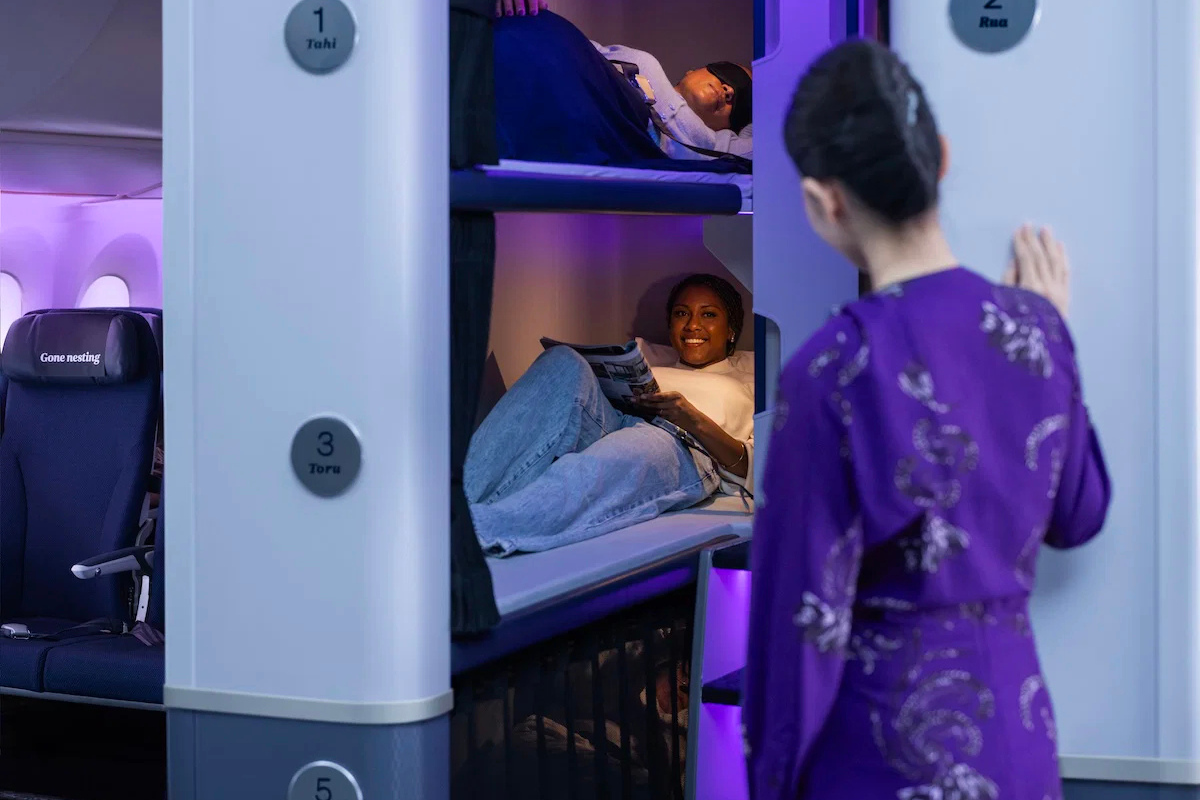
What started as an off-the-wall prototype that many didn’t think would ever see the light of day is finally turning into a reality, with Air New Zealand locking down plans to install six bunk beds in its Economy Class cabins on ultra-long-haul flights.
Dubbed ‘Skynest,’ the bunk bed concept was conceived after three years of research and development at Air New Zealand’s innovation center in Auckland and first unveiled to the world in early 2020.
At the time, Air New Zealand was confident enough in the concept that it filed patent and trademark applications for its Economy Skynest, but then the COVID-19 pandemic happened, and the plans for this innovation went quiet.
By 2022, however, the Kiwi flag carrier was once again touting its Economy Skynest with the concept due to appear in real life on Boeing 787 Dreamliners that were meant to be delivered two years later.
Unfortunately, that timeline slipped, and more than six years after the Skynest was first announced, we finally know when it will become a reality.
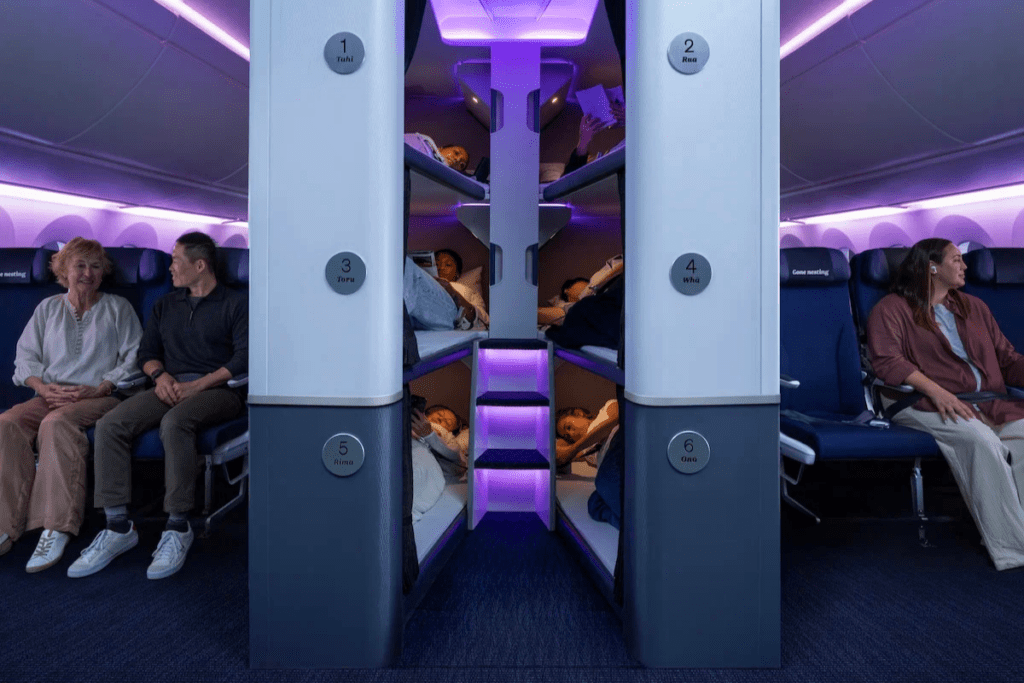
Air New Zealand now says the Skynest will appear on a brand new 787 Dreamliner, which is set to be delivered later this year. The bunk beds will take up the room of six Economy Class seats, located in the center of the front section of the main Economy section.
Each bed is 6.6 feet long and will come with fresh bedding, a pillow, and a blanket. There is also a USB-A and USB-C outlet in each bunk, along with a small storage belt and a semi-sheer privacy curtain.
As these beds aren’t certified for taxi, takeoff, or landing, Air New Zealand plans to upsell them to Economy and Premium Economy as a four-hour mid-flight session, which will cost an additional $495.
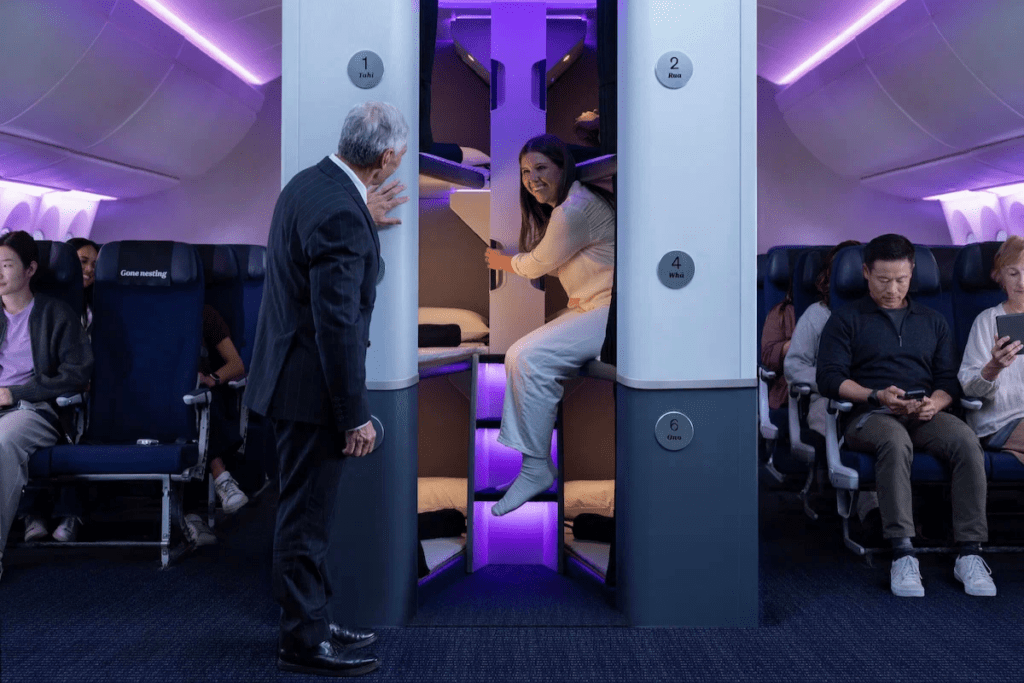
The plan is to offer two time slots per flight, starting right after the main meal service. When the time is up, lighting in the bunks will automatically illuminate, and there will be a 30-minute handover period for the flight attendants to set up the bunks with fresh bedding.
Passengers will only be allowed to book one session per flight, and the bunks are only available to able-bodied passengers aged 15 years or older. Suffice to say, only one person is allowed in each bunk.
Given that Air New Zealand flies some of the longest flights in the world, including the back-breaking 17-hour service from New York JFK to Auckland, the airline clearly believes that there will be enough demand from passengers, eager to stretch out.
For passengers traveling with smaller children, Air New Zealand will still offer its innovative Skycouch concept, in which a row of three Economy Class seats can be converted into a bed-like area with special footrests that fold up and lock into place.
Air New Zealand has just licensed out the Skycouch concept to United Airlines, which will start offering what it calls the ‘Relax Row’ later this year.
The licences for both of these concepts are owned by Air New Zealand, meaning that other airlines can’t simply copy these ideas. That being said, given the airline’s unfortunate financial situation and limited route network, perhaps we’ll see Air New Zealand more willing to license these concepts to airlines that don’t have overlapping networks.