



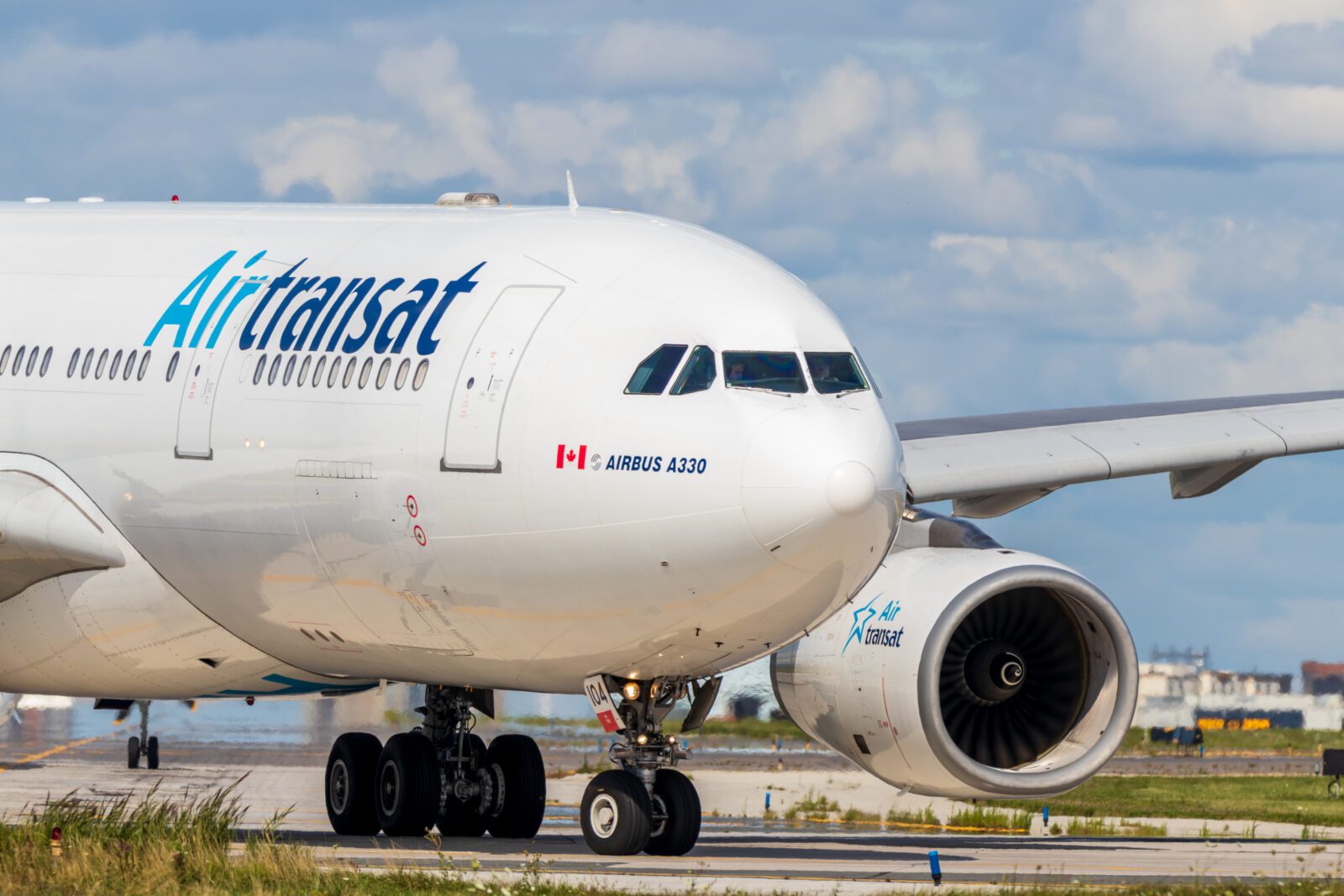
In a lengthy 80-page ruling, a Canadian employment tribunal has ruled that flight attendants are not permitted to consume cannabis, whether on or off duty, after a union argued that a ban on crew members smoking marijuana was unfair.
The case arose after Canada legalized the consumption of cannabis in 2018. In response to this newfound freedom, however, the Canadian leisure carrier Air Transat quickly introduced new rules prohibiting its crew members from consuming the drug.
The rules were very clear: “Immediate dismissal will result from the possession, use or transport of any drug or narcotic, whether legal or illegal. The use of cannabis by crew members is strictly prohibited.”
The policy added: “Testing positive for drugs is a violation of this policy.”
Given that THC (Tetrahydrocannabinol), the psychoactive component of marijuana, is detectable in hair strands for up to 90 days, the policy effectively barred Air Transat crew members from consuming cannabis even if they were on leave for several weeks.
The Canadian Union of Public Employees (CUPE), which represents flight attendants at several Canadian airlines, including Air Transat and Air Canada, challenged the policy, arguing that it was unreasonable to ban employees from using a legal narcotic while off-duty.
An employment tribunal in Quebec was charged with deciding whether Air Transat’s policy was both legal and reasonable, given that it could have a significant impact on the private lives of flight attendants outside of work.
In coming to its decision, the tribunal looked at the safety-sensitive role of flight attendants, finding that crew members must be relied upon to make fast and effective decisions while dealing with a wide range of potential in-flight emergencies, such as fires, unruly passengers, medical emergencies, and evacuations.
Air Transat told the tribunal that the consequences of impaired performance could be catastrophic, and without a reliable real-time test for potential cannabis impairment, a complete ban was necessary to ensure that its flight attendants were fit for duty.
Given the effect that altitude can have on someone who has used narcotics, as well as the fact that the effects of cannabis use can vary greatly from one person to the next, the tribunal concluded that a “no risk” approach for safety-sensitive aviation employees was justified.
Even the union’s privacy argument was dismissed, with the judge in the case ruling that “the safety of passengers on an aircraft must take precedence over the right to privacy.”
The ruling continued: “The employer has demonstrated that the cannabis consumption provision is reasonably necessary to achieve a legitimate objective, namely safety in the hazardous environment of aviation, that it is proportionate to that objective, and that it represents a minimal infringement on the flight attendant’s right to privacy.”
Following the verdict, the CUPE union says it is still analysing the lengthy ruling, but that it still believes the policy is “excessively intrusive” and that Air Transat should compensate its members accordingly for the “extreme discipline” required of crew members even when off-duty.
In the United States, flight attendants are also prohibited from consuming cannabis, even when off-duty, because, while marijuana use has been fully legalized in around 25 states and partially legalized in all but four states, it still remains illegal at the federal level.
Given that it has long been established that flight attendant working conditions are governed under federal rather than state-level law, crew members at U.S. carriers can be immediately terminated if they test positive for cannabis.
The Federal Aviation Administration (FAA) imposes strict drug testing requirements on airlines, and in 2026, 25% of safety-sensitive workers, including flight attendants, must be pulled for a random drug test.
These drug tests are so sensitive that flight attendants often remind their members to steer clear of popular CBD products, even if they aren’t meant to contain any THC, because a positive drug test result could still be returned.