



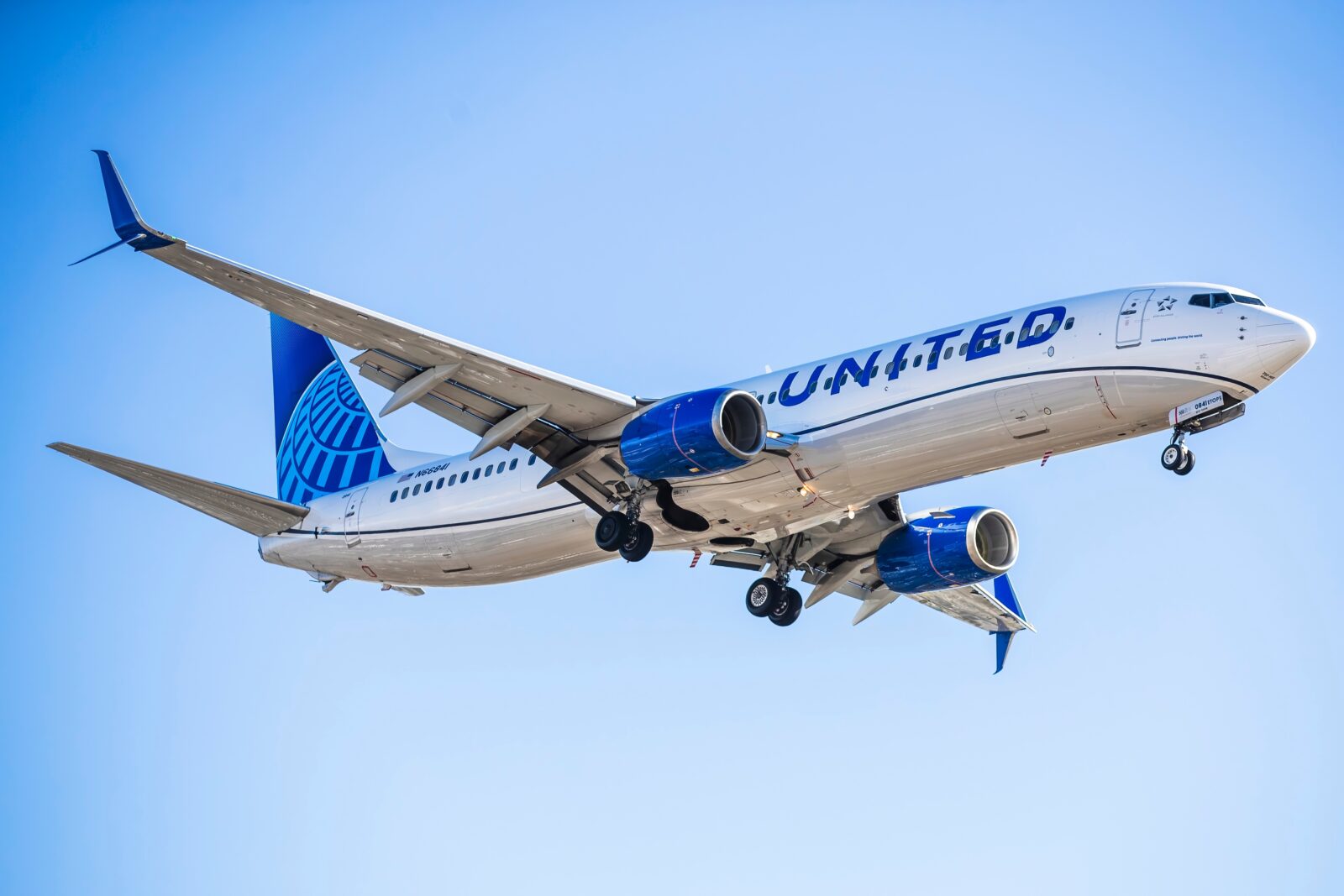
A United Airlines pilot threatened to call the FBI and have passengers’ phones searched after people noticed an antisemitic Wi-Fi hotspot name during a recent flight, prompting a potential security threat against the aircraft.
“I had one of the strangest experiences I’ve ever seen on a flight recently on a United flight,” the passenger who shared the story on Reddit said. “At some point during the flight, someone on the plane had their phone hotspot visible with the name: ‘Free Palestine, F Zionists.'”
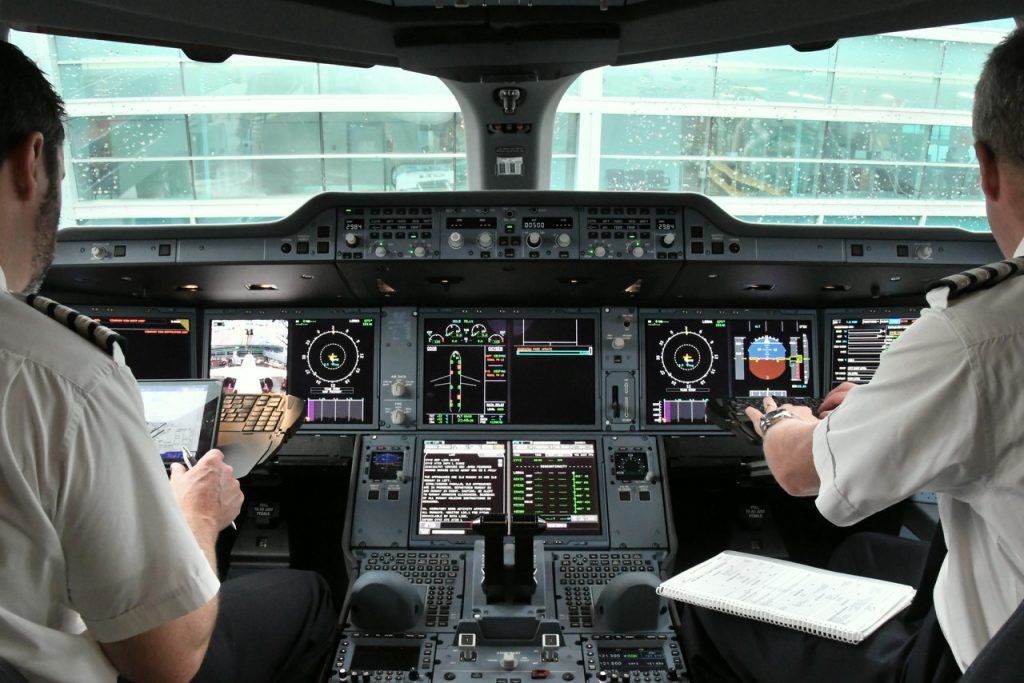
“The pilot came over the speaker, sounding extremely serious, and said the message was being interpreted as a potential threat/security issue. He then announced that the person had ’30 seconds’ to remove or disable the hotspot from public visibility, or law enforcement/FBI would be meeting the aircraft when it landed.”
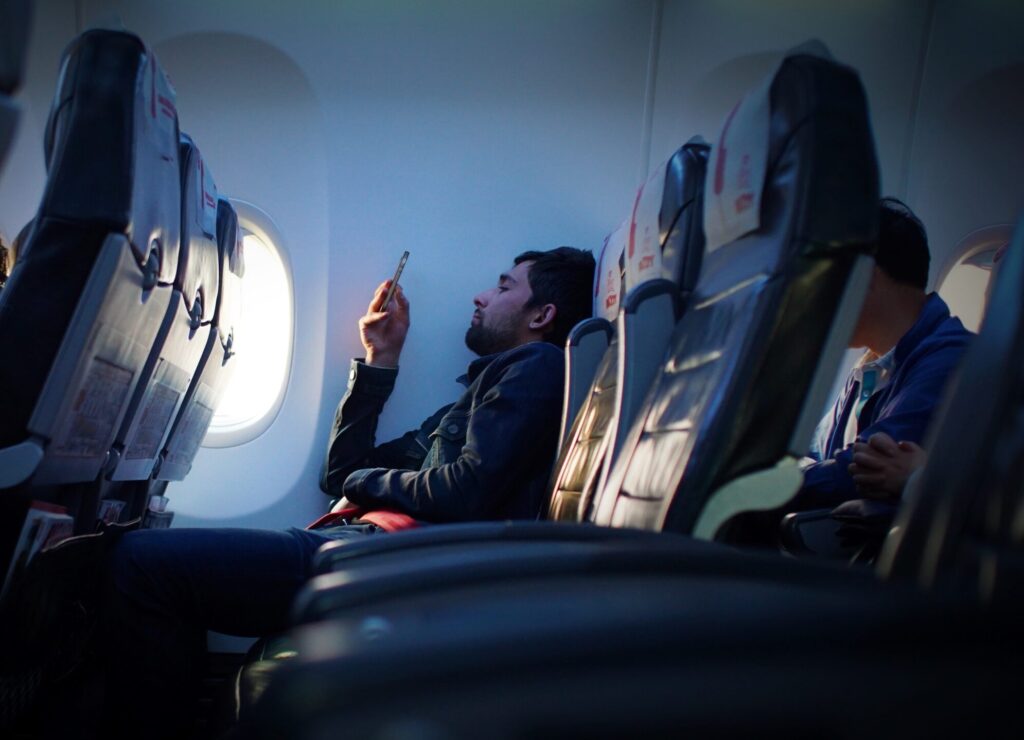
The passenger added, “The entire cabin got dead silent. You could feel everyone looking around, trying to figure out who it was. Some people looked nervous, some looked annoyed, and others were laughing because they thought it was absurd. The hotspot disappeared pretty quickly after that.”
But while the passenger understood why the pilot took action to address the hotspot name, he pondered whether the reaction of the crew was too extreme.
Wifi Hotspot
by u/Valuable-Meal4252 in unitedairlines
“On one hand, I understand airlines and pilots taking anything remotely threatening seriously, especially on airplanes,” the passenger wrote. “On the other hand, the hotspot name itself didn’t contain a direct threat. It was political, provocative, and obviously designed to get attention, but threatening? That feels like a stretch.”
In a follow-up message, the passenger added that the pilot threatened to have the aircraft met by the FBI and that it would be “sequestered” so that law enforcement could interrogate people’s phones and find the culprit.
In the end, that didn’t happen. It appears that the pilot’s threat was designed to get whoever created the hotspot name to remove it immediately, and with good reason.
Not necessarily because the hotspot name posed an immediate security threat against the aircraft, but because it was highly offensive and had the potential to offend passengers and potentially make some people feel threatened or uneasy.
And while people have a lot of leeway in what they say in the name of free speech, when it comes to offensive and potentially threatening speech, in whatever form that takes, on a private plane, then the rules very much change.
If a passenger attempted to board a plane with a t-shirt emblazoned with the same slogan, then it would be no surprise to learn that United, or any other airline for that matter, would pull them out of the boarding line and not only get to cover up the offensive speech but also potentially question them about their suitability for travel.
Unfortunately, using Wi-Fi hotspots to share threatening messages to passengers on a flight has become a bit of a trend in the last year.
In January, for example, a Turkish Airlines flight to Barcelona was intercepted by fighter jets after a bomb threat was posted as a Wi-Fi hotspot name.
Turkish Airlines flight TK-1853 was in its initial descent to land in Barcelona when a passenger noticed an alarming network name in the list of available Wi-Fi connections, which read: “I HAVE A BOMB. EVERYONE WILL DIE.”
The flight crew was immediately alerted, and the pilots declared an emergency, advising air traffic control of a possible bomb threat against the plane. After being ordered into a holding pattern off the coast of Barcelona, the pilots were cleared to land, and the plane was then directed to a remote part of the airfield where Spain’s Guardia Civil police service swarmed the aircraft.
A thorough search was carried out of the aircraft, but no threat was detected. Turkish Airlines, however, vowed to try to find the culprit.
Less than a month later, a packed Wizz Air Airbus A321 flying from London Luton to Tel Aviv, Israel, was involved in a mid-air security alert when a passenger created a Wi-Fi hotspot name labeled “terrorist.”
A full-scale security alert was declared, and after being intercepted by the Israeli air force, the Wizz Air flight was directed to land at Tel Aviv’s Ben Gurion Airport, where security forces were waiting to meet the plane.
According to Israel’s N12 news station, preliminary reports suggest the phone that was transmitting the ‘terrorist’ label belonged to an ultra-orthodox couple. The couple claimed their son had given them the phone before they boarded the plane and didn’t realise they had a private Wi-Fi network.


Antisemetic? That’s a lie. You can be semetic without being a Zionist. LIAR LIAR LIAR!