



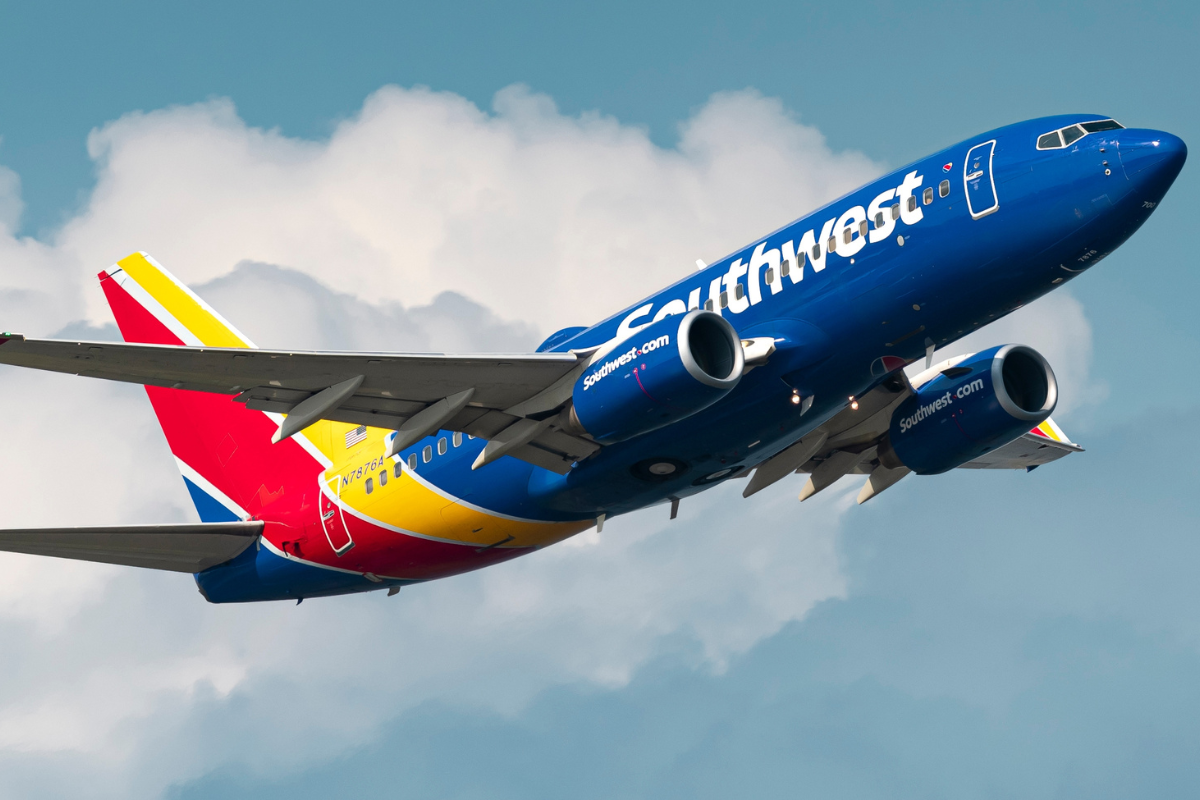
Two Southwest Airlines airplanes nearly collided mid-air close to Nashville International Airport (BNA) on Saturday after air traffic controllers appear to have accidentally directed one of the planes to cross into the path of the other aircraft.
The extraordinary near-miss occurred at around 5:45 p.m. on April 18, when Southwest Airlines flight WN-507 from Myrtle Beach was coming in to land at Nashville Airport following an otherwise routine one-and-a-half-hour flight.
Local Nashville media are reporting that WN507 was directed to turn right during a go-around putting it in the path of departing WN1152 on Saturday. ADS-B data shows the two jets passed 500 ft apart vertically. https://t.co/Q9pPj47IBg pic.twitter.com/rg0JBTq106
— Flightradar24 (@flightradar24) April 20, 2026
As the Boeing 737MAX-8 aircraft was about to touch down on Runway 2L, the pilots decided to perform what has been described as a “precautionary” go-around due to gusty conditions that were sweeping across the airport as the plane was coming into land.
According to flight tracking data supplied by Flight Radar 24, the pilots of flight WN-507 climbed to an altitude of just 2,000 feet, when air traffic control directed them to turn right.
At the same time, Southwest Airlines flight WN-1152 to Knoxville was taking off from an adjacent runway known as 2L. Both aircraft were headed in a north-easterly direction when air traffic control appear to have directed the pilots of WN-507 into the path of WN-1152.
Transponder data analyzed by Flight Radar 24 suggests that the two aircraft came within 500 feet of one another, and a catastrophic accident may only have been averted thanks to an emergency cockpit warning system known as TCAS.
TCAS stands for ‘Traffic Alert and Collision Avoidance System’, and it’s often described as a last line of defense system, when all other warning systems have failed.
TCAS sounds an audible alarm in the cockpit if it detects the threat of a midair collision. It functions independently of ground-based alert systems, giving alerts when all other systems have failed.
The system provides two levels of threat alert: Traffic advisories and resolution advisories.
Southwest Airlines has confirmed that an incident occurred, saying in a statement: “We are engaged with the FAA as part of the investigation. Southwest appreciates the professionalism of its Pilots and Flight Crews in responding to the event. Nothing is more important to Southwest than the Safety of our Customers and Employees,” the airline said in a statement.”
Southwest flight WN-507 was able to continue with its go-around, landing safely at Nashville Airport on the second attempt, while flight WN-1152 continued on to Knoxville.
There have not been any reports of injuries on either aircraft, which is likely due to the fact that passengers and crew on both aircraft were securely buckled in at the time the incident took place.
Last December, the pilots of a Volaris El Salvador Airbus A320neo nearly collided mid-air with a United Express Embraer E145 regional jet at Houston Intercontinental Airport after the pilots of the Volaris plane mixed up ‘left’ and ‘right.’
The incident occurred when both planes were given takeoff clearance at roughly the same time from adjacent runways. After takeoff, the pilots of the Volaris plane had been told by air traffic control to turn slightly left at a heading of 110 degrees, while the pilots of the United Express plane had been instructed to turn right at a heading of 340 degrees.
After takeoff, the pilots of the Volaris aircraft thought they had been instructed to turn right and even called air traffic control to confirm that this was the direction they were due to be headed.
The controller initially reiterated the instruction, seemingly unaware that the aircraft had already commenced the wrong turn, saying: “Let’s see, Jetsal 4321, yes, so left turn to 110.”
While the air traffic controller failed to recognize and correct the mistake, thankfully, TCAS again stepped in to alert the pilots of the United Express of a potential collision with a so-called resolution advisory.
The use of parallel runways made headlines last month when the Federal Aviation Administration permanently banned parallel landings at San Francisco International Airport.
The decision will have an impact on the amount of traffic that the airport can handle, although the FAA says it is still working with the airports and airlines to manage the impact of its safety measures.