



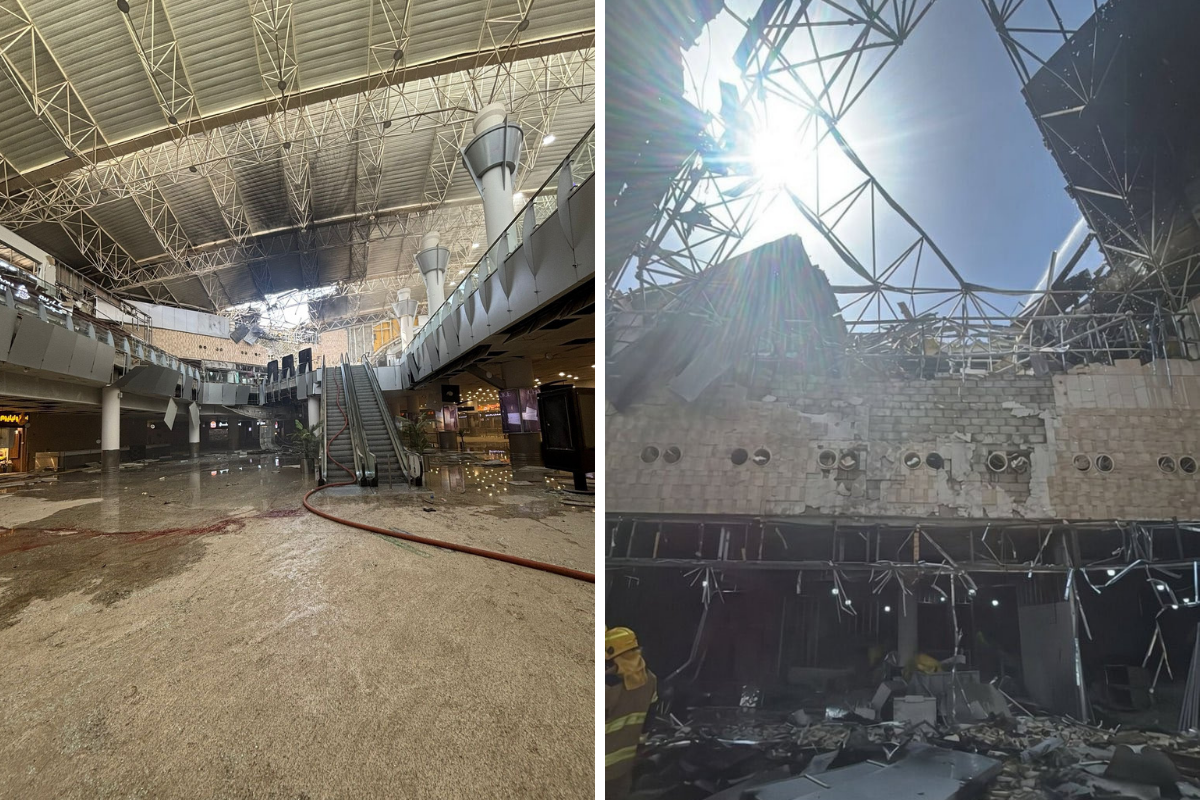
Within hours of Kuwait International Airport resuming commercial flights from its flagship Terminal 1 passenger building, Iran launched a massive barrage of ballistic missiles and kamikaze drones against Kuwait on Tuesday night, resulting in a direct hit on Terminal 1 that has caused massive new damage.
Terminal 1 had been shuttered since February 28, when Iran first launched retaliatory strikes against its Persian Gulf neighbors in response to a joint U.S. and Israeli military offensive on the Iranian regime.
Kuwait International Airport after the Iranian drone and missile attack. https://t.co/Dwk4qfOqJf pic.twitter.com/nqmw7Z7QTR
— Ariel Oseran أريئل أوسيران (@ariel_oseran) June 3, 2026
The building had been badly damaged in that very first wave of attacks by Iran at the end of February, which resulted in Kuwait shuttering its airspace and completely closing down operations at Kuwait International Airport (KWI) for weeks on end.
During that time, local officials used the opportunity to carry out extensive repair and refurbishment works in Terminal 1, and the building only reopened to the first commercial passenger flights on Monday.
Late on Tuesday night, however, Iran fired a barrage of ballistic missiles and kamikaze drones against Bahrain and Kuwait in a major escalation of tensions that continues to threaten regional stability.
Most of the hostile projectiles were intercepted by air defense systems, but Terminal 1 at Kuwait International Airport took a direct hit during the overnight attack.
Photos and videos of the serious damage that the terminal building sustained in the attack quickly emerged on social media, showing a large hole in the terminal roof and debris scattered across one of the passenger concourses.
Kuwaiti officials temporarily closed airspace over the country, with flights forced to divert to alternative airports in Saudi Arabia until the all-clear was given.
Rather than maintaining the airspace closure, however, Kuwait has already resumed operations at its alternative Terminal 4 and Terminal 5 passenger buildings following the completion of a damage assessment across the airport.
Iran has repeatedly targeted passenger airports across the Persian Gulf in its retaliatory attacks.
On February 28, an Iranian kamikaze attack drone also had a direct hit on the roof of Terminal 3 at Dubai International Airport, penetrating the roof and causing damage to the passenger concourse.
At least three people were injured in this attack, although further injuries were thankfully avoided as the airport had already been evacuated of most passengers.
Days later, another attack drone exploded on the outskirts of the airfield at Dubai International, close to Terminal 3. The attack reportedly damaged an Emirates Airbus A380 superjumbo and an Airbus A321 belonging to Saudia Airlines.
Not long after, a third strike resulted in an Iranian attack drone hitting one of the massive fuel tanks within the perimeter of Dubai International Airport. The strike caused a large fire and huge plumes of smoke to rise above the Dubai skyline, but flights were only suspended for several hours before being allowed to resume.
Attacks were also reported at Bahrain International Airport, although no serious damage was caused. An attack on Abu Dhabi International Airport tragically resulted in one death from falling debris caused by an air defense interception at low altitude.
Despite Tuesday night’s attacks, the White House is still actively working on securing a long-term peace deal with Iran, although this is dependent on Tehran completely dismantling its nuclear program.