



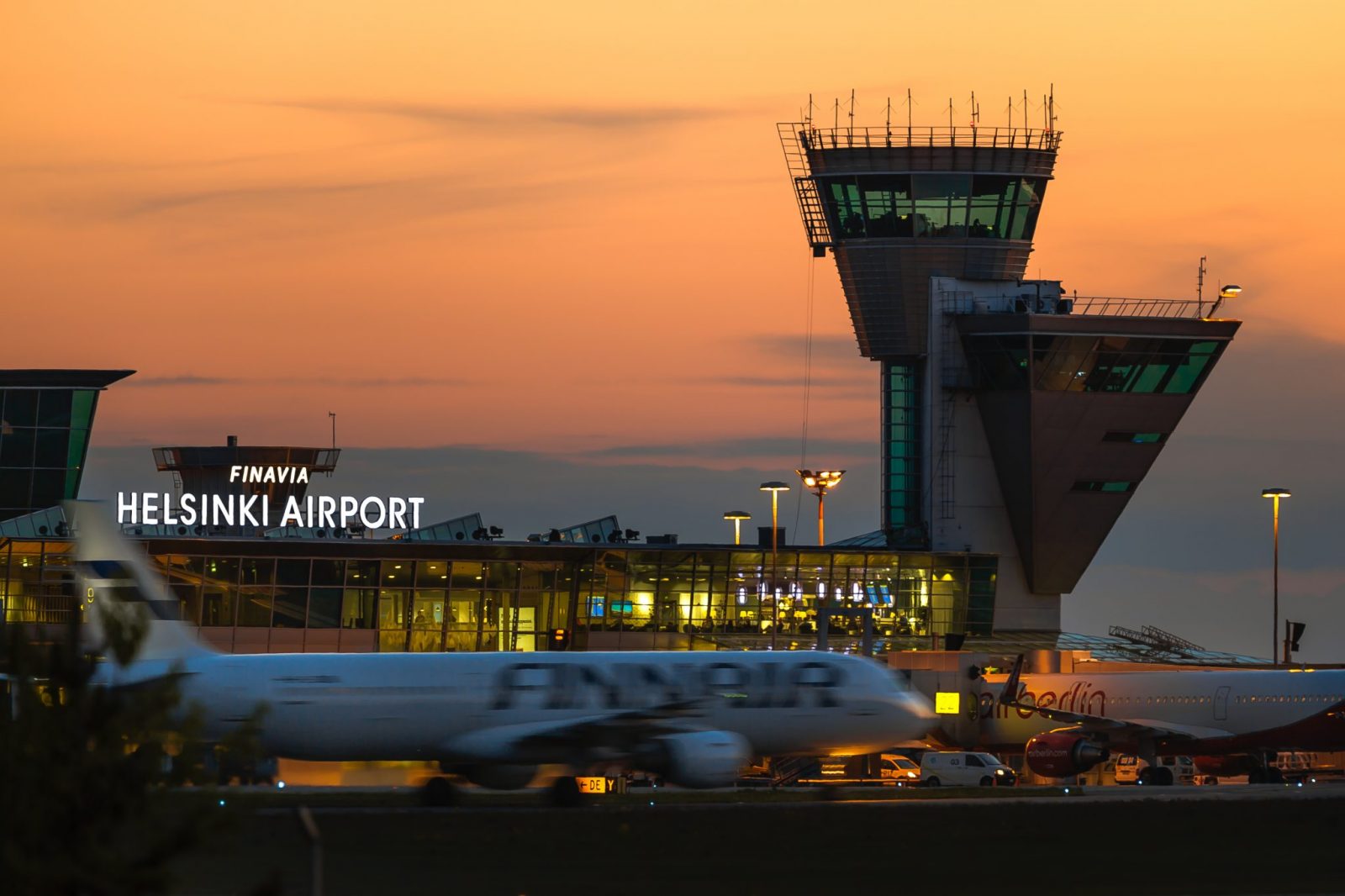
Airport operations were suspended at Helsinki International Airport, and flights were forced to divert early on Friday morning after a military drone threat put Finland’s capital on an emergency alert footing.
After the threat was detected, Helsinki’s City Rescue Department warned around 1.8 million people living in the Uusimaa region to shelter indoors.
The alert was first put out at around 4 am on May 15, with air traffic to and from Helsinki International Airport (HEL) immediately stopped and all ground operations brought to a halt.
Air traffic was finally allowed to resume at around 7 am on May 15. By that point, nine international flights inbound to Helsinki had been forced to divert to alternative airfields, including Tallinn in Estonia.
One of those flights was a Finnair Airbus A350, which had been flying for nearly 13 hours from Seoul, South Korea, when it diverted to Tallinn. When the all-clear was given, nearly two hours after it had landed, the massive widebody jet was permitted to fly just 16 minutes to Helsinki.
Knock-on effects from the airspace closure are expected to be felt throughout Friday, with around 10% of all scheduled flights already cancelled.
Finnish authorities scrambled fighter jets in response to the airspace incursion but later moved to reassure worried residents that there was no threat to public safety.
Since last Autumn, there have been a number of drone sightings around some of Europe’s airports. These have not been recreational drones, but rather military-grade drones that could easily down an aircraft if the two collided.
In October 2025, Munich Airport was affected by drone sightings for two nights in a row, with dozens of flights cancelled and thousands of passengers left stranded.
In late September, flights at Copenhagen and Oslo airports were disrupted by a coordinated drone attack that the Danish police said had been carried out by a “capable operator” with the “capabilities, the will, and the tools to show off in this way.”
Officials have never pinned blame on a specific country or entity, although it’s widely believed that the drones could be linked back to Russia.
There are a number of systems available to the military and commercial operators to combat illegal drone activity. London Heathrow was one of the first airports in the world to install a permanent anti-drone system in 2020.
Also in use at Paris Charles de Gaulle, the system produced by Aveillant uses a holographic radar to identify drones as far as 5 km from the perimeter of the airport.
The system can’t stop the drones, but it can identify the location of the drone operator, allowing the police or military to quickly intervene.