



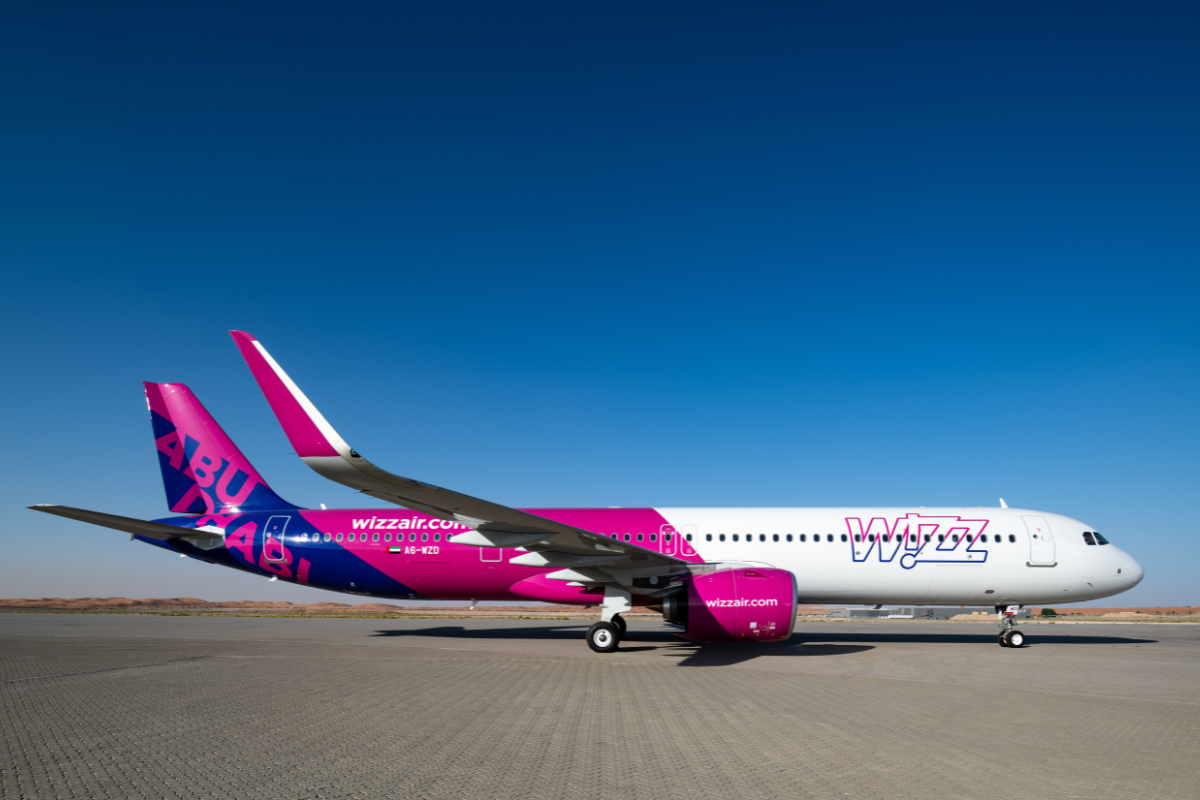
Ultra-low-cost airline Wizz Air is shutting down its operations in the Middle East with the closure of its Abu Dhabi joint venture in just a couple of months because, it turns out, the United Arab Emirates is too hot.
József Váradi, the charismatic chief executive of the Hungarian airline, said on Monday that following a “tremendous journey in the Middle East,” its Wizz Air Abu Dhabi subsidiary would shutter on September 1, 2025.

Váradi cited a number of reasons why the five-year-old airline was no longer tenable, including the fact that during the summer months, temperatures in Abu Dhabi regularly hit an average of 42°C (107.6°F).
While those kinds of temperatures should have come as no surprise, the toll that the extreme heat and desert-like conditions in the Middle East had on airplane engines wasn’t truly understood.
Wizz Air has battled ongoing issues with the Pratt & Whitney engines that power its fleet of Airbus A320 series aircraft, forcing the airline to conduct ground planes for expensive maintenance procedures a lot more often than it would have liked.
Budget airlines grapple with razor-thin margins and need to keep maintenance costs low and their planes in the air as much as possible.
In addition, Váradi said geopolitical volatility in the region, as well as regulatory hurdles and market access, had hastened the demise of Wizz Air Abu Dhabi.
“The operating environment has changed significantly. Supply chain constraints, geopolitical instability, and limited market access have made it increasingly difficult to sustain our original ambitions,” Váradi commented.
“While this was a difficult decision, it is the right one given the circumstances. We continue to focus on our core markets and on initiatives that enhance Wizz Air’s customer proposition and build shareholder value.”
The decision to end its joint venture in Abu Dhabi is part of a broader strategic realignment in which Wizz Air plans to focus on its core European low-cost airlines, after years of plotting to compete on long-haul routes.
Wizz Air has taken delivery of two Airbus A321XLR jets that have the capability to fly up to 4,700 nautical miles, but the airline is now reviewing its order of another 45 of these jets as Váradi rethinks Wizz Air’s long-haul ambitions.
The airline’s longest route, between London Gatwick and Jeddah, Saudi Arabia, clocks in at 4,715km, but Váradi is now carefully monitoring whether this route, and other long-haul routes, are viable.
Only last summer, Wizz Air was talking up the possibility of launching non-stop long-haul flights between Europe and India on its all-economy class single-aisle aircraft.
These kinds of flights would only be possible with the Airbus A321XLR, but with Wizz Air now retrenching to its core business of operating intra-European budget flights, there may be little need for these long-range planes.
Wizz Air Abu Dhabi was formed as a joint venture with the ADQ investment and holding company which is owned by the government of Abu Dhabi.
The subsidiary didn’t get off to a great start as it was meant to launch just as the COVID-19 pandemic decimated travel demand around the world.
In 2022, however, the expansion seemed to be doing so well that Váradi was even talking up a possible subsidiary in Saudi Arabia.
Many of Wizz Air Abu Dhabi’s staff are European and have been on secondment in the UAE. They will be offered positions at other Wizz Air locations across Europe.
Operating an airline in the harsh conditions of the Middle East hasn’t stopped the likes of mega airlines like Emirates and Qatar Airways from thriving, although engine issues have long been a problem.
In 2023, Sir Tim Clark, the president of Emirates, criticized Airbus and engine manufacturer Rolls-Royce over issues with the engines on A350 widebody airplanes because they didn’t perform so well in hot, humid, and sandy environments like Dubai.
Despite the criticism, however, Emirates does now operate the Airbus A350-900 aircraft as part of a fleet renewal program that will eventually see the iconic A380 superjumbo phased out for good.


What a poorly written article! Who checked the spelling and grammer ?